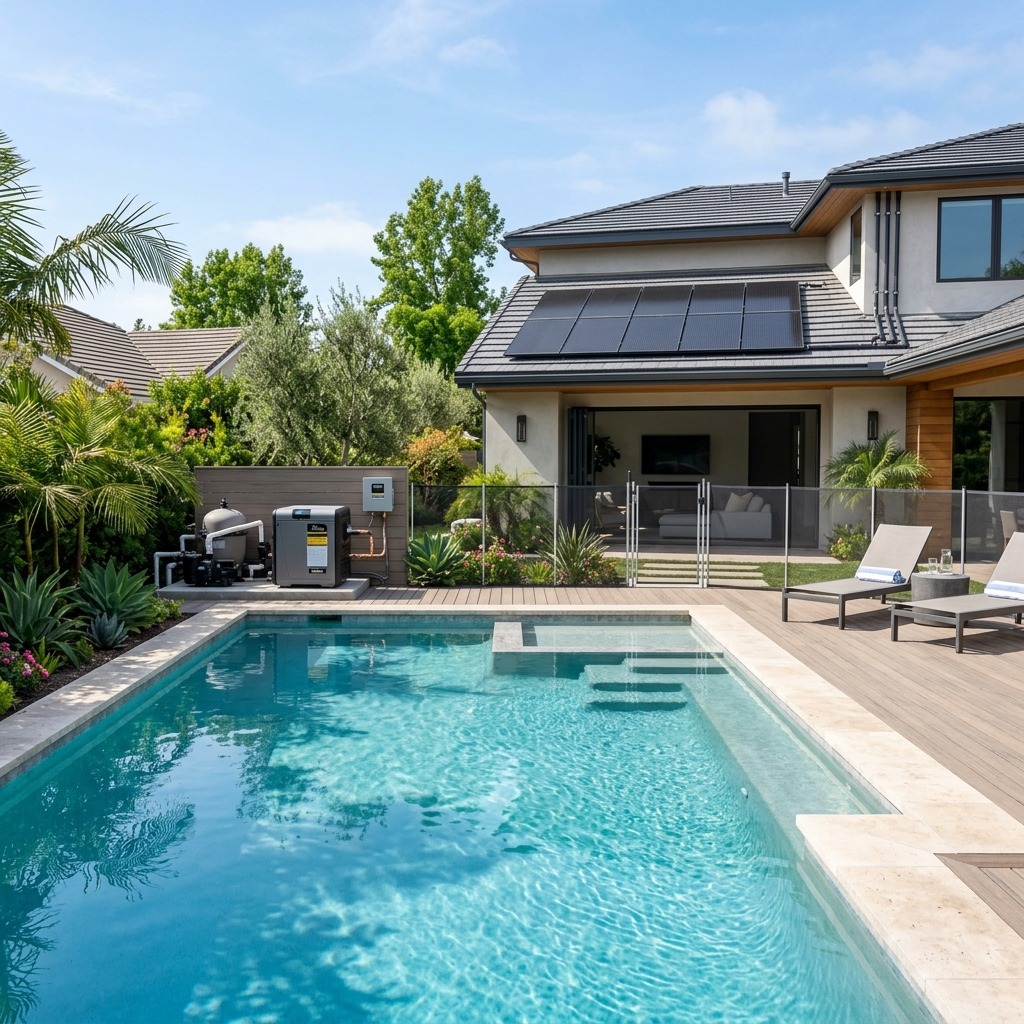
A solar pool heater uses the sun’s energy to warm your pool water. Unlike gas or electric heaters, solar systems have almost no operating cost after installation. They work by pumping pool water through a series of collector panels mounted on the roof or ground. The sun heats the water as it passes through, and the warm water returns to the pool.
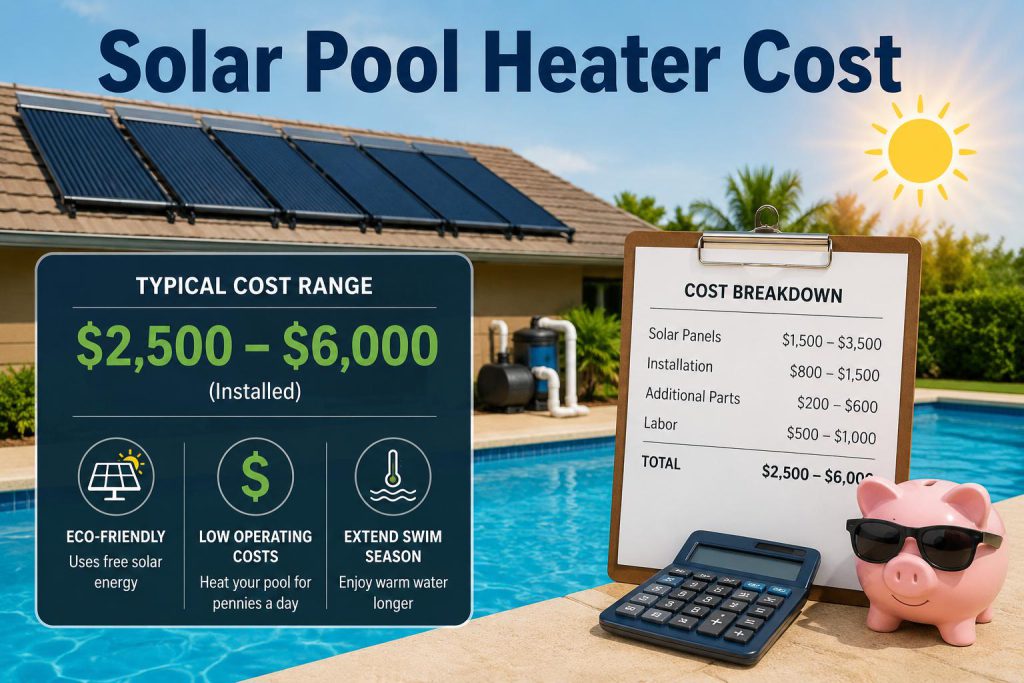
The cost to install a solar pool heater ranges from $2,500 to $6,500 for most homes, with an average of $4,500. High-end systems with premium glazed panels and complex roof configurations can reach $12,000. This guide breaks down every cost you need to know so you can budget accurately before calling a contractor.
What Is the Average Cost to Install a Solar Pool Heater?
The average cost to install a solar pool heater is $4,500, with most homeowners spending between $2,500 and $6,500 for a complete system.
The total price includes panels, mounting hardware, piping, valves, a flow controller, and professional installation labor. Small above-ground pools with simple plumbing run land at the low end, around $2,500 to $3,500. Large inground pools requiring many panels and extensive roof work reach the high end, from $5,500 to $6,500 or more.
Contractors use unglazed polypropylene solar collectors for most residential pool heating projects in warm US climates. These black polymer panels absorb heat efficiently without needing a glass cover, which keeps the cost lower than glazed alternatives. Before any panels are ordered, a technician measures the available sun energy at your roof’s location using a digital solar irradiance meter. This reading tells them exactly how many panels your system needs to heat your pool to a target temperature. All solar pool heating systems sold in the United States must meet SRCC OG-100 Section 3, which is the Solar Rating and Certification Corporation’s minimum performance standard for individual solar collectors. Only SRCC-certified panels qualify for federal and state energy tax credits.
How Much Do Solar Pool Heaters Cost by Collector Type?
Solar pool heater equipment costs depend almost entirely on the type of collector panels you choose. Unglazed panels cost $1,500 to $3,000, glazed panels cost $3,000 to $8,000, and evacuated tube systems cost $5,000 to $12,000 for the panels alone.
Here is a side-by-side breakdown:
| Collector Type | Panel Cost | Best For |
| Unglazed Polypropylene | $1,500 – $3,000 | Warm climates, seasonal use |
| Glazed Glass/Copper | $3,000 – $8,000 | Year-round use, cooler climates |
| Evacuated Tube | $5,000 – $12,000 | Cold climates, maximum efficiency |
Unglazed panels are the most common choice in states like Florida, Texas, Arizona, and California. They have no insulating cover, which means they lose some heat to the air in cold weather but work extremely well in warm climates. Glazed panels add a glass cover and copper tubing, which reduces heat loss and lets the system work in colder regions. Evacuated tube collectors are the most efficient option and can heat a pool even on cloudy winter days, but they cost the most to purchase and install.
Each collector type uses a different grade of piping on the supply and return connections. Glazed and evacuated tube systems require rigid black solar piping rated for high-temperature exposure, because the fluid inside these collectors can reach very high temperatures when the pump is off. Installers measure every pipe run with a telescopic measuring pole to calculate the exact footage of pipe needed before placing a material order. This prevents material waste and ensures accurate project pricing. All solar system piping connections must meet ASTM D2846, the standard specification for chlorinated polyvinyl chloride (CPVC) plastic hot and cold water distribution systems. This applies to any CPVC fittings used to connect solar panels to pool plumbing.
How Much Does Labor Cost to Install a Solar Pool Heater?
Labor costs to install a solar pool heater typically range from $500 to $1,500 for standard single-story rooftop installations. Complex jobs with steep roofs, tile surfaces, or multi-story homes can push labor to $2,000 to $4,000.
Most contractors charge between $50 and $150 per hour for solar pool heater installation. A straightforward system on a low-slope asphalt shingle roof takes one to two days to install, which puts most labor bills in the $800 to $1,500 range. Jobs that require removing and reinstalling roof tiles, running long plumbing lines, or working at elevation take longer and cost more.
When mounting panels on a sloped roof, installers use stainless steel roof mounting brackets secured directly into the roof framing. Each bracket is driven in with a depth-sensing cordless impact driver, which has a clutch that stops driving when the fastener reaches the correct torque. This prevents overdriving screws into the framing, which would weaken the connection over time. All rooftop work must comply with OSHA Standard 1926.501, which requires fall protection for any worker at 6 feet or more above a lower level. Contractors working on residential roofs must use personal fall arrest systems or guardrail systems to meet this requirement. Inspectors can issue stop-work orders for rooftop jobs where fall protection is missing.
What Are the Key Installation Cost Factors for Solar Pool Heaters?
The primary cost factors for a solar pool heater installation are pool size, pump capacity, roof accessibility, and local climate. Each one directly affects both material and labor pricing.
Pool Size: Most solar heating systems are sized to cover 50% to 100% of the pool’s surface area with collector panels. A 15×30-foot pool (450 square feet) needs between 225 and 450 square feet of collector area. More collector area means more panels, more piping, and more labor time.
Pump Capacity: Many existing pool pumps cannot push water up to a roof-mounted panel system. If your pump lacks the head pressure to lift water to the roof, you need to add a booster pump. A heavy-duty variable speed pump sized for solar panel flow typically costs $500 to $1,300 to purchase and install. Variable speed pumps are preferred because they can be programmed to run at lower speeds during peak solar hours, reducing electricity use while maintaining proper flow through the collectors. Installers verify that the pump produces the correct flow rate using a differential pressure manometer connected across the pump’s inlet and outlet ports. This reading confirms the pump can overcome the height difference and pipe friction to deliver proper flow. All swimming pool pump motors must meet NEC Section 680.21, which sets wiring, grounding, and disconnect requirements for pool-associated motors.
Roof Type: Asphalt shingles are the easiest and cheapest mounting surface. Tile roofs add $500 to $1,500 in extra labor to remove and replace tiles around the mounting hardware. Flat commercial-style roofs require different ballasted mounting systems.
Climate Zone: Homes in northern states may need more panels to achieve the same temperature gain as a home in the Sun Belt, which pushes material costs up.
How Much Do Solar Pool Heater Controls and Accessories Cost?
Solar pool controls and automated accessories cost between $300 and $1,500 depending on the level of system automation.
The most common add-on is a three-way automatic diverter valve, which shifts pool water flow between the panels and the bypass line depending on pool temperature. A basic manual diverter valve costs $150 to $250. An automatic diverter with a digital temperature controller costs $325 to $600 and lets the system run without manual intervention. High-end programmable controllers with smartphone connectivity cost $800 to $1,500.
The centerpiece of an automated system is the three-way motorized diverter valve, which receives a signal from the temperature controller and opens or closes to redirect water flow. Before installation, technicians calibrate the valve’s actuator using a digital process loop calibrator, which sends a 4-20mA signal to simulate real-world temperature readings and verify the valve opens and closes at the correct set points. Accurate calibration is necessary because an improperly set diverter valve can push cold roof water into a warm pool, which wastes the heat already stored in the water. All wiring from the controller to outdoor equipment must comply with NEC Section 680.22, which defines the minimum wire gauge, conduit type, and clearance distances for electrical equipment located within 20 feet of pool water. An improperly wired outdoor controller near a pool is a shock hazard and will not pass inspection.
Other common accessories include pool covers (which can cut heating loss by 50% to 70%), freeze protection kits for cooler climates ($200 to $500), and automatic pool cover rollers ($500 to $2,000).
How Do Roof Mount and Ground Mount Solar Systems Compare in Cost?
Ground mount solar pool heaters cost $1,000 to $3,000 more than roof-mounted systems of the same panel size due to additional framing, trenching, and concrete work.
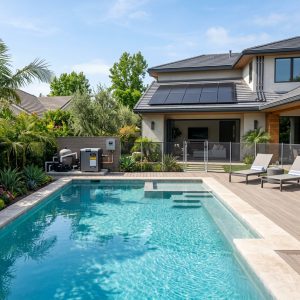
Roof mounting is the default option. Panels are secured to the existing roof structure, which eliminates the need for separate framing. The main roof costs are the brackets, penetration flashings, and extra labor for difficult roof types.
Ground mounting is chosen when a roof faces the wrong direction, is shaded by trees, or cannot support the panel load. Ground mount systems require a dedicated racking structure anchored into the ground with concrete footings. Installers use galvanized steel ground mount racking for these frames because it resists rust from lawn sprinkler overspray and outdoor exposure. Before drilling any anchor holes, the installer measures the exact tilt angle of the frame using a laser clinometer tool to confirm the panels face the correct azimuth and slope angle for your latitude. Incorrect tilt angle reduces system output by up to 20%, which lengthens the payback period. All ground-mounted solar structures must be engineered to survive wind and snow loads as specified in ASCE 7 Section 29, which covers wind pressure requirements for rooftop and ground-mounted photovoltaic and solar thermal panels. In many states, a stamped engineering drawing is required before the permit is issued for ground mount systems.
Ground mount systems also require trenching a pipe run from the pool equipment pad to the panel location, which adds $500 to $1,500 in extra excavation and pipe material costs.
What Are the Long-Term Cost Savings and Payback Periods of Solar Pool Heaters?
Solar pool heaters save between $500 and $1,000 per year in operating costs compared to gas or electric heaters, with a payback period of 2 to 7 years depending on your location and current energy costs.
The savings come from eliminating or dramatically reducing your fuel or electricity bill for pool heating. Gas pool heaters cost between $300 and $700 per month to run in cooler weather. Heat pump heaters cost $100 to $200 per month. A solar pool heater runs on water circulation electricity only, which costs less than $25 per month on average. Over a 10-year period, the total operating savings easily exceed the original installation cost.
The solar system must maintain safe operating pressure to deliver those savings reliably. Every solar pool heating system includes a spring-loaded vacuum relief valve installed at the highest point of the collector array. This valve opens automatically when the system drains back into the pool at night or during a freeze event, preventing a vacuum from forming that could collapse the collector tubes. Before startup, the contractor tests the system’s operating pressure using a digital vacuum gauge tester connected to the test port on the relief valve. This confirms the valve opens and closes at the correct pressure settings. All pool solar heating systems must comply with ISPSC Section 316.4, which covers the installation of pressure and vacuum relief devices on pool heating system collectors. Missing or improperly rated relief valves are a common cause of inspection failures on solar pool heating systems.
For homeowners in Florida, California, and Arizona, solar pool heaters typically pay back their cost in 2 to 4 years. In cooler northern states that use glazed or evacuated tube collectors, payback runs 5 to 7 years.
What Are the Pros and Cons of a Solar Pool Heater?
Solar pool heaters offer near-zero operating costs and a lifespan of 15 to 25 years, but they require a high upfront investment and depend entirely on available sunlight to produce heat.
Here is a direct comparison:
Pros of a Solar Pool Heater:
- Operating cost is less than $25 per month in electricity
- Lifespan of 15 to 25 years with proper maintenance
- Extends your swim season by 2 to 4 months in most US climates
- Qualifies for a 30% federal residential energy tax credit (IRS Form 5695 / Residential Clean Energy Credit)
- No fuel lines, gas connections, or combustion equipment to maintain
- Little maintenance compared to gas or heat pump systems
Cons of a Solar Pool Heater:
- Higher upfront cost of $2,500 to $6,500 compared to $1,500 to $4,500 for gas
- Requires adequate south-facing roof or ground space for panels
- Cannot heat the pool at night or during extended cloudy periods
- In cold climates, you may still need a backup gas or heat pump heater for shoulder seasons
- Freeze protection system is required in states with below-freezing temperatures
Before closing out a solar pool heater installation, contractors flush the entire system with clean water and check for air pockets in the collector lines. To winterize or blow out the lines in frost-prone states, they use a portable air compressor with a pressure regulator to push air through the collector tubing and expel all residual water. This prevents water from freezing inside the collectors during cold snaps, which can crack the tubing and destroy the panel. All solar collector drainage and blowout procedures must follow ISPSC Section 316.2, which covers the required design and access provisions for solar pool heating system draining. Systems that cannot drain completely are not code-compliant in states that enforce the International Swimming Pool and Spa Code.
Final Thoughts
A solar pool heater is one of the best long-term investments you can make for your pool. The upfront cost is real, but the operating savings are just as real. Most homeowners who install solar in warm climates pay off the system in 2 to 4 years and then swim for free for the next 15 to 20 years.
Installation costs run $2,500 to $6,500 for most homes. Glazed and evacuated tube systems for colder climates cost more upfront but deliver strong performance year-round. Always work with a licensed solar pool heating contractor who uses SRCC-certified panels, and get at least three local quotes before signing a contract.
Ask your contractor about the 30% federal Residential Clean Energy Credit on IRS Form 5695. A $4,500 solar pool heating system could return $1,350 in tax credits, which cuts your effective payback period by more than a year.
Solar heating systems have minimal operating costs and are highly eco-friendly, though they depend on daily sunlight levels. Homeowners looking to size their panel arrays can use our free solar pool heater cost calculator to project their installation budget.