The cost to install a new saltwater pool ranges from $12,000 to $100,000 depending on the pool type and size. Converting an existing pool to saltwater costs far less, typically between $600 and $3,500. This guide walks you through every cost involved so you can make a smart decision for your home and your budget.
What Is the Average Cost to Install a Saltwater Pool?
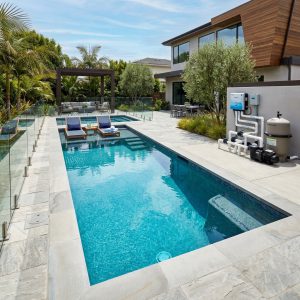
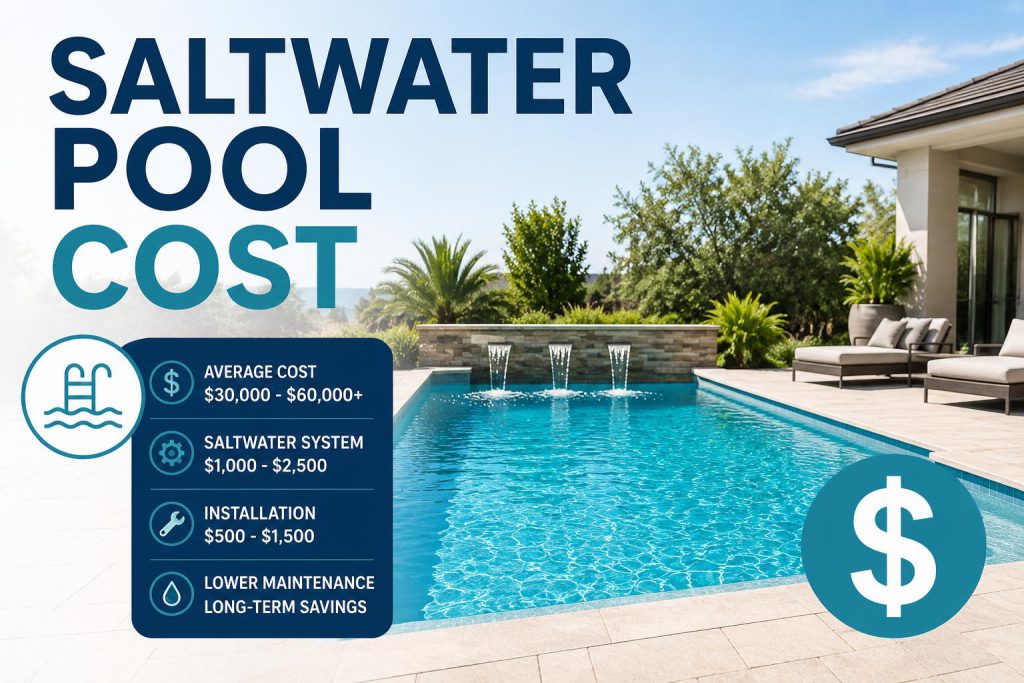
The average cost to install a new inground saltwater pool is around $25,000, with most homeowners spending between $12,000 and $38,500.
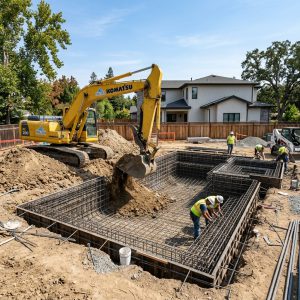
Above-ground saltwater pools are much more affordable. They typically cost between $3,000 and $8,000 installed. The wide price range exists because pool size, shell material, site conditions, and added features all push the total up or down. A basic rectangular fiberglass pool with standard equipment lands near the low end. A large custom concrete pool with water features and upgraded decking reaches the high end.
After the pool is filled, your contractor adds coarse pool salt to the water to bring the salt level to the correct concentration, usually between 2,700 and 3,400 parts per million (ppm). They verify this level with a digital salt refractometer, which reads the salinity of the water directly. Accurate salt levels are required under ISPSC Section 314, which governs pool water circulation and sanitation standards. Keeping the salt level in the correct range prevents corrosion and ensures the generator runs efficiently.
How Much Does It Cost to Convert an Existing Pool to Saltwater?
Converting an existing chlorine pool to a saltwater system costs between $600 and $3,500 for most homeowners.
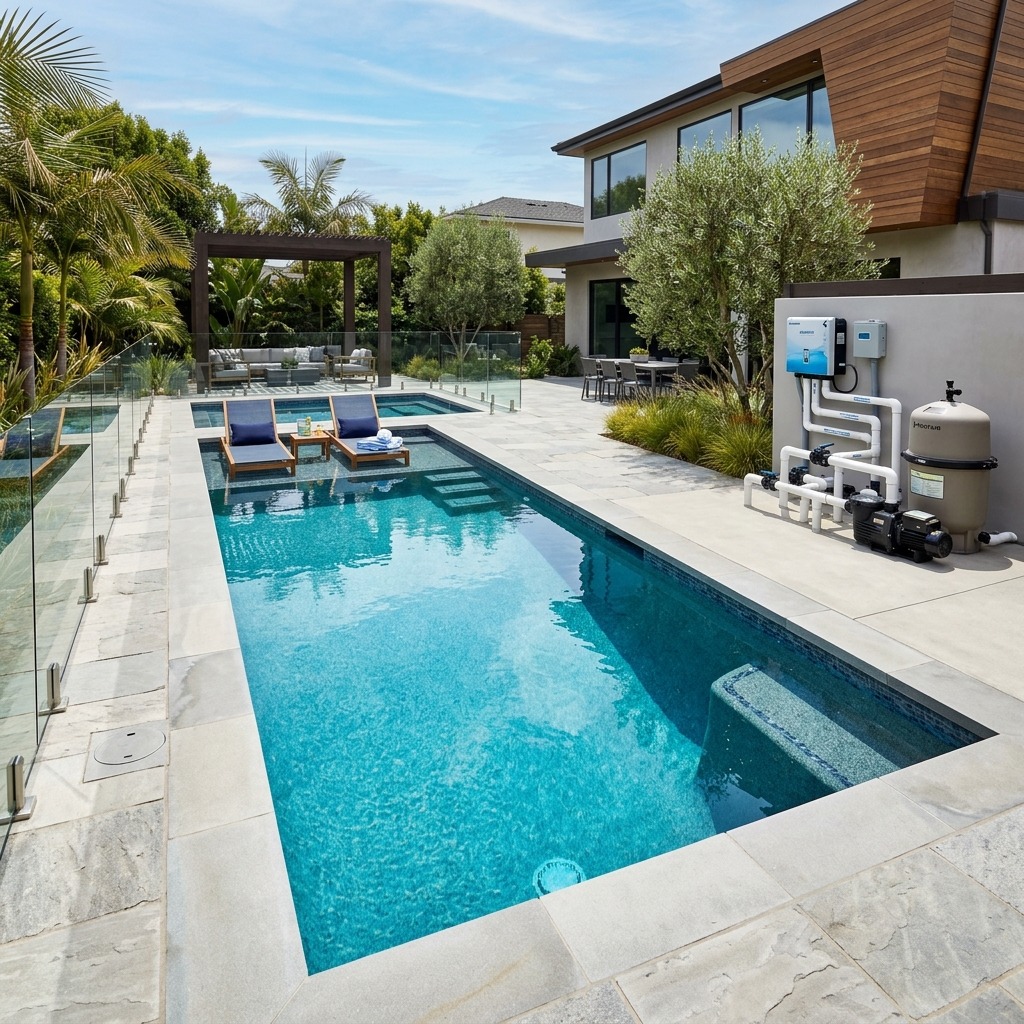
The biggest expense in a conversion is the salt chlorine generator unit. This device connects to your existing pool plumbing and does the work of turning salt into chlorine automatically. Most conversions also require updating some plumbing lines to handle the salt system’s output pressure. Contractors use Schedule 80 CPVC piping to replace sections of the return lines that connect to the new generator. CPVC handles higher heat and salt exposure better than standard PVC. A pneumatic PVC pipe cutter gives the crew a clean, square cut on each pipe section, which is needed for leak-proof connections. All piping materials must meet ASTM D1784, the standard specification for rigid PVC compounds used in pool plumbing systems.
Most conversions take one to two days to complete. Labor alone typically costs $300 to $500. The salt chlorine generator unit makes up the rest of the budget.
How Much Does a Salt Chlorine Generator System Cost?
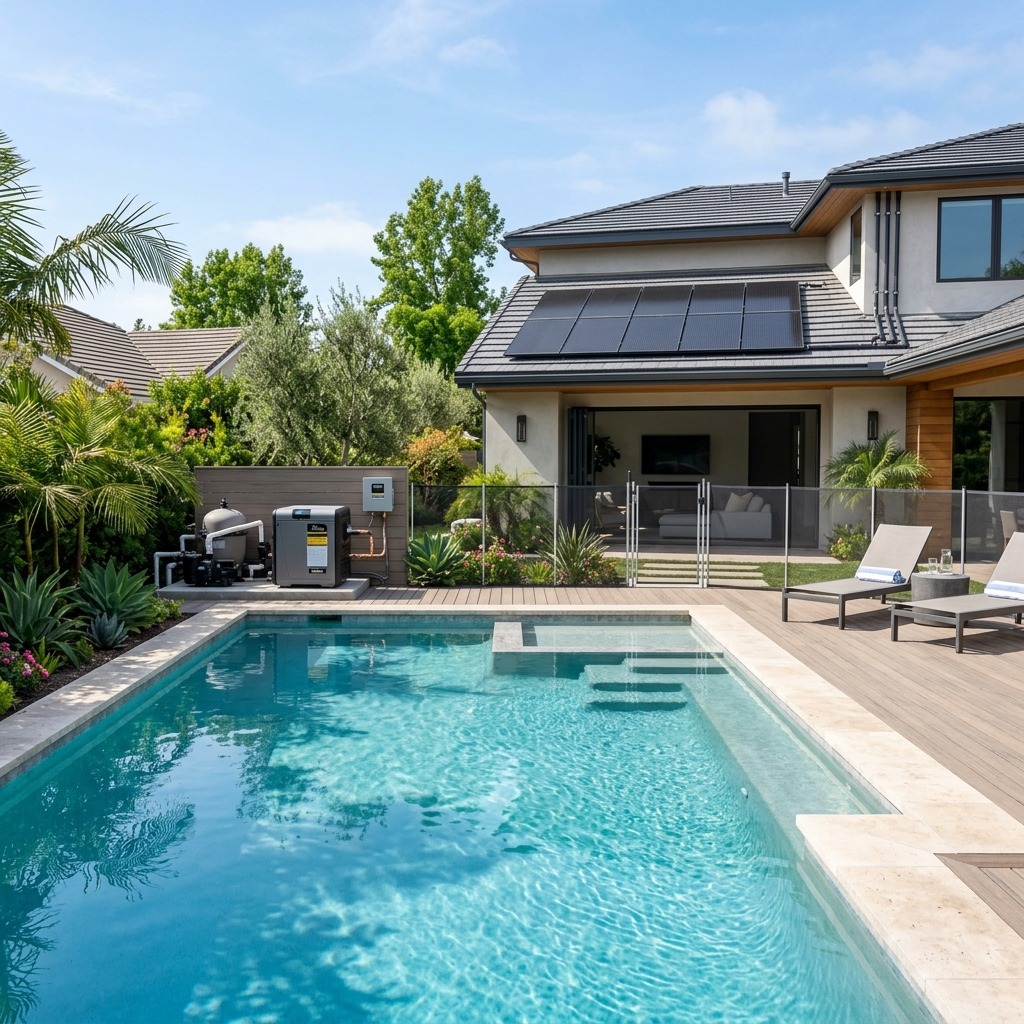
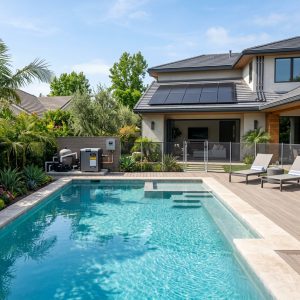
A salt chlorine generator system costs between $500 and $3,200 depending on the size of the pool and the brand.
Small above-ground pool systems start around $500 to $1,200. Larger inground pool systems range from $1,000 to $3,200. Premium models with digital displays, automatic self-cleaning cells, and flow sensors cost more but require less manual monitoring. The generator’s output rating, measured in pounds of chlorine produced per day, must match your pool’s volume.
Every salt chlorine generator must be electrically bonded to the pool shell and equipment. Electricians run solid copper bonding wire from the generator to the pool light fixture, ladder rails, pump motor, and filter housing. They use a digital clamp-on ground resistance tester to verify that the bonding circuit is complete and within safe resistance limits. This bonding is required under NEC Section 680.26, which mandates equipotential bonding for all pool equipment and metallic components. Skipping or improperly completing the bonding work is a serious safety hazard and will fail inspection.
How Do Saltwater Pool Installation Costs Differ by Shell Material?
The shell material you choose is the biggest factor in your total installation cost. Fiberglass, concrete, and vinyl all come in at very different price points.
| Shell Type | Saltwater Pool Cost Range |
| Above-Ground | $3,000 – $8,000 |
| Vinyl Liner (Inground) | $12,000 – $35,000 |
| Fiberglass (Inground) | $20,000 – $60,000 |
| Concrete / Gunite (Inground) | $35,000 – $100,000 |
Fiberglass shells are the most popular choice for saltwater pools because the gelcoat surface does not absorb minerals or react with salt. Concrete pools are more customizable but require more frequent interior resurfacing when exposed to salt water. Vinyl liner pools are the most affordable inground option, but liners can degrade faster in high-salinity environments if not properly maintained.
Each pool type requires a dedicated low-voltage power connection to run the generator’s control board. An electrician runs a low-voltage power cord from the subpanel to the generator’s outdoor junction box. They use a low-voltage wire stripping tool to prepare clean terminations at each connection point. All outdoor equipment must be positioned and wired in compliance with NEC Section 680.22, which defines safe distances and enclosure types for electrical equipment near pool water.
What Are the Ongoing Maintenance and Chemical Costs of a Saltwater Pool?
Saltwater pools cost about $300 to $800 per year in ongoing maintenance, compared to $500 to $1,200 per year for a traditional chlorine pool.
Salt is the primary input for a saltwater system. Most pools need about 40 to 80 pounds of salt added per year to replace what is lost through backwashing, splashing, and rainfall dilution. Salt costs about $10 to $100 per year depending on pool size and local prices. You still need to add a few other chemicals periodically, including pH adjusters, alkalinity buffers, and stabilizers. These additional chemicals cost another $100 to $250 per year.
One chemical that every saltwater pool needs is cyanuric acid stabilizer. This compound protects the chlorine that the generator produces from being broken down by UV sunlight. Without it, the sun can destroy up to 90% of the chlorine in just a few hours. Contractors measure the pool’s salt conductivity using a handheld digital conductivity meter, which checks the water’s ability to carry electrical charge. This reading is used to calculate accurate salt and stabilizer dosing. All pool chemicals must be labeled, stored, and handled in compliance with EPA Federal Insecticide, Fungicide, and Rodenticide Act (FIFRA) chemical safety standards. This applies to both commercial contractors and homeowners handling pool chemicals.
How Much Does It Cost to Replace a Saltwater Chlorine Generator Cell?
Replacing the salt cell in a saltwater generator costs between $200 and $700 depending on the model and pool size.
The salt cell is the working part of the generator. It contains titanium plates that are coated with a special compound. When salty water flows over these plates and electricity passes through them, chlorine is produced. Over time, the coating wears down and the cell stops working efficiently. Most cells last between 3 and 7 years before they need replacement. This is the single largest long-term maintenance cost for saltwater pool owners.
Your pool filter also needs attention on a regular schedule. Many saltwater pool owners use diatomaceous earth filter powder (DE) in their filters. DE filters need to be backwashed every 4 to 6 weeks and the DE powder replaced once per season. Your contractor checks the filter pressure with a dial-indicator pressure gauge mounted on the filter housing. A pressure reading 8 to 10 psi above the normal baseline means the filter is clogged and needs backwashing. All filter equipment must meet NSF/ANSI Standard 50, which covers pool circulation system components for safety and performance. Filters that do not carry NSF/ANSI 50 certification should not be installed on residential pools.
What Is the Upfront Price Difference Between Saltwater and Chlorine Pools?
A saltwater pool costs about $1,000 to $2,500 more upfront than a comparable traditional chlorine pool.
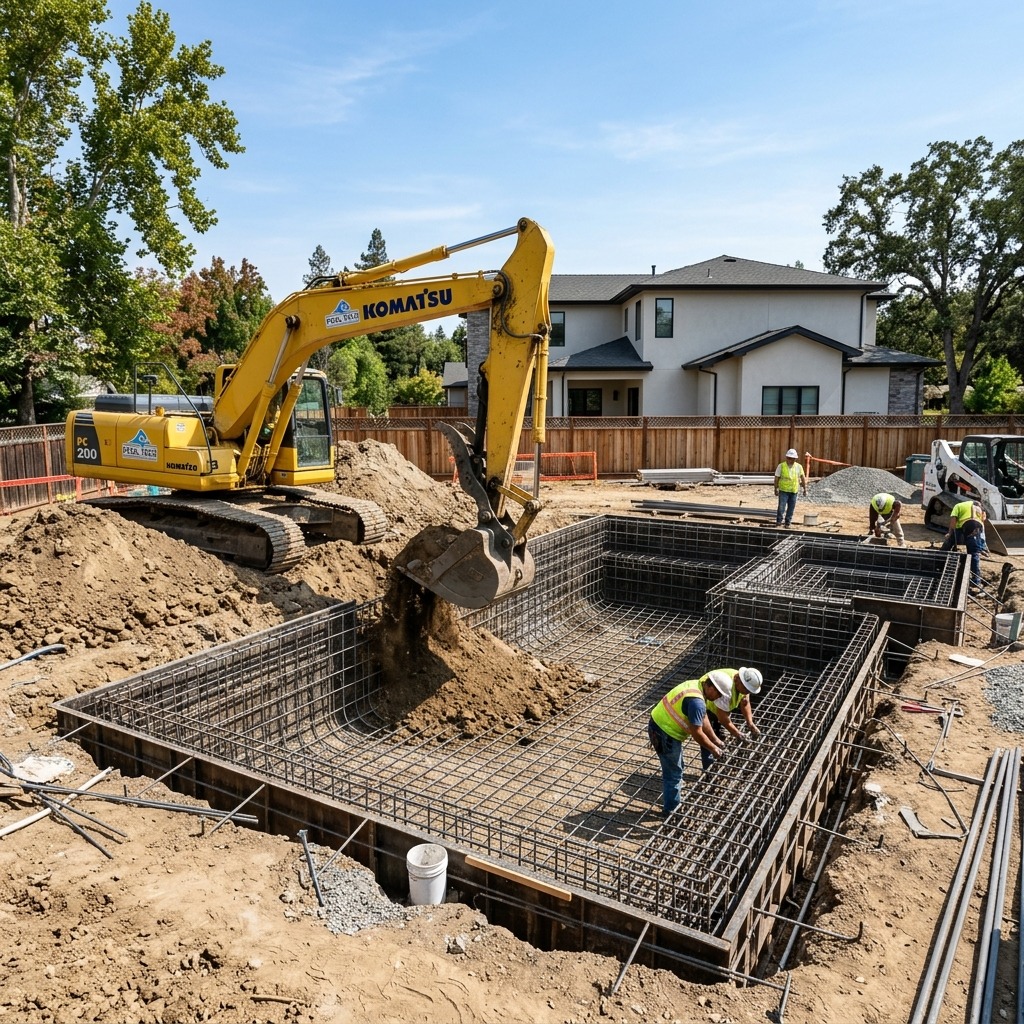
The extra cost comes entirely from the salt chlorine generator and its installation. The pool shell, excavation, plumbing, and decking cost the same whether you choose saltwater or chlorine. A traditional chlorine inground pool can run from $10,000 to $35,000. Add the saltwater system and installation, and the same pool costs $11,000 to $38,500 on average.
During pool construction, the electrical contractor buries the conduit runs that feed power to the generator, pump, and lights. They route shielded electrical conduit underground from the main subpanel to the equipment pad. Before digging, the crew scans the yard with an underground cable locator tool to find existing buried utilities and mark them safely. All underground conduit burial must meet NEC Section 300.5, which specifies minimum burial depths for conduit by type and location. Standard nonmetallic conduit in residential yards must be buried at least 18 inches deep. Hitting a live utility line during pool construction is a serious and expensive hazard that proper scanning prevents.
Over time, saltwater pools typically break even with chlorine pools in total cost of ownership after 5 to 7 years of use, because the ongoing chemical savings offset the higher startup cost.
What Are the Pros and Cons of a Saltwater Pool?
Saltwater pools offer gentler water and lower annual chemical costs, but they come with higher upfront equipment costs and the need for occasional metal surface protection.
Here is a straightforward comparison:
Pros of a Saltwater Pool:
- Water feels softer and causes less irritation to eyes and skin
- Lower annual chemical costs (save $200 to $400 per year vs. chlorine)
- The generator makes chlorine automatically, reducing manual maintenance
- No need to handle or store large amounts of chlorine tablets or liquid
- Consistent chlorine production keeps the water more stable
Cons of a Saltwater Pool:
- Higher upfront cost by $1,000 to $2,500 compared to a chlorine system
- Salt can be corrosive to metal fixtures, railings, lights, and stone coping over time
- The generator cell needs replacement every 3 to 7 years at $200 to $700
- Certain pool finishes, like some colored plasters, can fade faster in salty water
One common concern with saltwater pools is calcium hardness. Salt water that is not properly balanced can cause calcium to build up on pool surfaces or make the water corrosive to metal parts. Contractors add anhydrous calcium chloride flakes to raise calcium hardness when levels drop too low. A digital water hardness titrator is used to measure exact calcium hardness levels in milligrams per liter, which gives a more precise reading than basic test strips. Water hardness must be maintained between 200 and 400 ppm as required under ISPSC Section 312, which sets minimum water quality standards for residential pools. Proper calcium hardness protects the pool shell, equipment, and salt cell from corrosive water damage.
Final Thoughts
A saltwater pool is a smart investment for most homeowners who swim regularly. The water is more comfortable, the day-to-day chemical work is lighter, and the long-term savings are real. Most homeowners pay back the extra upfront cost within 5 to 7 years through lower chemical bills.
New inground saltwater pools cost $12,000 to $100,000. Converting an existing pool to saltwater costs $600 to $3,500. If you already own a pool and want softer, cleaner water, a saltwater conversion is one of the best upgrades you can make.
Converting to a saltwater system reduces chlorine lock issues and is gentler on eyes and skin, though it requires a higher upfront equipment purchase. Estimate your conversion and maintenance costs using our salt water pool cost estimator.