Above ground pools are no longer the budget afterthought they used to be. According to 2026 industry data from the Pool & Hot Tub Alliance (PHTA), above ground pool sales have grown more than 38% over the last four years, making them the fastest-growing segment of the entire residential pool market. Homeowners are waking up to a simple truth: you can have a clean, functional, family-ready swimming pool in your backyard for a fraction of what an inground installation costs — and you can often set it up in a single weekend.
But “above ground pool” is an umbrella term that covers everything from a $250 inflatable ring-top pool from a big-box store to a $15,000 resin-and-composite hybrid system that looks almost indistinguishable from a semi-inground build. The gap between those two extremes is enormous, and most homeowners land somewhere in the middle without quite understanding what they’re paying for or why.
That’s exactly what this above ground pool cost estimator guide is designed to fix. You’ll get real 2026 pricing for every major pool type — steel frame, resin frame, semi-permanent hybrids, and inflatables — along with a complete installation cost breakdown, DIY versus professional labor comparisons, long-term maintenance projections, and answers to the questions homeowners ask most. By the end, you’ll know exactly what an above ground pool will cost you, this year, at your property.
Key Takeaways
– Above ground pool kits range from $200 to $15,000, depending on material, shape, and size — installed costs run $1,500 to $20,000+ when you add site prep, decking, and fencing.
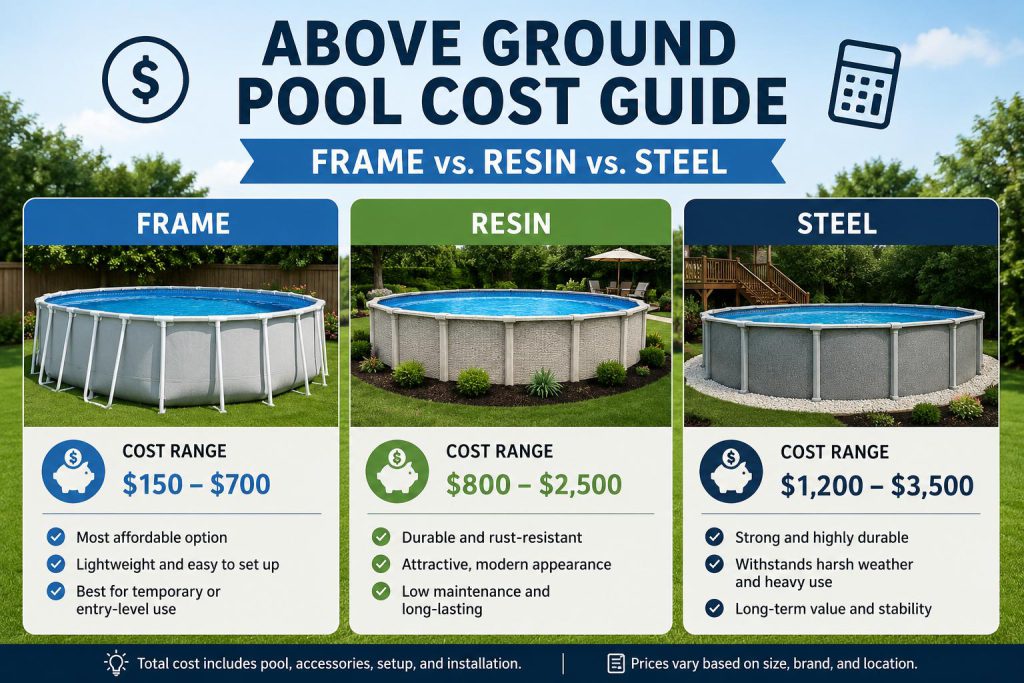
– Steel frame pools are the most affordable durable option ($1,500–$5,000 installed) but are more prone to rust in humid or coastal climates.
– Resin frame pools cost 30–60% more than equivalent steel models but offer significantly better corrosion resistance and a longer lifespan of 15–25 years.
– Site leveling is the most underestimated cost in above ground pool installation — a sloped or rocky yard can add $500–$3,000 to your budget before the pool kit is even opened.
– Annual maintenance for an above ground pool runs $800–$1,800 per year, including chemicals, electricity, and routine part replacements.
– Liner replacement — typically needed every 7–12 years — costs $400–$1,500 including labor, and is often the largest recurring cost of ownership.
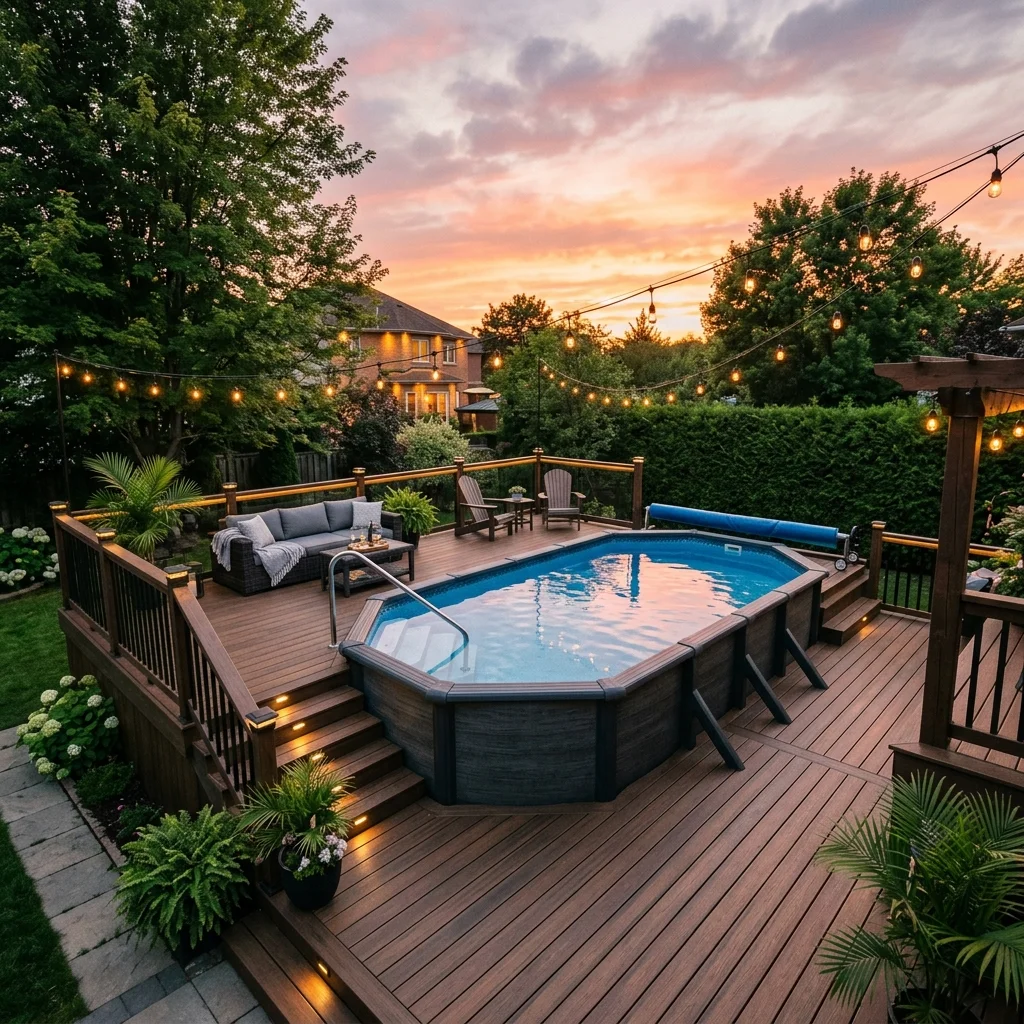
Above Ground Pool Types — Which Category Are You Buying?
Before you can use any above ground pool cost estimator accurately, you need to pin down exactly which product category you’re considering. These four types behave very differently in terms of durability, installation complexity, and total cost of ownership.
Inflatable / Soft-Sided Pools ($200–$1,000) — Not Recommended for Permanent Use
Soft-sided inflatable pools — including the immensely popular Intex and Bestway ring-top models — occupy the entry-level of the market. Prices range from about $200 for a basic 10-foot round model to around $1,000 for larger 16×48-inch oval configurations. These pools use an inflatable ring at the top or a metal frame of very thin steel tubes to hold up the walls, which are made from laminated PVC rather than a rigid liner.
The appeal is obvious: low cost, no tools, no permits in most jurisdictions, and setup in two to four hours. For families testing the concept of pool ownership or households with young children who need a seasonal option, they serve a purpose. However, national consumer data from 2025–2026 consistently shows an average lifespan of just two to four seasons before punctures, connector failures, or UV-degraded walls force replacement.
When you factor in the cost of replacing a soft-sided pool every three years against the cost of a quality steel or resin frame pool that lasts 10–20 years, the math rarely favors inflatables for anyone planning to keep a pool for more than one or two summers. This guide focuses primarily on the durable above ground pool categories — steel frame, resin frame, and semi-permanent hybrids — but inflatable pricing is included in comparison tables for reference.
Steel Frame Above Ground Pools ($1,500–$5,000)
Steel-framed above ground pools represent the sweet spot for budget-conscious buyers who want a pool that can last a decade or more. The structure consists of galvanized or coated steel upright posts and top rails connected in a rigid frame that supports a heavy-duty vinyl liner. Pool kits — which typically include the frame, liner, and a basic pump/filter system — run $800 to $2,500 depending on size, with installed costs (including site prep and basic accessories) landing in the $1,500 to $5,000 range.
Popular brands include Intex Ultra XTR, Summer Waves Elite, and Wilbar’s Steel-Series products, which are sold through mass retailers and specialty pool dealers alike. Round steel frame pools in the 18-foot to 24-foot diameter range — the most common purchase — cost $1,200 to $2,000 for the kit alone. Oval models, which require more structural bracing, carry a 15–25% price premium at comparable sizing.
The primary limitation of steel frames is their vulnerability to corrosion. Even galvanized steel is susceptible to rust at connection points, particularly in coastal climates with salt air, regions with highly chlorinated or hard water, or yards with frequent moisture accumulation. Expect repainting or protective coating maintenance every three to five years if you want to extend the pool’s life toward the upper end of its range.
Resin Frame Above Ground Pools ($2,500–$8,000)
Resin frame pools use polymer (plastic composite) components for all exposed structural elements — uprights, top rails, and coping — while often retaining steel panels beneath the liner where the structural load is greatest. The result is a frame that is completely rust-proof on every part you can see and touch, requires almost no maintenance to the structure itself, and generally presents a more attractive finished aesthetic.
Kit prices for quality resin models range from approximately $1,500 to $5,000 depending on size and brand, with installed costs running $2,500 to $8,000 when you add site preparation, installation labor, and upgrades. Leading brands in this segment include Doughboy, Radiant, and Cornelius/Wilbar’s resin lines, all of which carry industry-leading warranties of 15 to 25 years on the structure.
The 30–60% cost premium over equivalent steel models is real but defensible when you spread it over a 20-year horizon. If a steel frame pool requires liner replacement every 8 years and a structural overhaul or full replacement after 10–12 years in a humid climate, while a resin pool holds up for 20–25 years with only liner replacements, the per-year cost of ownership often favors resin despite the higher upfront price.
Semi-Permanent & Hybrid Above Ground Pools ($5,000–$15,000)
At the top of the above ground pool market sit semi-permanent and hybrid systems — products like the Radiant Above Ground pool, the AquaGram, or Sharkline’s Essence series. These pools use full resin or composite panels for both the frame and walls, can be partially sunk into the ground for a more inground appearance, and often support deck integration that makes them visually competitive with true inground pools at a fraction of the cost.
Installed costs for this category range from $5,000 on the low end to $15,000 or more when you include professional installation, upgraded pump/filter/heating systems, and entry-level decking. These systems are also the primary candidates for saltwater conversion and are frequently built with deeper walls — 54 inches to 60 inches — compared to the standard 48-inch walls of most steel frame pools.
If you’re weighing whether a semi-permanent above ground pool makes sense versus a true inground installation, the semi-inground pool cost guide explores that comparison in detail, including soil requirements, permit differences, and the resale value implications of each choice.
Full Cost Breakdown Including Installation
The sticker price on an above ground pool kit is only the starting point. Once you add everything a pool actually needs to be usable and safe, the total installed cost can easily be two to three times the kit price alone. The table below captures the full range for a typical 18–24 foot round pool installation in 2026.
| Item | Low | High | Notes |
| Pool Kit (frame + liner + basic pump) | $800 | $5,000 | Varies by type/size |
| Site Leveling & Ground Prep | $500 | $3,000 | Rocky/sloped yards cost most |
| Professional Installation Labor | $300 | $2,500 | DIY eliminates this |
| Upgraded Pump & Filter System | $200 | $1,200 | Basic kits include entry-level units |
| Electrical Connection (GFCI) | $200 | $800 | Required by code in most states |
| Deck Addition | $2,000 | $10,000 | Optional but highly recommended |
| Fencing / Safety Barrier | $500 | $3,000 | Required in many jurisdictions |
| Landscaping / Sod Restoration | $200 | $1,500 | Varies by disruption level |
| Chemicals & First-Season Startup | $150 | $400 | Shock, alkalinity, stabilizer |
| Total Installed (No Deck) | $2,350 | $12,400 | Median ~$5,500 |
| Total Installed (With Deck) | $4,350 | $22,400 | Median ~$9,500 |
Pool Kit Cost by Brand & Material
Buying the right kit involves balancing upfront cost against long-term value. According to 2026 pricing from major pool retailers and wholesale distributors, here’s what you can expect to pay for popular above ground pool kits across the major size categories:
- 18-ft Round, Steel Frame: $800–$1,400 (e.g., Intex Ultra XTR 18×52, Summer Waves Elite)
- 24-ft Round, Steel Frame: $1,200–$2,000 (e.g., Wilbar Impresser, Sharkline)
- 18-ft Round, Resin Frame: $1,500–$2,500 (e.g., Doughboy D-Series, Cornelius Resin)
- 24-ft Round, Resin Frame: $2,200–$4,000 (e.g., Radiant Above Ground Round, Doughboy Premier)
- 12×24 Oval, Steel Frame: $1,800–$2,800
- 15×30 Oval, Resin Frame: $3,500–$5,500
- Semi-Permanent Hybrid, 15×30: $5,000–$9,000 (kit only)
These prices generally include the frame, liner, and a basic 1,000–1,500 GPH filter pump. Saltwater-compatible systems and pools with thicker 60-inch walls typically add 15–25% to these kit prices.
Site Leveling & Ground Preparation ($500–$3,000)
This is the cost category that surprises homeowners the most. Every above ground pool manufacturer requires the installation site to be level within one to two inches across the entire footprint — and in practice, most yards need some degree of grading, compaction, or base material before a pool can safely be installed.
A flat, grass-covered yard in good condition might only need $200–$500 worth of hand-grading and a sand base. A sloped yard — even one that looks relatively flat to the eye — can require several inches of fill dirt or excavation on the high side, which involves equipment rental or contractor fees. Rocky ground requires more extensive work still. Budget $500–$1,500 for average yards and $1,500–$3,000 for challenging terrain. Skipping this step is the single most common reason above ground pools fail prematurely — an unlevel pool puts uneven stress on the liner and frame, leading to structural failure and accelerated wear.
Liner & Pump/Filter Kit
Most pool kits include a basic liner and entry-level pump, but many buyers choose to upgrade both at purchase. Liner thickness is measured in mil (thousandths of an inch), with 20–25 mil being standard in kit pools and 28–30 mil being the premium option. Upgrading from a standard to a 28-mil overlap or beaded liner at purchase adds $100–$400 to kit cost and meaningfully extends the liner’s service life.
Pump and filter upgrades matter more than most buyers realize. The bundled pumps in entry-level kits are typically sized for bare minimum circulation, which means longer run times, higher electricity costs, and faster chemical consumption. Upgrading to a 1.5 HP variable-speed pump adds $300–$700 to upfront cost but can reduce operating costs by 30–50% annually — a strong investment over a 10-year horizon.
Deck Addition ($2,000–$10,000)
A pool without a deck is functional but not particularly enjoyable or safe. Entry points that require climbing a ladder on the outside and descending a separate inside ladder create accessibility problems and represent a safety concern, particularly for children. A deck transforms the experience entirely.
Pressure-treated wood decks — the most affordable option — run $2,000–$4,500 for a simple wraparound design on an 18-foot round pool. Composite decking (Trex, TimberTech) adds $1,500–$3,000 over equivalent wood designs but eliminates the staining, sealing, and splintering issues that come with wood. Fully custom pool decks with multiple levels, built-in seating, and pergola structures can reach $8,000–$10,000 for elaborate designs. For a thorough look at what decking options really cost across material types, the pool decking and heating costs guide breaks down every major surface material with regional pricing data.
Fencing & Safety Requirements
In most U.S. states, a permanent above ground pool — generally defined as one with a water depth of 18 inches or more — requires a perimeter safety barrier. Requirements vary by state and municipality, but the general standard calls for a fence at least 48 inches high with a self-closing, self-latching gate and no climbable footholds on the exterior. Some jurisdictions accept the pool wall itself as one side of the barrier when it’s 48 inches or taller; others require a separate fence surrounding the entire pool regardless of wall height.
Fencing costs for a typical above ground pool installation run $500–$1,500 for a basic aluminum or wood fence around an 18–24 foot round pool, rising to $2,000–$3,000 for larger oval pools or properties requiring complete enclosures. Check your local code and HOA requirements before purchasing — some neighborhoods restrict above ground pools entirely, and others impose specific aesthetic standards on fencing materials and colors.
What Factors Drive Above Ground Pool Costs Up?
Once you understand the baseline cost of a pool kit and its installation, you need to account for the variables that push your specific project above or below that baseline. Three factors matter more than almost anything else.
Round vs. Oval vs. Rectangle — Shape Premium
Round above ground pools are structurally self-supporting — the circular shape distributes hydrostatic pressure evenly around the entire perimeter, which means simpler frames, fewer materials, and lower prices. An 18-foot round pool kit typically costs 20–35% less than a comparably sized oval, and 30–50% less than a rectangular model of equivalent capacity.
Oval pools require stabilizer bars (buttresses) extending out from the long sides of the pool to counter the outward pressure that a circular pool handles passively. These buttresses require additional clear space around the pool and add $300–$800 to kit costs at comparable sizes. Rectangular above ground pools — increasingly popular for lap swimming and exercise — require the most robust framing of all three shapes, pushing kit prices to the top of the range.
National averages from 2026 pool contractor surveys show that homeowners choosing oval or rectangular above ground pools pay a 25–45% premium over round models — factor this into your planning if shape matters for your use case.
Depth Options & Saltwater Conversions
Standard above ground pools come with 48-inch (4 foot) walls, which delivers actual swimming depth of roughly 36–40 inches once you account for the sand base and normal operating water level. This is functional but limiting for adults, lap swimmers, or anyone planning to dive from a seated position.
Pools with 52-inch or 54-inch walls — now common in mid-range and premium models — add meaningful depth and cost 10–20% more than equivalent 48-inch models. True 60-inch (5 foot) wall pools, typically found in semi-permanent hybrid systems, deliver real adult swimming depth and carry an additional 15–25% premium.
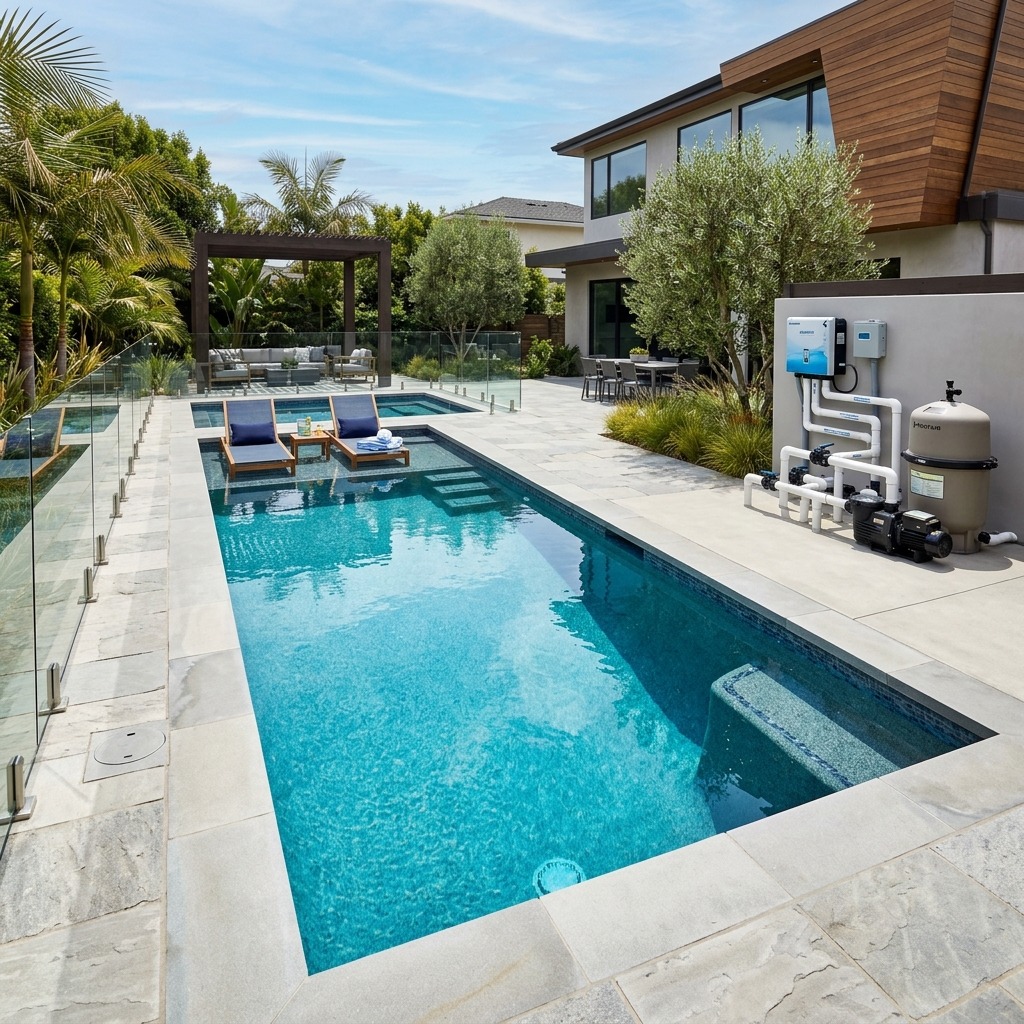
Saltwater systems for above ground pools have become dramatically more affordable. A saltwater chlorine generator (SWCG) compatible with an above ground pool runs $300–$800 installed, compared to $1,500–$3,500 for inground systems. The lower chemical costs — roughly 50–70% less in annual chlorine spending — make the upgrade pay for itself in three to five seasons for typical families. Not all pool liners and frame components are saltwater-compatible, however; verify compatibility before converting, and note that resin frame pools are generally better suited to saltwater than steel frame models.
Heating an Above Ground Pool
An unheated above ground pool in most U.S. climates delivers a usable season of four to six months. Adding heat can extend that to seven to nine months — or even year-round in mild climates — and dramatically improves enjoyment in spring and fall when ambient temperatures are still cool.
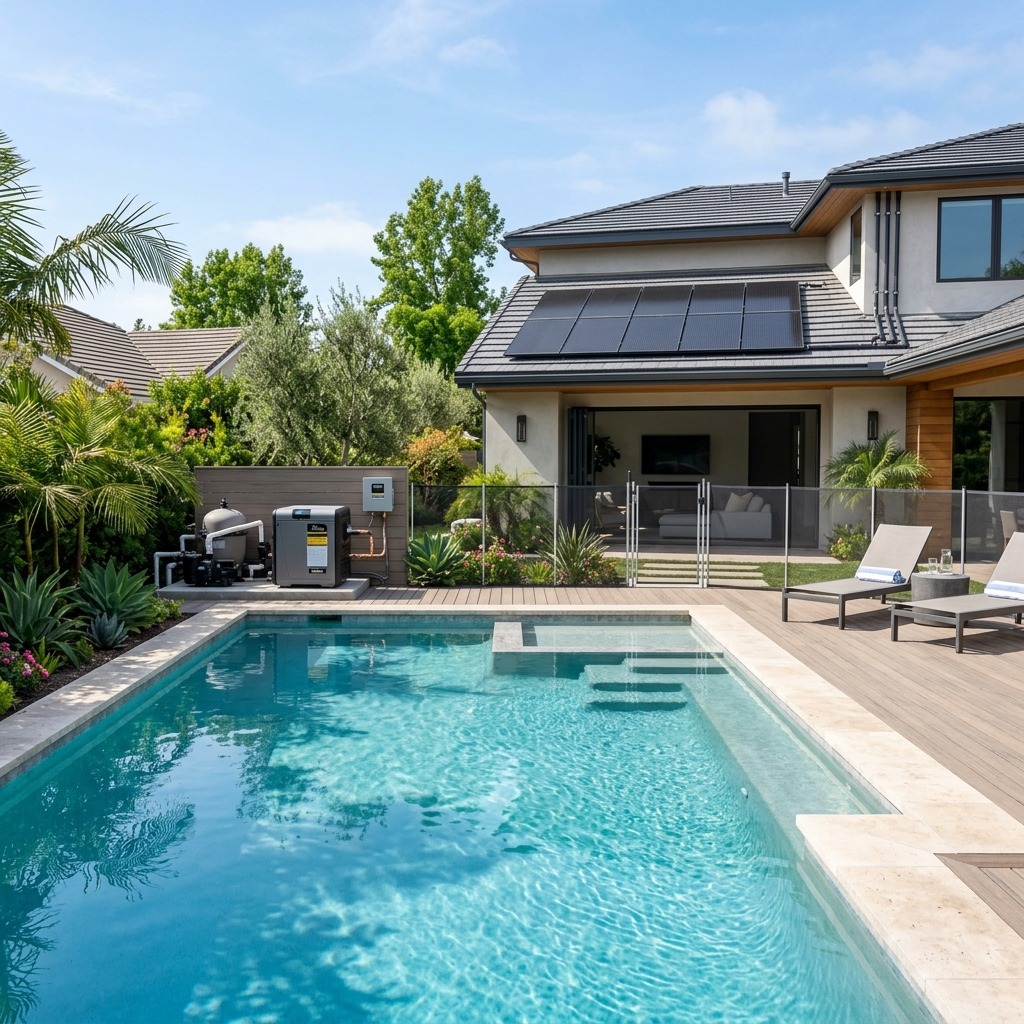
Heating options for above ground pools include solar covers ($50–$250, the most cost-effective first step), solar panel systems ($500–$3,000), electric resistance heaters ($500–$1,200), and heat pumps ($800–$2,500 installed). Gas heaters are rarely used for above ground pools due to the cost of gas line extension relative to the pool’s overall value. Solar covers alone can raise water temperature by 10–15 degrees Fahrenheit on sunny days. A dedicated heat pump — the most energy-efficient active heating option — extends the season most effectively and typically pays for itself over three to five years compared to electric resistance heaters. The pool decking and heating costs guide includes a full side-by-side comparison of heating methods for both above ground and inground pools.
Installation — DIY vs. Professional
The ability to self-install is one of the most compelling financial arguments for an above ground pool. Most round steel frame pools can be assembled by two adults with basic tools in a single day, eliminating $300–$2,500 in installation labor. But “can be done DIY” does not mean “should always be done DIY,” and understanding the distinction can save you a botched installation.
What DIY Installation Really Takes
A successful DIY above ground pool installation requires:
- Level ground: The site must be within 1–2 inches of level across the entire footprint. Renting a plate compactor and transit level costs $80–$150/day and is worth every dollar. Eyeballing it is not sufficient.
- Two or more people: Pool wall panels are unwieldy and impossible to position alone. Plan for at least two adults and ideally three for oval models.
- A full day: Manufacturer instructions typically estimate 4–8 hours for an 18-foot round pool. Double that estimate for first-time installers with an oval or rectangular model.
- Correct sand base depth: A 2-inch compacted sand base is standard for most above ground pools. Using too little or the wrong type of sand — never play sand, which compacts unevenly — leads to liner damage over time.
- GFCI electrical: All pool pumps must be connected to a dedicated GFCI-protected circuit. If you’re not comfortable with basic electrical work, hire a licensed electrician for this step — it’s a code requirement and a safety non-negotiable.
Manufacturers including Intex, Doughboy, and Radiant provide detailed installation videos and manuals. For straightforward round pool installations on reasonably flat ground, DIY is very achievable for a mechanically inclined homeowner.
When to Hire a Professional
Professional installation makes sense when any of the following conditions apply: your yard has significant slope requiring grading equipment; you’re installing a large oval or rectangular model; you’re adding a deck simultaneously; your pool is a semi-permanent hybrid with more complex assembly; or your municipality requires licensed contractor sign-off for the permit.
Professional pool installation for above ground pools typically runs $300–$800 for a round model and $800–$2,500 for a large oval or rectangular pool with full site preparation included. Some above ground pool dealers include installation in a bundled package price — ask explicitly whether installation is included and exactly what’s covered before signing.
Permit Requirements for Above Ground Pools
Permit requirements for above ground pools vary widely by jurisdiction. Many municipalities exempt temporary or portable pools below a certain size (commonly 5,000 gallons or less) from permit requirements entirely. For larger, semi-permanent installations with decks attached to the home’s structure, permits for the deck, electrical work, and sometimes the pool itself may all be required.
A typical pool permit costs $50–$300 and requires a site plan showing the pool’s location, distances from property lines and the home’s foundation, and the proposed fence configuration. Some areas also require a post-installation inspection before the pool can be filled. Research your specific municipality’s requirements before beginning work — unpermitted pool structures can create significant problems at resale.
Above Ground Pool Lifespan & Long-Term Costs
Buying the pool is only the beginning. The true cost of an above ground pool unfolds over years of ownership, and understanding the long-term cost picture is essential for budgeting accurately.
Liner Replacement Timeline
The vinyl liner is the most maintenance-intensive component of an above ground pool. Liners are vulnerable to UV degradation, chemical imbalance damage, physical punctures, and stress from ground movement. Under normal operating conditions with proper water chemistry maintenance:
- Standard 20-mil liner: 5–8 years before replacement is typically needed
- Premium 28-mil liner: 8–12 years with proper care
- Overlap vs. beaded liners: Beaded liners are easier to replace but cost 10–20% more; overlap liners tuck over the top rail and are standard in most kits
Liner replacement costs $400–$1,000 for the liner itself plus $200–$500 in professional installation labor, for a total of $600–$1,500 per replacement cycle. Homeowners comfortable with DIY can handle liner replacement themselves and save the labor cost, though it requires careful work with a full pool drain.
Keeping your water chemistry properly balanced is the single most effective way to extend liner life. Pool chemistry calculators and regular testing prevent the acidic or alkaline water conditions that accelerate liner degradation. For a detailed breakdown of ongoing chemical and maintenance costs, the pool maintenance cost calculator provides season-by-season budgeting data for above ground pools of all sizes.
Annual Maintenance Budget
National averages from pool service companies and chemical retailers in 2026 put the annual maintenance cost of an above ground pool at $800–$1,800, broken down roughly as follows:
- Chemicals (chlorine, shock, algaecide, pH adjusters): $300–$600/year for a standard 10,000–15,000 gallon pool
- Electricity (pump operation): $200–$500/year depending on pump efficiency and local rates
- Seasonal opening/closing supplies: $100–$200/year
- Filter media replacement (sand or cartridge): $50–$150/year
- Miscellaneous repairs and accessories: $100–$300/year
Saltwater conversion reduces the chemical budget by $150–$300/year but adds roughly $30–$60/year in cell replacement amortization. Variable-speed pumps cut electricity costs by 30–50% versus single-speed models, making them the most impactful long-term upgrade for operational savings.
Above Ground vs. Semi-Inground — When to Upgrade
The decision between a fully above ground pool and a semi-inground installation comes down to four factors: budget, aesthetics, longevity, and terrain.
Above ground pools are the clear choice when your primary goals are low upfront cost, installation flexibility, and the ability to relocate or remove the pool in the future. They require no excavation, minimal permits in most jurisdictions, and can be self-installed. The compromise is visual — even the best-landscaped above ground pool still looks like an above ground pool, and it adds little to nothing to your property’s appraised resale value.
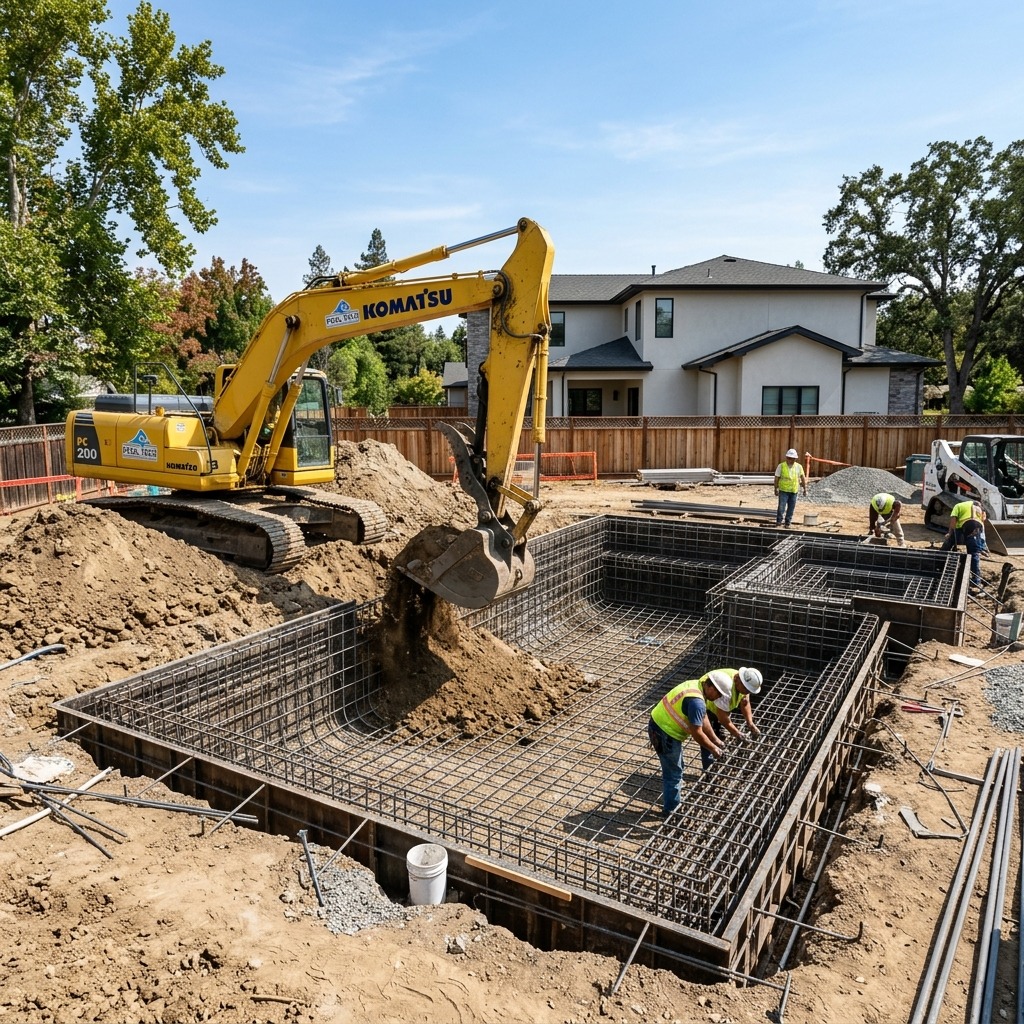
Semi-inground pools split the difference. By sinking the pool partially into the ground — typically 18 to 36 inches — you gain the look of an inground pool without the full excavation cost, and you can build decking that aligns with natural grade for a seamless outdoor living space. Semi-inground installations typically cost $8,000–$20,000 installed, compared to $2,000–$12,000 for a comparable fully above ground system. Some real estate analyses suggest semi-inground pools in markets where pools are valued can return 50–75% of their cost in home value — significantly better than the near-zero return of a fully above ground pool.
If your yard has significant natural slope, a semi-inground pool can actually be a practical solution rather than a purely aesthetic upgrade — setting one end of the pool into the hillside while the other end remains above grade creates a level water surface without expensive grading of the entire yard. The semi-inground pool cost guide covers this use case in detail, including which pool systems are rated for partial burial and which are not.
For homeowners considering whether the long-term ownership economics of different pool types make sense for their situation, the vinyl liner vs fiberglass pool true 10-year price analysis provides a useful framework for comparing total cost of ownership across pool categories over a realistic timeframe.
How to Use the Above Ground Pool Cost Calculator
Above ground pools cost a fraction of inground builds, but site prep and safety fences can still drive up the price. We recommend running your numbers through our above ground pool cost calculator before you buy a kit. It accounts for hidden costs like ground leveling and electrical work for the pump.
The most accurate way to estimate your specific above ground pool cost is to work through a structured estimator tool rather than relying on national averages alone. Regional material and labor costs vary significantly — the same 24-foot round resin pool installation costs roughly $4,200 installed in the rural Southeast and $8,500 in coastal California, reflecting differences in labor rates, permit costs, and material freight.
When using an above ground pool cost estimator, you’ll want to have the following information ready:
- Your target pool size and shape (round, oval, or rectangle — with diameter or dimensions)
- Your preferred material (steel, resin, or hybrid)
- Your yard’s current condition (flat and graded, gently sloped, significantly sloped, or rocky)
- Your installation plan (full DIY, partial DIY with electrician, or full professional)
- Your deck and fencing plans (none, minimal safety fence only, or full deck and fence)
- Your heating preference (none, solar cover, heat pump, or gas/electric heater)
- Your ZIP code (for regional cost adjustment)
A quality estimator tool uses all of these inputs to produce a cost range specific to your situation rather than generic national figures. For a detailed explanation of how these tools are built and how to interpret their outputs, the pool cost calculator vs estimator complete guide explains the difference between simple calculators and true estimation models — and why that distinction matters for planning accuracy.
Once you have your estimate, build in a 10–15% contingency buffer for unexpected costs. Unforeseen ground conditions, utility line conflicts, or material price fluctuations have affected a meaningful portion of pool projects over the last two years, and a small contingency reserve can mean the difference between a smooth project and a stressful one.
Conclusion
Above ground pools have come a long way from the basic backyard staple they were a generation ago. Today’s steel frame, resin frame, and semi-permanent hybrid models offer genuine quality, durability, and aesthetic appeal at price points that make pool ownership realistic for millions of families who can’t or don’t want to invest $50,000 or more in an inground installation. The key is going in with accurate numbers.
Using a comprehensive above ground pool cost estimator — one that accounts for your pool type, yard conditions, regional labor rates, and full accessory costs — is the only way to build a budget you can actually rely on. National averages give you a starting point, but your specific project will be shaped by variables unique to your property, your climate, and your goals.
Take the time to run the numbers properly before you buy. Compare the total installed cost across two or three pool types that meet your size requirements. Factor in the liner replacement cycle and annual operating costs. Decide on your deck and fencing plan before budgeting, not after. And build in that 10–15% contingency.
Ready to find out exactly what your above ground pool will cost? Use our free estimator tool at poolcostestimator.com to get a customized cost range based on your pool size, material, and ZIP code — no email required, no sales calls.
Frequently Asked Questions
How much does an above ground pool cost all-in for an average family?
For a family looking at a mid-range above ground pool — an 18 to 24-foot round steel or resin frame model with basic decking, a fence, and a quality pump/filter upgrade — the realistic all-in budget in 2026 is $5,000 to $10,000. This assumes a reasonably flat yard (no major grading), DIY or partial-DIY installation, and a modest deck. If you opt for a full professional installation, a larger oval shape, or premium decking materials, the total can easily reach $12,000 to $15,000. Conversely, a budget-conscious buyer who does the full installation themselves and skips the deck can put in a functional 18-foot round pool for $2,000 to $3,500. The key is understanding which of those variables applies to your situation before you set your budget.
How long do above ground pools last?
Lifespan varies dramatically by pool type and care. Entry-level inflatable pools typically last two to four seasons. Steel frame above ground pools in moderate climates with proper maintenance typically last 10 to 15 years for the structure, though liners will need replacement every seven to ten years within that period. Resin frame pools from reputable brands like Doughboy or Radiant — when properly maintained — routinely last 20 to 25 years. Semi-permanent hybrid systems are built to last 25 or more years. The single most important longevity factor under your control is water chemistry: pools with consistently balanced water, regardless of type, outlast comparable pools with chronically poor chemistry by five to ten years.
Is it worth putting money into an above ground pool rather than saving for inground?
This question depends heavily on your timeline and financial situation. If you’re planning to stay in your home for fewer than five years and don’t have the budget for an inground installation, a quality above ground pool delivers genuine value and enjoyment at a fraction of the cost. If you’re planning a long-term stay and have the financial flexibility, inground installations add meaningful property value and eliminate the recurring liner replacement cycle. The honest answer for most families is that a good above ground pool delivers 80% of the enjoyment of an inground pool at 15–25% of the cost — which makes it an excellent value proposition for families who aren’t in a financial position to justify $40,000–$80,000 for an inground build.
Can I install an above ground pool myself?
Yes, for most round above ground pools — and for mechanically capable homeowners who have help — DIY installation is entirely feasible. The tools required are basic (rubber mallet, level, tape measure, flat-head screwdriver, garden hose), and most manufacturers provide step-by-step video guides. The most important caveat is site leveling: if your yard requires significant grading, you’ll likely need to rent equipment or hire a grader before beginning the pool installation itself. The electrical connection for the pump should always be done by a licensed electrician unless you’re experienced and comfortable with residential electrical work — it’s required by code and is a real safety issue. Oval and rectangular pools are significantly more complex than round models and are better handled with professional help for first-time installers.
Do above ground pools require permits?
Requirements vary enormously by municipality. Many local codes exempt small portable pools — typically defined as pools with fewer than 5,000 gallons or a footprint under a certain square footage — from permit requirements entirely. Permanent above ground pools of standard size generally require at minimum an electrical permit for the pump circuit and a building permit if you’re adding a deck attached to the home’s structure. Fencing permits are also sometimes required separately. Some jurisdictions treat any pool over 18 inches in depth as a permanent structure requiring full pool permitting. Always check with your local building department before installation — violations can result in mandatory removal orders at resale, which are far more expensive than the permit fee would have been.
What’s the best above ground pool for cold climates?
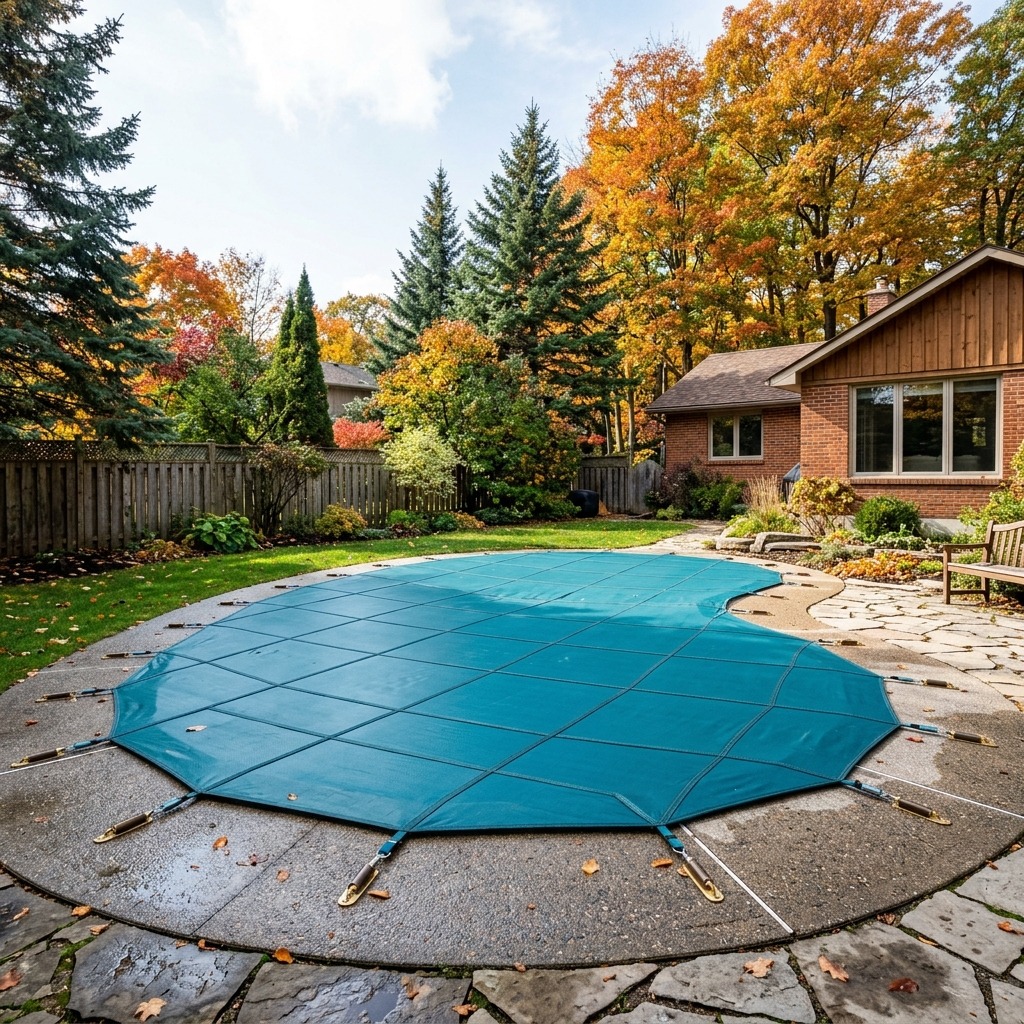
In climates with hard freezes, pool winterization is essential for all above ground pools, but some materials handle winter stress better than others. Resin frame pools are generally better suited to freeze-thaw cycles because resin components don’t expand and contract the way steel does when temperatures swing dramatically. Regardless of frame material, proper winterization — lowering the water level, blowing out the pump lines, removing and storing equipment, and using a quality winter cover — is the most important factor. Above ground pool covers for winter use run $80–$300 for standard round sizes and should be replaced every three to five years as UV degradation compromises their effectiveness.
How much does it cost to heat an above ground pool?
The startup cost of adding heat to an above ground pool ranges from $50 for a basic solar cover to $2,500 for a full heat pump installation. For most homeowners, the most cost-effective approach is a layered strategy: start with a solar cover (always worthwhile regardless of other heating choices) and add a heat pump if you want reliable temperature control across spring and fall. Heat pumps for above ground pools cost $800–$2,000 for the unit plus $200–$500 for electrical connection, and run at roughly $1.00–$2.00 per day to maintain temperature in mild-to-cool weather — far cheaper than electric resistance heaters, which cost three to five times as much to operate. In the sunniest regions, solar panel systems can provide cost-free heating during daytime hours with minimal supplemental heating needs.
What size above ground pool should I buy?
For most families of three to five people, an 18-foot round pool (capacity approximately 7,000–8,000 gallons) provides adequate space for recreational swimming and family fun. Families who entertain frequently or have older children who want more room to swim should consider a 24-foot round (capacity approximately 13,500–14,000 gallons) or an oval model in the 12×24 to 15×30 foot range. Oval and rectangular pools offer more linear swimming space — important for lap swimming — but cost significantly more than round pools of equivalent water volume. One practical note: every additional foot of diameter is much larger than it sounds in terms of ground footprint and water volume. An 18-foot pool has a footprint of 254 square feet; a 24-foot pool has 452 square feet — nearly 80% more space requirement on your property.