For pool owners residing in freeze-thaw climate zones across North America, proper seasonal pool closing (winterization) and spring reopening are critical maintenance procedures. Failing to winterize underground PVC plumbing lines, pump strainers, and pool heaters can lead to catastrophic freeze damage, resulting in thousands of dollars in emergency concrete deck excavation and equipment replacement.
In 2026, professional pool winterization costs average $250 to $550, while spring pool reopening fees average $200 to $480. Combined, annual seasonal transition services range from $450 to $1,030 for residential inground pools.
1. Pool Winterization Cost Breakdown & Technical Procedures
Closing a pool for winter involves far more than placing a plastic tarp over the water surface. Professional winterization incorporates four essential technical procedures:
| Winterization Procedure | Average Price Range | Description & Tools Used |
|---|---|---|
| Plumbing Line Blowout & Plugs | $150 – $320 | High-volume air compressor purges water from skimmers, returns, and main drains before inserting heavy-duty expansion plugs. |
| Non-Toxic Pool Antifreeze Dosing | $35 – $75 | Adding 2 to 6 gallons of non-toxic RV/pool propylene glycol antifreeze into suction and return lines. |
| Winter Chemical Closing Kit | $50 – $110 | Dosing water with high-strength winter algaecide, non-chlorine shock, and stain-sequestering agents. |
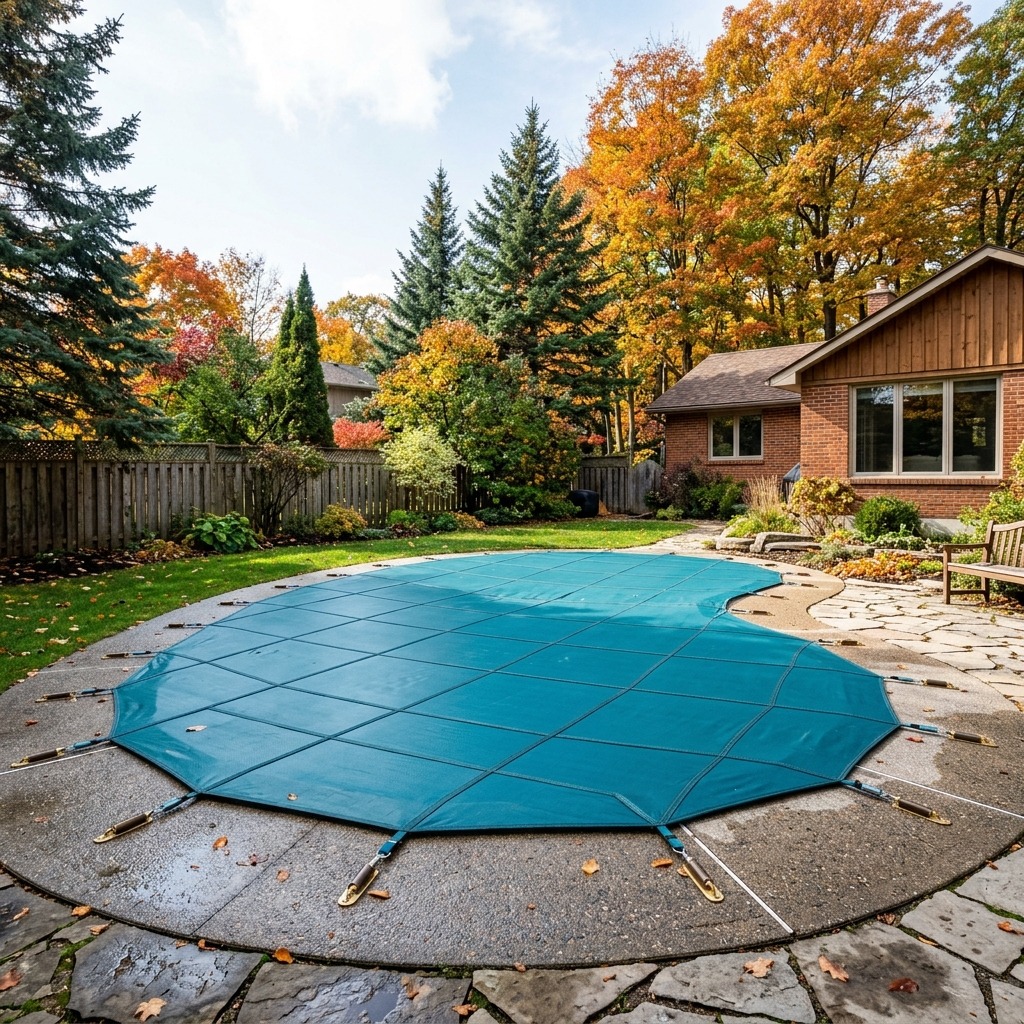
| Safety Cover Installation | $750 – $3,200 (One-time) | Heavy-duty mesh or solid safety cover anchored into concrete deck brass anchors using an installation rod. |
| Total Professional Closing Service | $250 – $550 | Complete turnkey winter protection package. |
2. Spring Pool Reopening Procedures & Water Clearing
When warm spring weather arrives, reopening your pool requires systematic restoration to achieve crystal-clear water before swimming:
- Safety Cover Removal & Wash ($80 – $150): Removing, power-washing, folding, and storing winter safety covers.
- Equipment Re-Assembly ($70 – $140): Re-installing pump drain plugs, pressure gauges, chlorinator cells, and filter elements.
- Spring Shock & Chemistry Balancing ($60 – $130): Super-chlorinating water with calcium hypochlorite shock and adjusting pH/alkalinity to clear winter turbidity.
- 24-Hour Continuous Filtration Run ($30 – $60 in electricity): Running continuous circulation cycles to filter out fine suspended particulate matter.
3. The Extreme Financial Risk of Skipping Winterization
Attempting to skip winterization to save $300 represents a severe financial risk. Water expands by approximately 9% when freezing. Water trapped inside underground PVC pipes expands with immense pressure, shattering pipe walls under concrete decks. Repairing freeze-damaged pipes requires heavy jackhammers, concrete deck demolition, and pipe replacement costing $1,800 to $4,800. Likewise, ice expansion inside a pool heater manifold causes $800 to $1,800 in parts damage.
4. Safety Cover Types & ASTM Safety Compliance
Installing a safety cover certified to ASTM F1346-91 safety standards prevents child and pet drowning hazards while keeping heavy autumn leaves out of the water:
- Mesh Safety Covers ($800 – $2,200 installed): Lightweight mesh permits rain and snowmelt to drain into the pool while blocking leaves and large debris.
- Solid Safety Covers ($1,400 – $3,500 installed): Heavy vinyl blocks 100% of sunlight, preventing winter algae growth and keeping water crystal clear until spring opening.
5. Regional Winterization Timelines & Guidelines
Timing your winterization procedure correctly prevents algae blooms:
- Northeast & Midwest (NY, IL, OH, PA): Close in October when water temperatures drop consistently below 60°F (15°C). Reopen in April before ambient temperatures rise.
- Pacific Northwest & Mountain West (WA, OR, CO): Close in late September or October; blow out lines thoroughly to prevent deep freeze damage.
Integrate seasonal transition fees into your overall budget with our Monthly Pool Maintenance Cost Breakdown.
Frequently Asked Questions (FAQ)
Should I drain my pool completely for winter?
No! Never drain an inground pool completely. Hydrostatic groundwater pressure can pop a fiberglass shell or concrete gunite pool out of the ground. Lower water levels only 6 to 18 inches below the skimmer intake line.
What happens if I don’t blow out pool plumbing lines?
Water left in un-purged pipes will freeze, expand, and rupture underground PVC plumbing lines, leading to expensive concrete excavation repairs.
Calculate Complete Seasonal & Resurfacing Budgets
Planning seasonal upkeep or estimating plaster renovation pricing? Use our free Pool Resurfacing Cost Calculator and Inground Pool Cost Calculator. Read our official Cost Estimation Disclaimer and Contact Support Desk for assistance.
6. Detailed Step-by-Step DIY Pool Winterization Guide
Homeowners who choose to winterize their pool DIY can save $250 to $400 in labor fees by following a methodical step-by-step protocol using appropriate tools:
- Step 1: Deep Cleaning & Vacuuming: Skim all surface leaves and vacuum pool floor sediment thoroughly using a manual vacuum head, hose, and telescopic pole. Leaves left under a winter cover decompose, staining plaster and creating heavy spring algae.
- Step 2: Water Chemistry Balancing: Test water 48 hours prior to closing. Adjust pH to 7.4–7.6, total alkalinity to 100–120 ppm, and calcium hardness to 250–350 ppm. Add a heavy-duty winter closing chemical kit containing non-foaming algaecide and stain-sequestering agents.
- Step 3: Lowering Water Level: Lower water level below the skimmer mouth line using a submersible sump pump. Lower 4 to 6 inches for vinyl liner pools, 6 to 12 inches for plaster gunite pools, and 12 to 18 inches for mesh cover installations.
- Step 4: Purging Plumbing Lines with Air: Connect a commercial 3 HP air compressor or heavy-duty cyclone blower to the pump strain housing. Blow air through skimmer lines, main drains, and return lines until water bubbles out. Plug skimmers with rubber winter expansion plugs or Gizzmo freeze compensators.
- Step 5: Antifreeze & Line Plugging: Pour 1 to 2 gallons of non-toxic RV/pool propylene glycol antifreeze into each plumbing line before tightening expansion plugs.
- Step 6: Equipment Draining: Remove drain plugs from circulation pump, filter tank, gas heater manifold, and chlorination unit. Store drain plugs safely inside pump strainer basket.
- Step 7: Anchoring Safety Cover: Stretch mesh or solid safety cover across pool deck. Use an installation rod and hex key to turn brass deck anchors flush with concrete deck.
7. Spring Pool Opening: Step-by-Step Recommissioning
Reopening your pool in early spring requires a reverse recommissioning process:
- Step 1: Removing & Washing Safety Cover: Remove winter cover, spray clean with fresh water, dry thoroughly, and store in a breathable storage bag to prevent mold.
- Step 2: Re-Installing Equipment Drain Plugs: Re-wrap drain plug threads with Teflon tape and screw firmly into pump housing, filter tank, and heater header manifold.
- Step 3: Removing Plumbing Plugs & Refilling Water: Remove rubber winter expansion plugs from skimmers and wall returns. Fill pool water back to mid-skimmer operating level.
- Step 4: Priming Pump & Starting System: Open suction and return valves. Fill pump strainer pot with water, seal lid, and prime circulation pump. Inspect for plumbing leaks.
- Step 5: Heavy Shock Treatment: Super-chlorinate water with liquid chlorine or calcium hypochlorite shock to eliminate winter bacteria. Run pump continuously for 24 to 48 hours until water turns crystal clear.
8. Winter Maintenance Inspections & Pool Care
Winter pool care does not end after cover installation. Monthly winter inspections prevent cover damage and water intrusion:
- Cover Snow & Ice Removal: Excess heavy snow build-up on solid covers should be managed using a cover pump. Never scrape ice off covers with sharp shovels.
- Checking Water Level Under Cover: Inspect water level twice during winter. If groundwater leaks into pool, adjust water level to prevent cover tension strap breakage.
9. Environmental Regulations & Pool Chemical Discharge Standards
When draining pool water for winterization, pool owners must adhere to municipal environmental regulations regarding water discharge. Directing chlorinated or chemically treated pool water into storm sewers can harm local waterways and violate municipal environmental codes.
- De-Chlorination Requirement: Water must be de-chlorinated (reducing free chlorine below 0.1 ppm) using sodium thiosulfate or by allowing water to sit uncovered without chemical dosing for 7 to 10 days before discharging.
- pH Neutralization: Water pH must be tested and neutralized to between 6.5 and 8.5 before discharging onto pervious lawn areas or municipal storm drains.
- Discharge Location: Always discharge drained pool water onto pervious lawn surfaces on your own property to permit natural soil filtration, avoiding direct runoff onto adjacent neighboring properties or un-permitted public storm drains.
10. Professional Contractor Selection & Insurance Verification
Hiring a licensed pool contractor for seasonal closing ensures structural safety and warranty protection:
- Verifying General Liability Insurance: Ensure your seasonal pool service company carries at least $1,000,000 in general liability insurance to cover accidental pipe burst damage or equipment drops.
- Written Winter Guarantee: Reputable contractors provide a written guarantee against freeze damage if their team performed the plumbing line blowout and expansion plug installation.