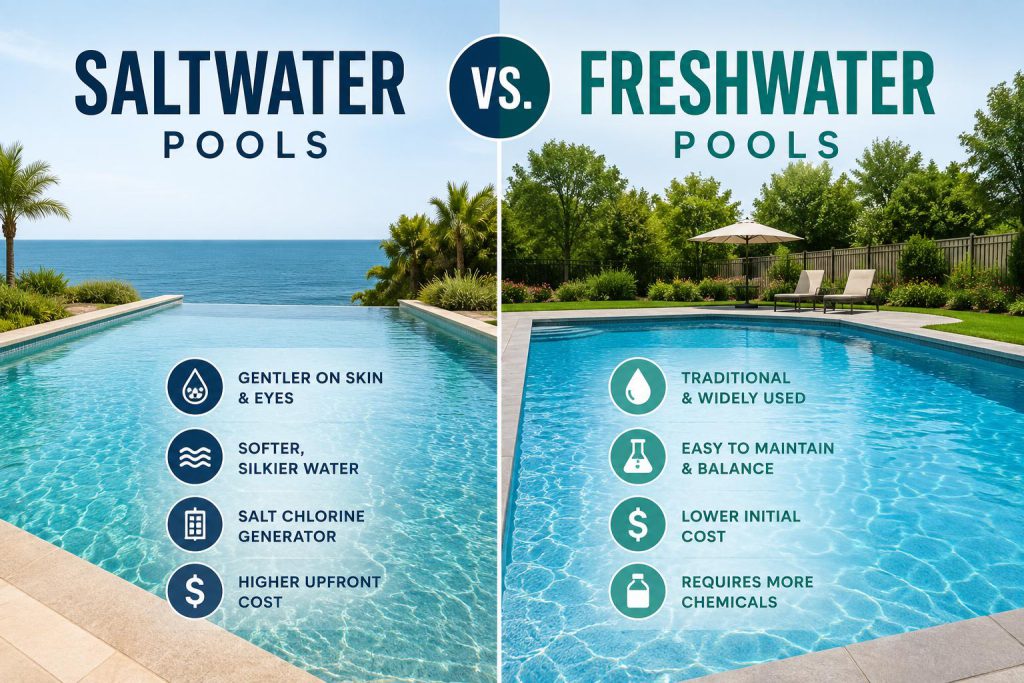
Picking the right type of pool is a big decision. You will spend a lot of time in it, so you want to make the right choice. Two of the most popular options are saltwater pools and traditional freshwater pools. Most people think they are very different, but they actually have more in common than you might expect. This guide walks you through everything in plain, simple terms so you can pick with confidence.
Are Saltwater Pools Really Free of Chlorine?
No. Saltwater pools still use chlorine to clean the water. This is one of the most common misunderstandings people have about pool types.
The real difference is how the chlorine gets into the water. In a freshwater pool, you buy chlorine products and add them yourself. In a saltwater pool, a machine called a salt chlorine generator makes the chlorine for you automatically. So both pool types use chlorine. They just get there in different ways.
Here is a quick side-by-side look at how these two systems compare at a basic level:
| Feature | Saltwater Pool | Freshwater Pool |
| Use Chlorine? | Yes | Yes |
| How Chlorine Is Added | Made automatically by a generator | Added by hand (tablets, granules, liquid) |
| Salt in the Water | Yes, mild (~3,200 ppm) | No |
| Water Feel | Soft, gentle, similar to human tears | Standard tap water feel |
| Chlorine Consistency | Steady and automatic | Fluctuates with your schedule |
How Does a Traditional Freshwater Pool Work?
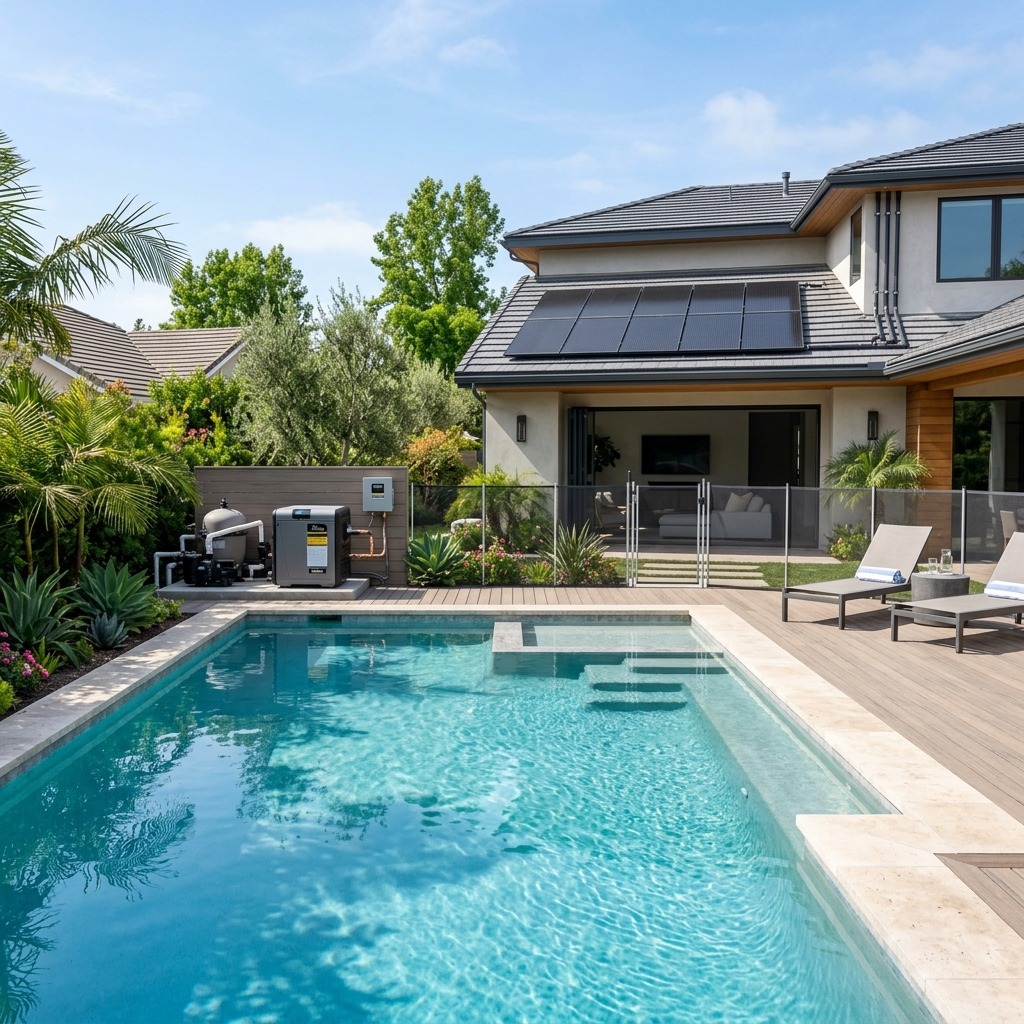
A freshwater pool keeps the water clean by adding chlorine directly into the pool by hand. You buy dry calcium hypochlorite granules or chlorine tablets and add them on a regular schedule.
Once you add the chlorine, it gets to work killing bacteria and algae. Over time, the chlorine reacts with things like sweat, sunscreen, and body oils in the water. This reaction creates a byproduct called chloramines. Chloramines cause that strong pool smell. They also make your eyes sting and your skin feel dry after a swim.
To stay on top of this, pool owners use a digital photometer water analyzer to test chlorine and chemical levels several times a week. If the levels drop or get out of balance, you add more chemicals. Keeping the water safe must meet rules like those in California Code of Regulations (CCR) Title 22 Section 65529, which sets sanitation standards for residential and public pools.
How Does a Saltwater Pool Work?
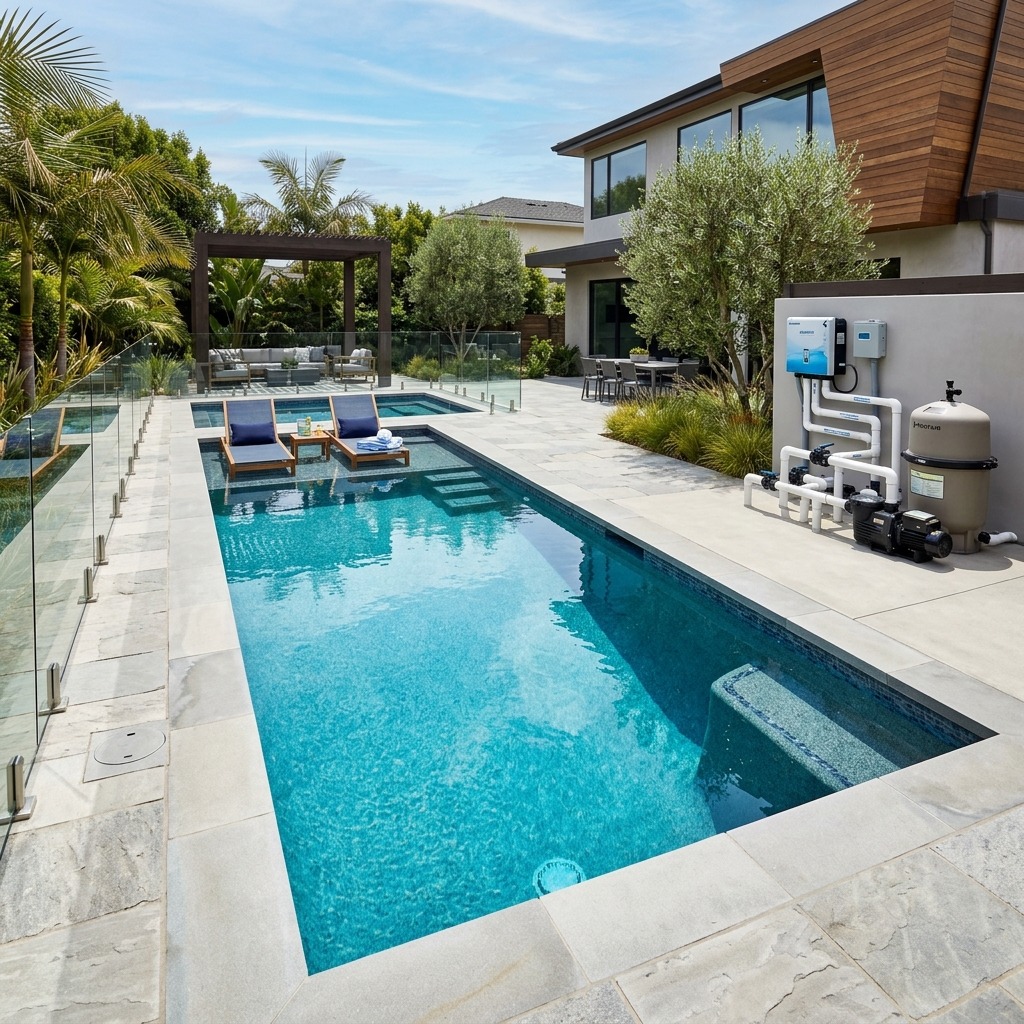
A saltwater pool cleans the water using a salt chlorine generator, also called a salt cell. You pour pool-grade salt into the water once or twice a year, and the machine does the rest.
Here is how it works. The pump moves water through the salt cell. Inside the cell, there are ruthenium-coated titanium electrode plates. A small electric current passes through those plates and breaks the salt down into chlorine. That chlorine cleans the pool. When it finishes its job, it turns back into salt and the whole cycle starts again.
The salt level in the water is mild. It sits at around 3,200 parts per million. That is close to the salt level in human tears, which is why saltwater pools feel so soft. During routine checks, technicians use a microprocessor-controlled salt cell tester to make sure the plates are working correctly. The system also needs to meet National Electrical Code (NEC) Article 680.26 bonding grid rules to keep the electrical parts of the pool safe.
Which Type of Pool Is Easier to Take Care Of?
A saltwater pool takes less day-to-day work. Because the generator handles chlorine production automatically, you do not need to test the water as often or run to the store for chemicals every week.
That said, saltwater pools are not completely hands-off. Here is a clear comparison of what each pool requires on a regular basis:
| Task | Freshwater Pool | Saltwater Pool |
| Chlorine Testing | 2 to 3 times a week | Monthly check |
| Adding Chlorine | Weekly, by hand | Not needed (auto-generated) |
| pH Balancing | As needed | More often (generator raises pH) |
| Chemical Storage at Home | Yes, buckets of chlorine | No bulk chlorine needed |
| Salt Cell Cleaning | Not applicable | Every 3 months |
| Weekly Chemical Cost | $10 to $20 per week | Near zero |
To keep the pH in check in a saltwater pool, technicians use a glass-electrode digital pH calibration pen and add liquid sodium bisulfate solution to bring the levels back down. Staying in the right range also meets Sacramento County Environmental Management Department (SCEMD) Pool Safety and Water Chemistry Guidelines.
Does a Saltwater Pool Feel Different to Swim In than a Freshwater Pool?
Yes, and most swimmers prefer it. Saltwater pools feel noticeably softer and gentler on your body.
Because the chlorine level stays steady and low, there are no sudden chemical spikes. Also, saltwater pools produce fewer chloramines. Next time you swim and notice red eyes or itchy skin after getting out of the water, chloramines are usually the reason.
Here is how the swimming experience compares between the two pool types:
| Experience | Saltwater Pool | Freshwater Pool |
| Eye Irritation | Rare | Common with high chlorine levels |
| Skin Feel After Swimming | Soft and smooth | Can feel dry or tight |
| Hair Damage | Minimal | Possible bleaching or dryness |
| Swimsuit Color Fading | Low risk | Higher risk |
| Chemical Odor | Very little | Strong when chloramines are high |
How Much Does Each Pool Type Cost?
A freshwater pool costs less to set up, but a saltwater pool can save you money over time. To start, a freshwater pool has no extra equipment costs. A saltwater pool requires buying a salt chlorine generator plus installation, which typically runs between $1,000 and $2,500.
Over 5 years, the numbers shift. Here is a simple cost breakdown for a standard 15,000-gallon inground pool:
| Expense | Freshwater Pool | Saltwater Pool |
| Equipment Setup | $0 | $1,500 |
| Starting Chemical Load | $80 | $120 |
| Chemicals Over 5 Years | $3,000 | $500 |
| Salt Cell Replacement | $0 | $700 |
| Extra Electricity | $0 | $150 |
| 5-Year Total | $3,080 | $2,970 |
Your actual break-even point depends heavily on local equipment prices and the size of your pool. Run your specific dimensions through a salt water pool cost estimator to see exactly what the upfront hardware will run you. Getting this baseline number makes it easier to figure out if upgrading to salt makes financial sense for your backyard.
Can You Switch From a Freshwater Pool to Saltwater?
Yes, and it is easier than most people think. You do not need to drain your pool to make the switch.
Here is the basic process:
- Test and balance your current pool water first
- Mount the generator control box near your equipment pad
- Install the salt cell into your return plumbing line. Installers use a heavy-duty PVC pipe deburring tool to prepare Schedule 80 PVC union fittings before connecting the cell
- Pour pool-grade salt into the water and let it dissolve for 24 hours
- Turn on the generator and set your preferred chlorine output level
This work must pass inspection under Sacramento County Building Code Section 15.04, which covers permits for residential pool upgrades and plumbing changes. A licensed pool technician can handle the full conversion in just a few hours.