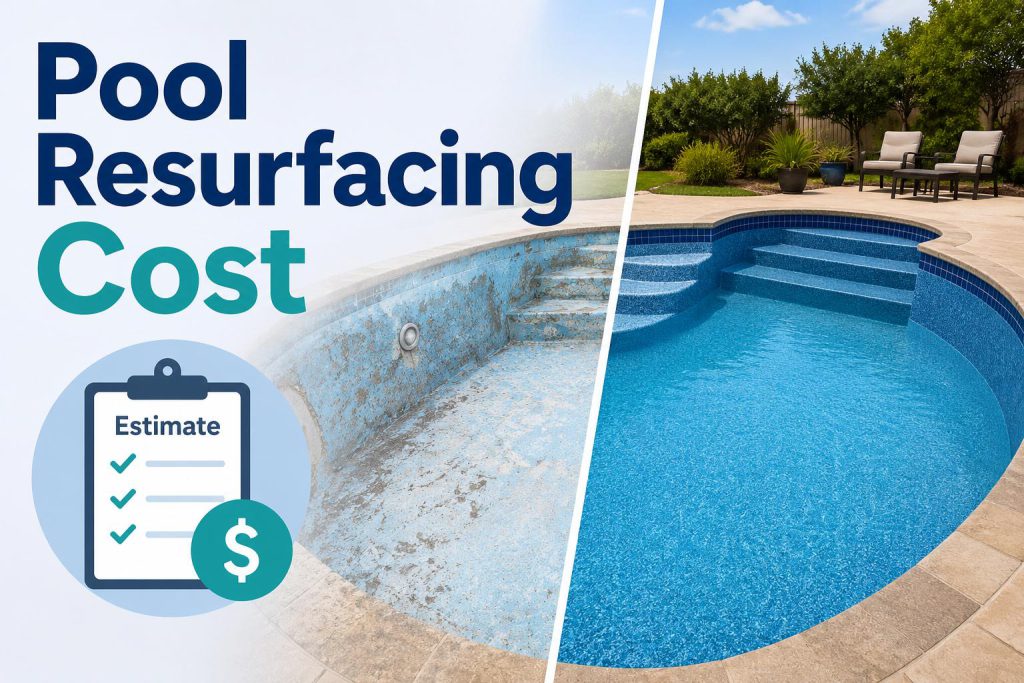
Most homeowners spend between $6,000 and $15,000 to resurface a pool. The exact price depends on the size of your pool, the material you pick, and the condition of the old surface. This guide breaks down every cost factor so you can plan your budget with confidence.
What Is the Average Cost to Resurface a Pool?
Most homeowners pay around $11,000 to resurface a pool, with costs ranging from $6,000 to $15,000 for a standard project.
Smaller projects using basic materials can cost as little as $1,000. Full tile renovations on large pools can exceed $50,000. The price difference is wide because every pool is different. A small plunge pool with a simple paint coat costs far less than a large freeform pool finished with glass tile.
Before your contractor starts work, they will apply a pool shell bonding agent to the existing surface. This chemical layer helps the new finish stick properly to the old shell. Your contractor will use a high-volume low-pressure (HVLP) spray gun to apply it evenly across the entire pool surface. This step is required under ISPSC Section 305, which sets standards for pool shell structural integrity and surface prep before new finishes are applied.
Getting at least three quotes from licensed contractors is the best way to know what your specific project will cost. Local labor rates, permit fees, and material availability all affect the final number.
How Much Does Pool Resurfacing Cost by Material?
The material you choose is the single biggest factor in your total cost. Prices range from about $1,000 for pool paint up to $30,000 or more for full ceramic tile.
Here is a clear breakdown of the most common pool resurfacing materials and their typical price ranges:
| Material | Cost Range | Lifespan |
| Epoxy Paint | $1,000 – $4,800 | 3 to 7 years |
| White Plaster | $3,000 – $6,500 | 7 to 10 years |
| Aggregate / Pebble | $5,000 – $10,000 | 15 to 20 years |
| Quartz Finish | $6,000 – $12,000 | 10 to 15 years |
| Ceramic or Glass Tile | $15,000 – $30,000+ | 25+ years |
The most affordable option is epoxy pool paint. It is a liquid coating brushed or rolled onto the pool surface. A contractor mixes it on-site using an electric paint mixer paddle to get the right thickness and consistency before application. One important note: epoxy paint releases volatile organic compounds (VOCs) during application. Your contractor must follow SCAQMD Rule 1113, which sets strict VOC limits for architectural coatings used in California and other regulated areas. If you live in a regulated state, your contractor must use a low-VOC formula. This can slightly raise the cost of the paint itself.
Epoxy paint has the shortest lifespan of all resurfacing options. You may need to recoat every 3 to 7 years, so factor in that recurring expense when comparing materials by price.
How Much Does It Cost to Replaster a Concrete Pool?
Replastering a concrete pool costs between $3,000 and $6,500 on average. This is the most common type of resurfacing for traditional gunite and shotcrete pools.
White plaster is the standard material for this job. It is a mix of portland cement, white marble dust, and water. Your contractor chips off the old plaster layer first. This step is called chipping or sandblasting, and it prepares the rough concrete shell underneath. The contractor then applies white pool plaster by hand in two smooth coats. A skilled plasterer uses a magnesium trowel to finish the surface and push out air pockets. A smooth, even trowel pass is what gives plaster its classic bright white look.
All plaster work on pools must meet ACI 524R, which is the American Concrete Institute’s official guide to Portland cement plastering. This standard covers mix ratios, water content, and surface preparation thickness.
Fresh plaster needs time to cure. After the pool is refilled, you must run the pump continuously for 30 days to prevent staining and calcium spots. This startup process adds no extra labor cost, but you will pay for the water to refill the pool.
How Much Does Pebble Tec or Aggregate Pool Resurfacing Cost?
Pebble and aggregate finishes cost between $5,000 and $10,000 for most pools. Premium brands like Pebble Tec can reach the higher end of that range.
Aggregate finishes mix small stones, pebbles, or quartz crystals into the plaster base. This creates a textured, natural-looking surface that is more durable and stain-resistant than plain white plaster. Before the new aggregate layer goes on, the crew must remove the old surface completely. They use a hydro-demolition water blaster, which fires high-pressure water to strip away old plaster without damaging the concrete shell underneath. This method is more precise than jackhammering and leaves a clean, open surface for bonding.
The new pebble aggregate finish then bonds to the exposed shell. Bonding performance must meet ASTM C1059, the standard for concrete bonding agents. This ensures the aggregate layer stays attached for its full 15 to 20-year lifespan.
Pebble finishes feel slightly rough underfoot, which some swimmers dislike. If texture is a concern, ask your contractor about smooth pebble blends that are polished before installation.
How Much Does Tile Pool Resurfacing Cost?
A full tile pool resurfacing job costs between $15,000 and $30,000 for most pools. Adding glass tile or custom mosaic work can push costs above $50,000.
Tile is the longest-lasting and most visually striking pool surface. It does not stain, does not fade, and can last 25 years or more with proper care. Most homeowners use tile at the waterline border only. A waterline tile strip typically costs $2,000 to $3,000. Full-tile pools cost far more because every square foot of the pool floor and walls requires individual tile placement.
Your contractor installs porcelain waterline tile using thinset mortar. A wet tile saw with diamond blade is used on-site to cut each tile to fit corners, curves, and steps precisely. All tile mortar work must comply with ANSI A118.15, the standard for improved modified dry-set cement mortar. This standard ensures the mortar achieves the bond strength needed to hold tile in a wet, chemically treated environment.
Grout lines between tiles require annual cleaning. Cracked or loose tiles need individual replacement. Budget about $200 to $500 per year for basic tile maintenance.
How Does Pool Size Affect the Resurfacing Cost?
Pool size directly controls how much material and labor you need. Larger pools cost more because the entire surface area must be covered.
Most contractors price resurfacing work per square foot. Average costs range from $3 to $15 per square foot depending on the material. A standard 12×24 foot pool has about 640 square feet of surface area when you include the floor, walls, and steps. A larger 16×32 foot pool has closer to 1,100 square feet. That difference in square footage can add $1,500 to $6,000 to the total job.
During the surface preparation stage, contractors often blast the old surface with silica pool sand in a process called abrasive sandblasting. This strips the old finish evenly across every square foot of the pool. Contractors use a pneumatic drywall hopper gun adapted for sand blasting to control the output rate and coverage. This ensures the entire surface gets uniform prep before the new coat goes on. Workers must follow OSHA Standard 1926.1153, which sets strict safety rules for handling respirable crystalline silica. Contractors are required to use dust control systems and respirators during this process.
Irregular pool shapes, such as kidney shapes or freeform designs, cost more to resurface than rectangular pools. Odd shapes have more complex edges and contours that slow down the work and require more precise material cuts.
What Additional Costs Should You Expect During Pool Resurfacing?
Beyond the surface finish itself, most projects add $500 to $3,000 in extra costs for preparation, repairs, and post-work setup.
Here are the most common additional expenses:
Draining the pool: Before any work starts, the pool must be completely drained. This costs $150 to $300 and takes about 8 to 12 hours.
Crack and structural repair: If the pool shell has cracks, they must be sealed before the new surface is applied. Contractors inject polyurethane crack injection resin into each crack using a carbon fiber staple installation drill to pin and secure the structural repair while the resin cures. All crack repair bonding must meet ASTM C881, the standard for epoxy-resin-base bonding systems used in concrete structures. This ensures the repaired crack will not re-open under hydrostatic pressure or seasonal ground movement. Crack repairs cost $100 to $500 per crack depending on length and depth.
Refilling the pool: Refilling a standard pool with fresh water costs between $40 and $2,000 depending on your local water rates and pool volume.
Water chemistry startup: After refilling, you need to add chemicals to balance the water. Initial chemical costs run $150 to $400.
Coping and tile repair: If your coping stones or waterline tiles are damaged, repair costs add $500 to $3,000 to the project.
How Often Do You Need to Resurface a Pool?
Most pools need resurfacing every 7 to 20 years, depending on the surface material and how well the pool is maintained.
Here are the typical lifespans by material:
- Epoxy paint: 3 to 7 years
- White plaster: 7 to 10 years
- Quartz finish: 10 to 15 years
- Pebble / aggregate: 15 to 20 years
- Ceramic or glass tile: 25+ years
Poor water chemistry speeds up wear dramatically. Water that is too acidic eats away at plaster and pebble surfaces faster than clean, balanced water. Contractors apply a pool shell waterstop sealant around all fittings, lights, and return jets during resurfacing. This prevents water from seeping behind the new surface layer and causing early delamination.
After refilling, your contractor will use a digital pH glass electrode tester to verify the pool water is in the correct range. Proper water balance is required under ISPSC Section 314, which sets standards for pool water circulation and sanitation. Keeping pH between 7.2 and 7.6 is the most important thing you can do to extend the life of any pool surface.
Watch for these warning signs that it is time to resurface:
- Rough or sandpaper-like texture that scratches skin
- Stains or discoloration that cannot be cleaned with acid wash
- Visible chips, flaking, or peeling on the pool walls or floor
- White chalking or residue that rubs off on your hand
- Cracks or leaks in the pool shell
If you notice two or more of these signs at once, schedule an inspection with a licensed contractor right away. Waiting too long can allow water to reach the concrete shell and cause expensive structural damage.
Final Thoughts
Pool resurfacing is one of the most important maintenance jobs a pool owner will ever face. Costs typically run between $6,000 and $15,000, but the right choice depends on your budget, your pool’s size, and how long you want the new surface to last.
Plaster is the most affordable starting point. Pebble and aggregate finishes offer better durability at a mid-range price. Tile is the premium option that lasts the longest. No matter what you choose, hire a licensed and insured pool contractor, ask for at least three quotes, and check that all work meets local code requirements.
Taking care of your pool surface now will save you far more money in the long run.
Whether you choose basic plaster, quartz, or premium pebble finishes, resurfacing is a vital maintenance step to protect the pool shell. To estimate costs for your pool’s surface area, try our interactive pool resurfacing cost calculator.