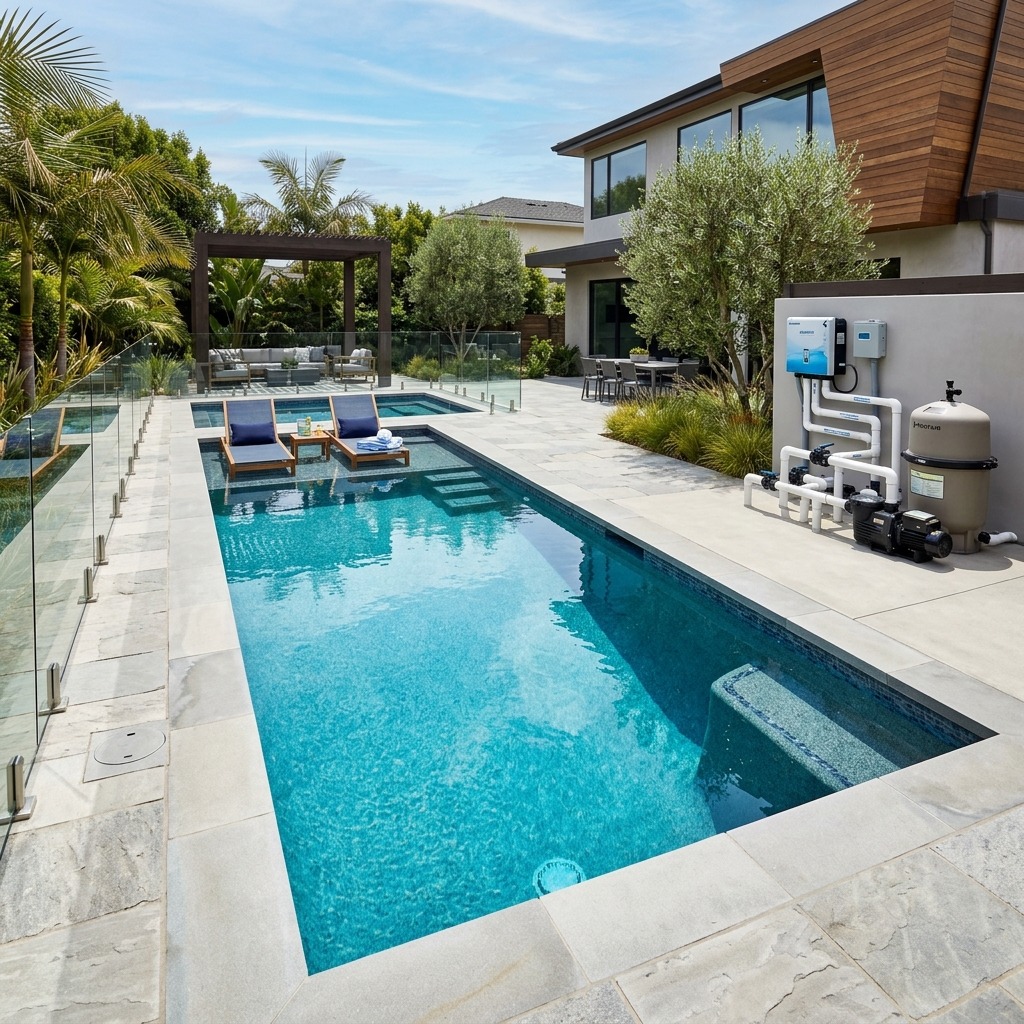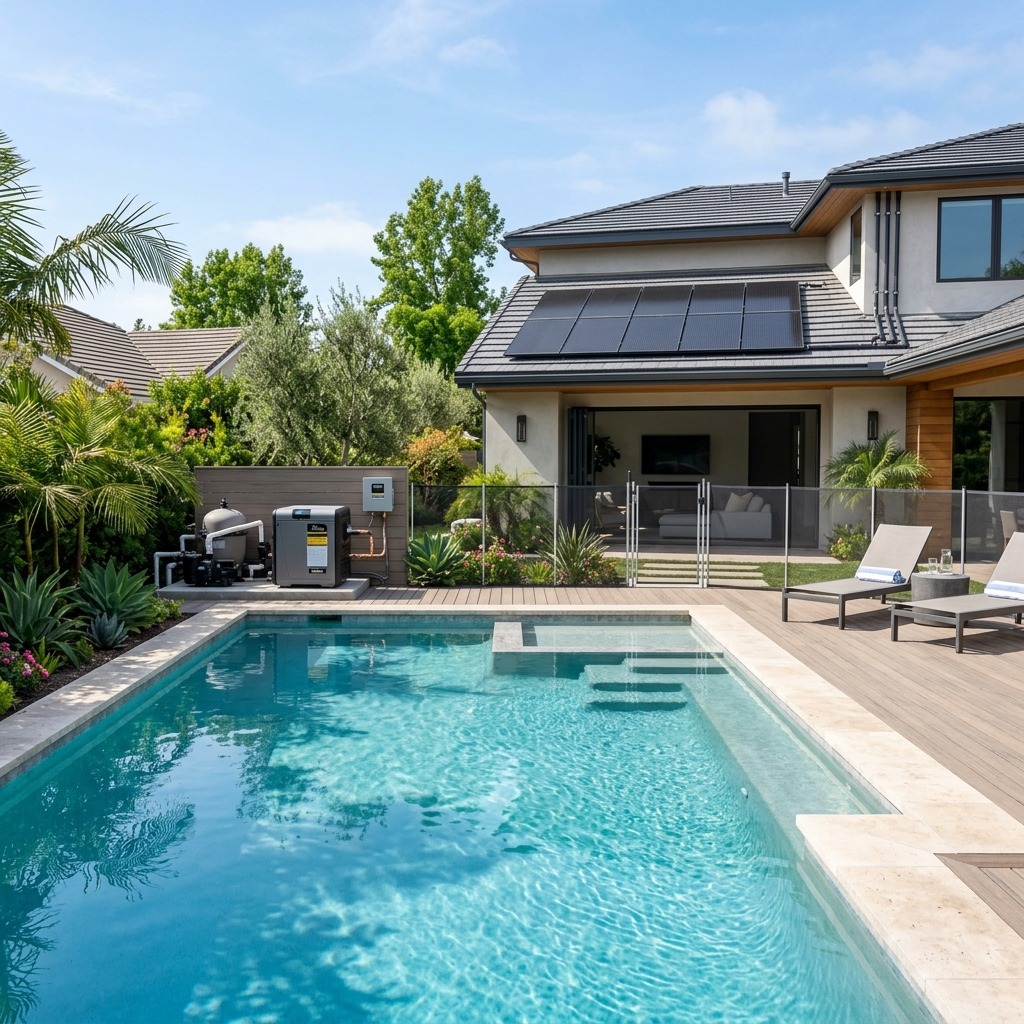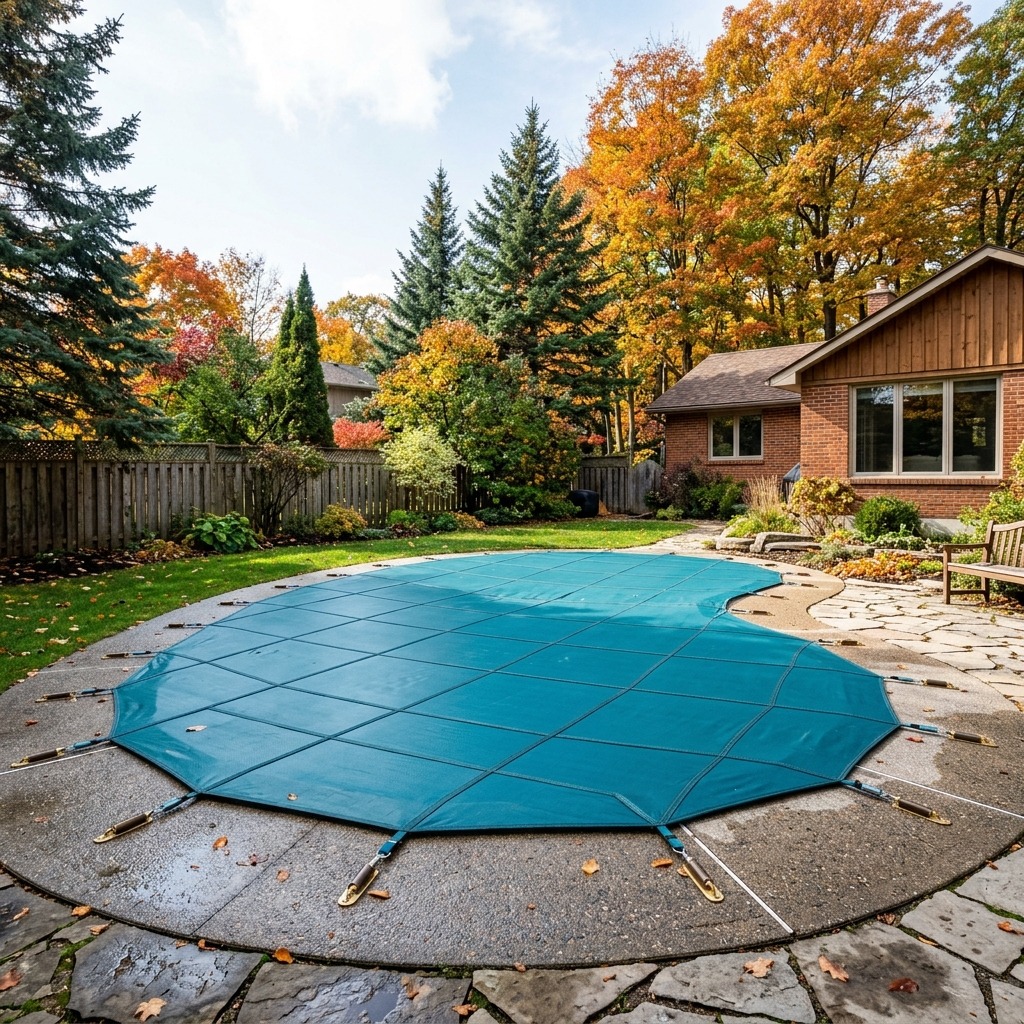
A plunge pool delivers the luxury of a private swimming or soaking space in a fraction of the footprint and at a fraction of the cost of a full-size inground pool. But “plunge pool” is an umbrella term that covers everything from a $4,500 galvanized stock tank conversion to a $75,000 custom gunite installation with integrated heating and cooling. The gap between those two extremes is enormous, and the wrong estimate can derail your project before a single shovel enters the ground.
This guide breaks down every plunge pool cost category by type, material, size, and feature so you can build an accurate budget before you talk to a single contractor.
Key Takeaways
- Plunge pool costs range from $10,000 to $75,000+ depending on type, material, and installation method.
- Prefab fiberglass plunge pools ($15,000–$45,000 installed) offer the fastest installation and lowest long-term maintenance.
- Custom gunite plunge pools ($30,000–$75,000) deliver maximum design flexibility but require the longest build timeline (8–16 weeks).
- Stock tank / DIY conversions ($3,000–$12,000) are the most affordable entry point but have significant code and durability limitations.
- Heating and cooling add $3,000–$9,000 to install and $500–$1,800 per year to operate costs that vary enormously by climate zone.
- Annual maintenance runs $800–$2,800 per year depending on pool type, heating system, and whether you self-maintain.
What Is a Plunge Pool?
A plunge pool is a small, deep body of water designed primarily for cooling, soaking, hydrotherapy, or cold-water immersion rather than lap swimming or recreational play. Standard plunge pools range from 6×10 feet to 12×16 feet in surface area, with depths of 4–6 feet deeper than a typical hot tub but significantly smaller than a full-size inground pool in every other dimension.
The category has expanded significantly in recent years. In 2026, plunge pools broadly divide into three use cases:
- Cold plunge pools Unheated or actively chilled water (50–60°F) for recovery, stress reduction, and metabolic benefits. Popular among athletes and wellness-focused homeowners.
- Warm plunge pools Heated water (90–104°F), essentially a large in-ground hot tub. Often integrated with spa jets.
- Dual-temperature systems A heating-and-cooling system that allows the owner to toggle between cold plunge and warm soak at the touch of a button. The most expensive configuration, but increasingly in demand.
Structurally, plunge pools are built using the same four material categories as full-size pools: gunite/shotcrete, fiberglass, vinyl liner, and prefabricated polymer or steel shells. Each material carries different upfront costs, installation timelines, and long-term maintenance demands.
Shell wall thickness is verified during post-installation inspection using an ultrasonic concrete wall thickness gauge, a non-destructive instrument that measures the time-of-flight of ultrasonic pulses through the shell wall to calculate thickness in millimeters without requiring core extraction. Minimum shell wall thickness for residential plunge pool construction is defined under ANSI/APSP-5 2011 — American National Standard for Residential Inground Swimming Pools, Section 2.4, which specifies structural wall thickness minimums as a function of pool depth and soil loading class requirements that apply equally to compact plunge pool shells as to full-size residential pools.
Full Installation Cost Breakdown (2026)
The table below captures every line item in a typical plunge pool installation. Costs vary by pool type see the next section for per-type breakdowns.
| Cost Component | Low Range | High Range | Notes |
| Excavation & Dirt Removal | $2,000 | $6,000 | Rock excavation adds $2,500–$9,000 |
| Pool Shell / Structure | $8,000 | $40,000 | Varies widely by material type |
| Plumbing (skimmer, returns, jets) | $1,500 | $4,500 | Spa jets add cost |
| Filtration Equipment (pump + filter) | $1,800 | $5,000 | Variable-speed pump recommended |
| Heating / Cooling Unit | $3,000 | $9,000 | Heat pump preferred over gas for efficiency |
| Electrical & Bonding | $1,200 | $3,500 | GFCI, bonding grid required by code |
| Concrete or Paver Surround (150 sq ft) | $2,000 | $6,500 | Smaller deck than full-size pool |
| Pool Cover (manual or automatic) | $800 | $5,000 | Safety + heat retention |
| Permit & Inspections | $300 | $2,000 | Varies by state and municipality |
| Total (Prefab Fiberglass) | $18,000 | $42,000 | Fastest install; lowest maintenance |
| Total (Custom Gunite) | $30,000 | $75,000 | Maximum design flexibility |
| Total (Vinyl Liner) | $15,000 | $38,000 | Lowest upfront; liner replacement every 7–10 yrs |
Contractor Tip: Plunge pools are frequently bundled with spa-grade equipment (higher-flow pumps, insulated plumbing, precision temperature controllers) that adds cost over standard pool specs. Confirm in writing which equipment tier is included in your quote.
Excavation boundary verification is performed using a digital laser distance measurer, a Class 2 infrared laser instrument that measures horizontal and vertical distances to ±1mm accuracy at ranges up to 100 meters. Confirming excavated dimensions against the pool shell’s specified footprint before the shell is placed prevents the shell-to-excavation misalignment that forces costly re-excavation or shimming under the shell base. Bonding of all metallic components within the excavated plunge pool structure is required under NEC Article 680.26(B)(1) equipotential bonding for in-ground pool structures which mandates a continuous copper bonding conductor connecting the shell reinforcement, equipment pad, all metal fittings, and the pool water itself.
Plunge Pool Types & Material Costs
Fiberglass Plunge Pools ($15,000–$45,000 installed)
Fiberglass is the dominant material choice for plunge pool installations in 2026, accounting for an estimated 55–60% of new plunge pool projects. Manufacturers including Leisure Pools, Thursday Pools, and Barrier Reef Pools produce purpose-built plunge pool shells in standard sizes ranging from 6×10 feet to 10×14 feet. The shell is factory-manufactured in a climate-controlled facility, transported on a flatbed truck, and crane-placed into the excavated hole in a single day with water in the pool typically achievable within one week of shell delivery.
Why fiberglass dominates plunge pools:
- Non-porous gelcoat surface reduces chemical consumption by 30–40% vs. concrete
- Smooth surface resists algae growth, reducing maintenance time
- Factory warranty on the shell structure (typically lifetime)
- No surface replastering ever
Cost range: $15,000–$45,000 installed, depending on size, plumbing, equipment, and deck.
Gunite / Shotcrete Plunge Pools ($30,000–$75,000 installed)
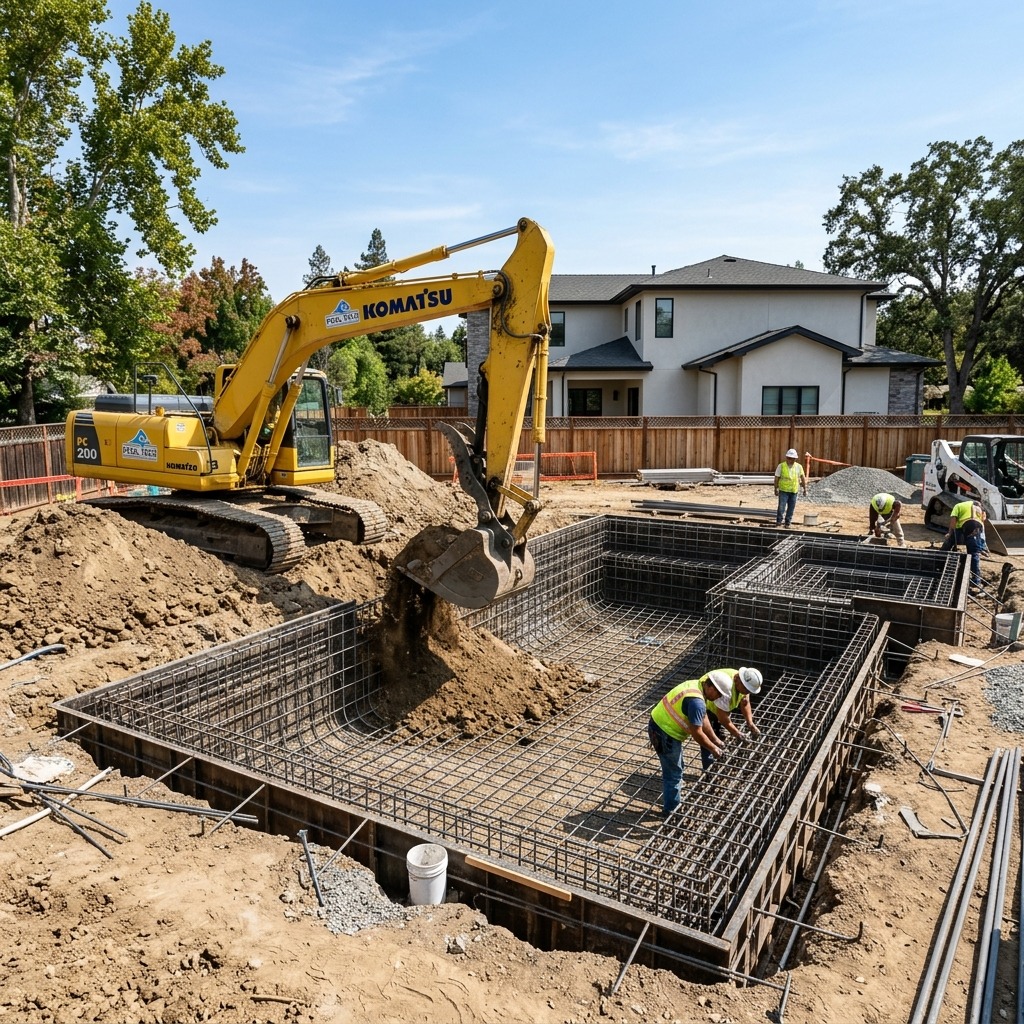
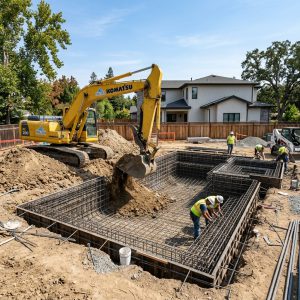
A custom gunite plunge pool is built entirely on-site, offering complete control over every dimension, shape, depth, and surface finish. After excavation, a steel rebar cage is tied inside the hole and a high-pressure pump shoots a gunite (dry-mix shotcrete) mixture directly onto the rebar at pressures of 50–90 PSI, building a structural concrete shell 6–10 inches thick. Once cured (3–7 days), the shell is finished with plaster, pebble aggregate, or tile.
The premium over fiberglass reflects on-site labor intensity and longer build timelines (8–16 weeks). Gunite makes sense when your design requirements exceed what prefab shells can deliver irregular shapes, integrated benches, beach entries, or pools wider than 12 feet that no fiberglass mold accommodates.
Cost range: $30,000–$75,000 installed.
Vinyl Liner Plunge Pools ($15,000–$38,000 installed)
A vinyl liner plunge pool uses the same framed-panel construction as a full-size vinyl pool steel or polymer composite wall panels, a vermiculite-cement floor, and a custom-fitted thermoplastic liner scaled down to plunge pool dimensions. Installation is faster than gunite and less restrictive in shape than fiberglass.
The recurring liner replacement cost ($4,000–$9,000 per cycle, every 7–10 years) is the key disadvantage at plunge pool scale. Because plunge pools are smaller in volume than standard pools, the liner represents a larger percentage of the total investment, making the replacement cycle proportionally more significant.
Cost range: $15,000–$38,000 installed.
Prefab Above-Ground / Polymer Shell ($8,000–$22,000 installed)
Prefabricated polymer plunge pool shells from brands including Soake Pools, Plunge, and Modus Pools are self-contained units that can be installed above-grade or partially sunk into the ground. The unit arrives complete with integrated pump, filter, heating, and in some cases hydrotherapy jets. Site preparation is minimal (a level concrete pad or compacted gravel base), and electrical connection is often the only trade work required.
Cost range: $8,000–$22,000, including base preparation and electrical. These systems are closest to a “plug-and-play” solution and are popular for rental properties, rooftops, and patios where excavation isn’t feasible.
Shell-wall hardness testing on concrete plunge pool shells is performed using a Schmidt (concrete rebound) hammer, a spring-loaded instrument that fires a steel plunger against the cured shell surface and measures the rebound distance in standardized units as a proxy for compressive strength. Rebound values are correlated to compressive strength (psi) via calibration curves that comply with ACI 318-19 Building Code Requirements for Structural Concrete, Section 19.2.1, which specifies minimum compressive strength thresholds for reinforced concrete structures in contact with soil and groundwater the precise exposure class that all below-grade plunge pool shells occupy.
Size, Shape & Depth: Cost Factors
Surface Area
Plunge pool size is the primary driver of material and excavation cost. Every additional square foot of surface area requires proportionally more shell material, liner, plumbing, and filtration capacity.
| Pool Dimensions | Approx. Volume | Approx. Installed Cost (Fiberglass) |
| 6 × 10 ft | 3,500 gallons | $15,000 – $25,000 |
| 8 × 10 ft | 5,000 gallons | $20,000 – $32,000 |
| 8 × 12 ft | 6,500 gallons | $23,000 – $36,000 |
| 10 × 14 ft | 9,000 gallons | $28,000 – $42,000 |
| 10 × 16 ft | 11,000 gallons | $32,000 – $48,000 |
Depth
Standard plunge pools are 4–5 feet deep sufficient for full-body immersion while seated or standing. Cold plunge applications typically target 5–6 feet to allow complete submersion without ground contact, while warm-soak configurations frequently use 3.5–4.5 feet to maximize the seating ledge area.
Each additional foot of depth past 5 feet requires deeper excavation, taller wall panels or thicker shell walls, a larger liner, and more water volume to heat or chill adding $2,000–$5,000 per additional foot at custom gunite scale.
Shape Complexity
Round or rectangular plunge pools are the most affordable shapes, standard dimensions, simple liner manufacturing, and uniform wall panel configurations. Kidney shapes, L-shaped designs, and pools with integrated bench cutouts or swim jet alcoves all require custom fabrication, adding $3,000–$12,000 over equivalent rectangular builds.
Excavation grade is verified across the full pool footprint using an optical surveying level (theodolite) , a precision rotary instrument that establishes a horizontal datum plane accurate to ±1 arc-second across the excavation site. Confirming uniform excavation depth before shell placement is essential for plunge pools because small-volume shells have far less tolerance for sub-base irregularity than full-size pools; a 2-inch high point under a 10×14-foot shell creates a stress concentration that can crack a fiberglass shell under water load. ANSI/NSPI-5 Section 5.2 defines minimum bather load area requirements for small-volume aquatic venues, establishing the dimensional compliance baseline for residential plunge pool structures.
Heating & Cooling: The Core Cost Driver
For most plunge pool buyers, the heating and cooling system is the feature that defines the experience and it’s the cost category most frequently underestimated at the planning stage.
Heat Pumps (Recommended)
A heat pump is the most energy-efficient active heating method for plunge pools. It extracts heat from the ambient air and transfers it to the water consuming approximately 1 kWh of electricity for every 5–6 BTU delivered to the pool. Brands including Hayward, Pentair, and Rheem manufacture heat pumps sized specifically for small-pool applications.
- Installed cost: $3,000–$7,000 (unit + installation + electrical)
- Annual operating cost: $400–$1,200 per year depending on climate and target temperature
- Best for: Warm plunge (90–104°F) in climates above 45°F average; dual-temperature applications
Gas Heaters
Gas heaters heat plunge pools faster than heat pumps (temperature recovery in 30–60 minutes vs. 2–6 hours) but are 3–5x more expensive to operate per BTU.
- Installed cost: $2,500–$5,000 (unit + gas line extension)
- Annual operating cost: $800–$2,500 depending on gas prices and usage frequency
- Best for: Cold climates where heat pump efficiency degrades; quick-heat applications
Active Chilling (Cold Plunge Systems)
Cold plunge requires active refrigeration, essentially a reverse-cycle heat pump or dedicated chiller unit that removes heat from the water and maintains temperatures of 50–60°F. This is the most expensive configuration.
- Installed cost: $5,000–$9,000 (chiller unit + installation)
- Annual operating cost: $600–$1,800 per year (electricity to maintain chill)
- Best for: Dedicated cold plunge applications in all climates; year-round cold-water therapy
Pool Covers: The Underestimated Heat Retention Tool
A quality insulating cover available from Loop-Loc, Coverstar, and Safety Cover reduces heating energy consumption by 50–70% by preventing evaporative heat loss. For plunge pools, where the water volume is small and temperature changes rapidly, a cover can reduce monthly heating costs by $40–$120. A manual cover costs $800–$1,500; an automatic safety cover costs $4,000–$7,500 for a plunge pool footprint.
Heating system efficiency is measured at commissioning using a digital BTU clamp meter, an instrument that measures the AC current draw and voltage of the heater’s electrical supply simultaneously and calculates the unit’s instantaneous BTU output via thermal coefficient against a calibrated reference. BTU output verification ensures the installed unit meets the minimum performance threshold specified under ASHRAE Standard 90.1-2022 Energy Standard for Buildings, Section 7.4.6 Swimming Pools, Hot Tubs, and Spas, which establishes minimum Coefficient of Performance (COP) requirements for electrically operated pool and spa heating equipment a threshold that heat pump models from Hayward, Pentair, and Rheem must demonstrate before project sign-off in most jurisdictions.
Calculate your heating cost: Use our plunge pool cost calculator to model your specific pool volume, target temperature, and climate zone against annual heating projections.
Installation Process & Labor Costs
Timeline by Pool Type
| Pool Type | Typical Timeline | Labor Cost |
| Fiberglass (prefab) | 1–3 weeks | $5,000 – $12,000 |
| Vinyl Liner (framed) | 3–6 weeks | $8,000 – $16,000 |
| Gunite / Shotcrete | 8–16 weeks | $15,000 – $35,000 |
| Prefab Polymer (above-grade) | 1–5 days | $1,000 – $4,000 |
Labor Cost Breakdown
Labor charges for a plunge pool installation cover five distinct trade categories:
- Excavation operator Machine excavation plus dirt removal. Typically $2,000–$6,000 for a standard plunge pool footprint.
- Pool builder (shell work) For gunite, this includes rebar tying, shotcrete application, and curing management. For fiberglass, shell placement and backfill management.
- Plumber Skimmer and return line installation, bonding fittings, and equipment pad connection.
- Electrician Bonding grid, GFCI circuit, equipment wiring. An independent licensed electrician is required in most jurisdictions even when the pool contractor manages other trades.
- Concrete/deck contractor Surround deck installation after pool completion.
The shotcrete application process for gunite plunge pools requires real-time quality management. During shell construction, project technicians monitor shotcrete consolidation using a concrete vibrator with pencil-tip probe, a 1-inch diameter electric vibrator that is inserted into the wet shotcrete at 6-inch intervals along the rebar cage to eliminate void pockets and ensure the aggregate bonds uniformly around every rebar intersection. Vibration frequency and insertion spacing must conform to ACI 309R-05 Guide for Consolidation of Concrete, Section 4.3, which specifies that vibrators should be inserted at 1.5× the vibrator’s radius of action (typically 8–12 inches apart) and withdrawn slowly at 3 inches per second to prevent air entrapment in pool shell walls a critical quality standard for small, deep-walled structures like plunge pools where wall thickness is minimal.
Prefab vs. Custom: Side-by-Side Cost Comparison
| Factor | Prefab Fiberglass | Custom Gunite | Prefab Polymer Shell |
| Upfront Cost | $15,000 – $45,000 | $30,000 – $75,000 | $8,000 – $22,000 |
| Installation Timeline | 1–3 weeks | 8–16 weeks | 1–5 days |
| Design Flexibility | Limited to shell catalog | Fully custom | Very limited |
| Surface Replastering | Never | Every 10–15 years ($3,500–$8,000) | N/A (liner replacement) |
| Annual Maintenance | $900 – $1,800 | $1,200 – $2,800 | $600 – $1,400 |
| Manufacturer Warranty | Lifetime shell | Contractor warranty (varies) | 2–10 years |
| 10-Year Total Cost | $24,000 – $63,000 | $42,000 – $103,000 | $14,000 – $36,000 |
| Adds Home Value | Yes (meaningful) | Yes (most) | Minimal (above-grade) |
For the majority of residential plunge pool buyers, prefab fiberglass delivers the best combination of cost, timeline, and long-term ownership economics. Custom gunite is justified when design requirements genuinely exceed what catalog shells offer, not simply as a status preference.
Pre-installation site leveling for prefab shell placement is performed using a laser level transit with rotating beam head a self-leveling instrument that projects a continuous 360° horizontal laser plane across the excavation floor, enabling technicians to verify grade uniformity to within ±⅛ inch at all four shell corner points simultaneously. Verified grade compliance before shell placement is a prerequisite under ICC International Building Code (IBC) Section 1808.6 Bearing Capacity of Soils, which requires that the sub-grade bearing capacity be verified and any soft spots or voids remediated before structural load is applied preventing the differential settlement that can crack or misalign a prefabricated pool shell once the structure is filled and under full hydraulic load.
Annual Maintenance & Operating Costs
Plunge pools are significantly cheaper to maintain than full-size pools primarily because their smaller water volume requires fewer chemicals, less filter run time, and less cleaning labor. However, the heating or chilling system adds an ongoing energy cost that full-size unheated pools don’t carry.
Annual Cost Breakdown
| Cost Category | Fiberglass | Gunite | Prefab Polymer |
| Chemicals | $250 – $600 | $400 – $900 | $200 – $500 |
| Electricity (pump) | $120 – $360 | $120 – $360 | $100 – $300 |
| Heating / Cooling (heat pump) | $400 – $1,200 | $400 – $1,200 | $300 – $900 |
| Filter media replacement | $50 – $150 | $50 – $150 | $40 – $120 |
| Professional service (if used) | $600 – $1,200 | $800 – $1,800 | $400 – $900 |
| Equipment reserve (prorated) | $150 – $400 | $200 – $500 | $100 – $300 |
| Annual Total (DIY) | $970 – $2,310 | $1,170 – $3,110 | $740 – $2,120 |
| Annual Total (Pro Service) | $1,570 – $3,510 | $1,970 – $4,910 | $1,140 – $3,020 |
Note: Professional service fees include chemical costs. Do not add the chemical line to a professional service contract total.
Water Chemistry for Small-Volume Pools
Plunge pools present a unique chemistry challenge: their small water volume means that a single bather introduces a proportionally larger chemical load than in a full-size pool. A 5,000-gallon plunge pool has roughly one-quarter the water volume of a standard 20,000-gallon pool which means the same bather’s body oils, sunscreen, and organic load raises contamination levels four times as fast.
Oxidation-reduction potential (ORP) monitoring is the most reliable ongoing chemistry metric for small-volume aquatic venues. ORP measures the water’s overall sanitizing power as a millivolt reading rather than just the raw chlorine ppm, a more accurate indicator of real-time disinfection capacity. Regardless of whether the plunge pool uses stabilized sodium dichloro-s-triazinetrione (dichlor) tablet feeders or a salt-generated hypochlorite (NaCl saltwater chlorine) system as the primary sanitizer, water quality is verified using an ORP (oxidation-reduction potential) electrode meter a platinum-tipped electrochemical sensor calibrated in millivolts (mV) that measures the water’s net oxidizing power across all active sanitizing species simultaneously, not just free chlorine alone. The Pool and Hot Tub Alliance (PHTA) Technical Manual Section 7.4 recommends a minimum ORP reading of 650 mV for residential small-volume aquatic venues where bather-to-water-volume ratios exceed standard pool norms a threshold consistent with the disinfection efficacy benchmarks established in CDC Model Aquatic Health Code (MAHC) Section 5.7.3.2 for commercial aquatic venues of comparable bather density. Note: MAHC is a model code for public aquatic facilities; the 650 mV ORP benchmark is independently adopted as the residential plunge pool industry standard by the PHTA.
Regional Price Variations by State
Plunge pool installation costs vary by region based on labor rates, material freight, permit complexity, and soil conditions. The following 2026 market estimate ranges apply to a fiberglass plunge pool (10×14 ft, heat pump, basic concrete surround):
| Region / States | Installed Cost Range |
| Southeast (FL, GA, SC, AL, TX) | $18,000 – $35,000 |
| Southwest (AZ, NM, NV, UT) | $20,000 – $38,000 |
| Midwest (IL, OH, IN, MN, MO) | $22,000 – $40,000 |
| Mid-Atlantic (VA, MD, PA, NJ) | $25,000 – $44,000 |
| New England (MA, CT, NY, ME) | $28,000 – $50,000 |
| Mountain West (CO, WA, OR, ID) | $26,000 – $46,000 |
| California (Bay Area, LA, SD) | $32,000 – $58,000 |
Why such variation? In cold-climate states, plunge pool installations require insulated plumbing and frost-protection measures that add $1,500–$4,000 to base cost. Coastal markets (California, New England) carry higher labor rates and more stringent permit requirements. Desert Southwest markets benefit from lower frost risk but face premium freight costs for fiberglass shells transported from Gulf Coast manufacturers.
Underground utility mapping at the excavation site is performed using a ground-penetrating radar (GPR) locator a surface-mounted antenna that transmits 250–2,500 MHz electromagnetic pulses into the ground and detects reflected signals from buried objects (pipes, cables, voids) at depth, producing a cross-sectional radargram of below-grade utility routing without excavation. GPR scanning before plunge pool excavation is required in many municipalities as a condition of the excavation permit, and it is strongly advisable regardless of striking an unlocated gas line or high-voltage conduit during excavation creating both a life-safety emergency and a project-halting cost event. Permanent equipotential bonding of all metallic components within the plunge pool installation is required under NEC Article 680.26 Equipotential Bonding for Permanently Installed Pools, which mandates a continuous copper bonding conductor connecting the shell reinforcement, all metallic fittings, handrails, equipment enclosures, and the pool water itself eliminating dangerous voltage gradient differentials in and around the pool structure that create shock hazard in wet environments.
Plunge Pool vs. Full-Size Pool: The Real Cost Comparison
One of the most common planning decisions homeowners face is whether to invest in a plunge pool or stretch the budget for a full-size inground pool. Here is a direct 10-year total cost comparison:
| Cost Category | Plunge Pool (Fiberglass) | Full-Size Pool (Fiberglass 16×32) |
| Initial Installation | $32,000 | $68,000 |
| Heating (heat pump, 10 yrs) | $6,000 | $8,000 |
| Chemicals (10 yrs) | $4,000 | $4,500 |
| Electricity — Pump (10 yrs) | $2,400 | $4,000 |
| Routine Service (10 yrs) | $12,000 | $15,000 |
| Deck & Surround | $5,000 | $15,000 |
| 10-Year Total | $61,400 | $114,500 |
| Savings | $53,100 over full-size pool | — |
The plunge pool is $36,000 cheaper at installation and approximately $53,000 cheaper over 10 years when heating and maintenance are included. The trade-off is capability: a plunge pool cannot support lap swimming, recreational games, or large groups.
Who should choose a plunge pool:
- Lots under 5,000 square feet where a full-size pool physically won’t fit
- Homeowners who want a wellness-focused water feature (therapy, cold plunge, hot soak) rather than recreational swimming
- Budgets under $50,000 for the complete project
- Urban or secondary properties (townhouses, condos with private yards, vacation rentals)
Who should choose a full-size pool:
- Families with children who want space to swim recreationally
- Homeowners in markets where pools add significant property value
- Properties with sufficient yard space to accommodate both the pool and usable surrounding yard
Water circulation performance at equipment commissioning is verified using a paddlewheel digital flow meter, an inline instrument that measures actual gallons-per-minute flow through the pool’s return plumbing against the pump’s rated GPM output. Confirming circulation meets the correct minimum turnover rate plunge pools must complete a full water volume turnover every 30–90 minutes, not the 6–8 hours typical of full-size pools, because the high bather-to-volume ratio creates chemistry loading conditions equivalent to a residential spa that ensures both water quality and equipment longevity. Failure to achieve 30-minute turnover in a 5,000-gallon plunge pool with two bathers produces chlorine depletion rates that cannot be sustained by standard chemical dosing schedules. The minimum turnover rate for residential plunge pools is governed by the hydraulic design standards of ANSI/APSP-5 American National Standard for Residential Inground Swimming Pools for structural flow rate requirements, and the higher-frequency circulation standard of ANSI/APSP-3 American National Standard for Residential Inground Spas, which mandates 30-minute minimum turnover cycles for spa-scale water volumes with bather densities equivalent to those present in a plunge pool.
Get your personalized estimate: Use our plunge pool cost calculator to compare plunge pool vs. full-size pool costs for your specific yard and budget.
DIY Plunge Pool Options & Costs
The DIY plunge pool market has expanded dramatically since 2022, driven by the popularity of cold-water therapy on social media and a wave of affordable stock tank and prefab solutions. Here are the four most common DIY approaches:
1. Stock Tank Conversion ($3,000–$8,000)
A galvanized steel stock tank available from agricultural supply brands like Tarter Farm & Ranch in 8-foot, 10-foot, and 12-foot round configurations can be converted into a functional cold plunge or warm soak with the addition of a pump, filter, and (optionally) a chiller unit. Stock tanks hold 740–2,000 gallons depending on diameter an 8-foot tank holds approximately 740–800 gallons, a 10-foot tank approximately 1,200 gallons, and a 12-foot tank approximately 1,800 gallons and are typically placed on a concrete pad or compacted gravel base at grade.
Full cost breakdown:
- Stock tank (8–10 ft round): $400–$900
- Pump/filter system: $300–$700
- Concrete pad installation: $800–$2,000
- Chiller unit (optional): $1,500–$4,500
- Electrical connection (GFCI required): $300–$700
- Total: $3,300–$8,800
Limitations: No building permits are typically required for above-ground structures under a certain volume threshold (check your local code), but galvanized steel degrades in chlorinated water. Most stock tank conversions require lining with a fitted PVC or EPDM rubber liner ($200–$500) to prevent metal contamination of the water and extend the vessel’s usable life.
2. IBC Tote Conversion ($1,500–$4,000)
An intermediate bulk container (IBC tote) a 275–330-gallon HDPE container in a galvanized steel cage can be converted into an entry-level cold plunge for under $2,000 with a used tote ($100–$250), a submersible pump, a basic filter, and an ice maker or chiller. This is the lowest-cost entry point for cold plunge experimentation, but the small volume (275 gallons vs. a stock tank’s 740+ gallons for a standard 8-foot model) limits full-body immersion to seated or crouching positions.
3. Shipping Container Pool ($12,000–$35,000)
A standard 20-foot or 40-foot ISO shipping container can be converted into a plunge pool or lap pool by a specialist contractor. The container’s corrugated steel shell is welded, coated with a waterproof epoxy lining, fitted with plumbing and filtration, and placed on a reinforced concrete pad. This approach delivers a structurally rigid, large-volume vessel at a lower cost than custom gunite but requires a crane for placement and significant site preparation.
Code Compliance Note for DIY Installations
All DIY plunge pools with electrical equipment pumps, heaters, and chillers require a GFCI-protected circuit regardless of the pool’s permanence or construction type. This is not optional. Electrical draw at the equipment panel is verified using a digital clamp meter a non-contact AC current measuring instrument clamped around the pump’s supply wire to confirm actual operating current draw matches the rated amperage, ensuring the circuit breaker is correctly sized and the GFCI is operating within its rated parameters. Electrical installations for all permanently installed aquatic structures including converted stock tanks placed on permanent pads must comply with NEC Article 680.10 Electrical Installations for Permanently Installed Swimming Pools, which governs circuit protection, bonding, and GFCI requirements for any body of water intended for human immersion that is permanently or semi-permanently sited at a residential property.
Frequently Asked Questions
How much does a plunge pool cost?
Plunge pool costs range from $10,000 to $75,000+ depending on type and installation method. Prefab fiberglass plunge pools installed inground cost $15,000–$45,000. Custom gunite plunge pools cost $30,000–$75,000. Prefab polymer above-ground units cost $8,000–$22,000. Stock tank DIY conversions cost $3,000–$9,000 but have significant durability and code limitations.
Is a plunge pool worth the cost?
A plunge pool makes strong financial sense for homeowners who want a water feature but don’t have the space, budget, or use case for a full-size pool. At 35–55% of the cost of a comparable full-size pool, a plunge pool delivers hydrotherapy, cooling, and aesthetic value while consuming far less yard space. In urban markets and smaller lots, it is often the only viable inground pool option. In markets where pools add meaningful property value, an inground plunge pool from a reputable manufacturer adds measurable value at resale unlike above-ground alternatives.
How long does a plunge pool last?
A fiberglass plunge pool shell carries a lifetime structural warranty from manufacturers like Leisure Pools and Thursday Pools and realistically lasts 30–50 years with proper water chemistry maintenance. Gunite shells require replastering every 10–15 years ($3,500–$8,000), but the concrete structure itself is permanent. Prefab polymer above-ground units carry 2–10 year warranties and typically last 10–15 years in practice. DIY stock tank conversions typically last 5–10 years before corrosion or liner degradation requires replacement or repair.
How much does it cost to heat a plunge pool?
Annual heating cost for a plunge pool depends on your target temperature, your climate, and your heater type. A heat pump maintaining a warm soak (100°F) in a moderate climate typically costs $400–$1,200 per year to operate. A gas heater for the same application costs $800–$2,500 per year depending on gas prices. An active chilling system maintaining 55°F for cold plunge use costs $600–$1,800 per year in electricity. An insulating pool cover reduces all of these figures by 40–60%.
Can a plunge pool replace a hot tub?
A heated plunge pool can functionally replace a hot tub for soaking purposes, with the added benefits of more space, deeper immersion, and the ability to use it as a cold plunge by switching to chilled mode (with a dual-temperature system). However, plunge pools do not replicate the high-velocity hydrotherapy jets of a purpose-built spa; the therapeutic jet experience is distinct. For buyers whose primary goal is jet massage, a dedicated spa or an integrated pool-spa combination is a better fit than a plunge pool.
Do plunge pools require permits?
Yes, in most jurisdictions. Inground plunge pools are treated as permanently installed swimming pools and require the same building permit, electrical permit, and safety barrier (fence) as a full-size pool. Above-ground prefab units may qualify for exemptions in some municipalities based on volume thresholds or impermanence, but any unit with permanent electrical connections typically requires at minimum an electrical permit. Always verify with your local building department before installation unpermitted pool structures create insurance exposure and title complications at resale.
How small can a plunge pool be?
The practical minimum for an inground plunge pool is approximately 6×8 feet at the surface large enough for one person to fully submerge while seated. Most prefab fiberglass shells start at 6×10 feet. Stock tank conversions offer a smaller footprint (8-foot round tanks have approximately 50 sq ft of surface area) at significantly lower cost. Below 6 feet in any linear dimension, you are essentially building an oversized soaking tub rather than a functional plunge pool.
Can you add a plunge pool to an existing backyard with a full-size pool?
Yes. Many homeowners add a plunge pool as a companion feature to an existing full-size pool positioned adjacent to the main pool or integrated into the pool deck. A cold plunge pool alongside a warm full-size pool creates a hot/cold contrast therapy circuit that has become a popular wellness design. At plunge pool dimensions, the additional excavation footprint is typically manageable in a yard that already accommodates a full-size pool. Budget $20,000–$45,000 for a fiberglass plunge pool addition to an existing pool project, less if the contractor can share excavation equipment and electrical infrastructure with the main pool.
Underground plumbing lines from the plunge pool equipment pad are inspected prior to backfill using a submersible push-rod inspection camera a flexible fiber-optic camera head mounted on a rigid push-rod that is fed through the pool’s return and suction plumbing to visually inspect the interior pipe walls for cracks, joint separations, debris blockages, or installation defects. Camera footage is recorded and reviewed with the homeowner before the backfill phase covers the pipes permanently, providing documented pre-backfill pipe condition evidence. Below-grade plumbing inspection and acceptance criteria for prefabricated spa and plunge pool shells are governed by IAPMO/ANSI Z124.7 Prefabricated Plastic Spa Shells, which specifies the plumbing integrity testing requirements for factory-assembled aquatic vessel shell assemblies prior to field installation.