Are Saltwater Pools Really Chlorine-Free?
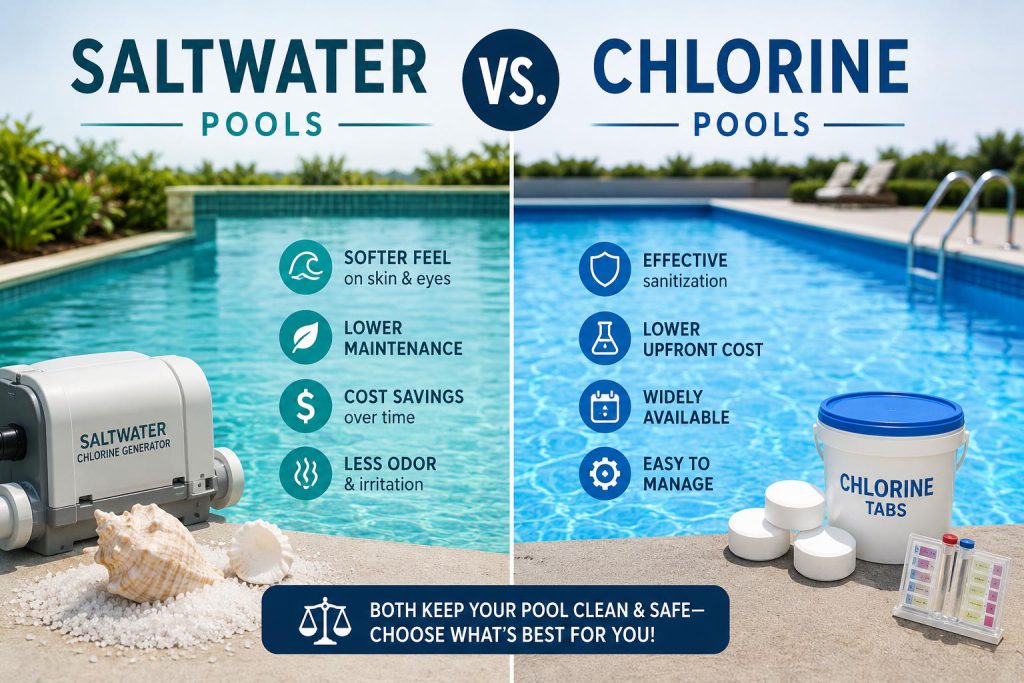
No. Both saltwater and traditional chlorine pools use chlorine to keep the water clean and safe. The only difference is how that chlorine gets into the water.
In a traditional pool, you buy chlorine chemicals and add them by hand. Many homeowners use dry calcium hypochlorite granules to shock and sanitize their pool. You have to measure the right amount and add it on a schedule. If you add too much, the water becomes harsh on skin. If you add too little, bacteria can grow. Also, in California, pool owners must follow the California Code of Regulations (CCR) Title 22 Section 65529 to keep sanitizer levels within a safe range. To get accurate readings, many pool owners use a high-precision digital titration colorimeter. This device tells you exactly how much active chlorine is in the water at any time.
Here is how the two systems compare at a glance:
| Feature | Saltwater Pool | Traditional Chlorine Pool |
| Sanitizer Used | Chlorine | Chlorine |
| How Chlorine is Added | Made automatically from salt | Added manually by hand |
| Water Feel on Skin | Soft, smooth, and gentle | Can feel dry or rough |
| Chlorine Odor | Very low or none | Strong when poorly balanced |
| Sanitizer Level Stability | Stays consistent | Spikes and drops regularly |
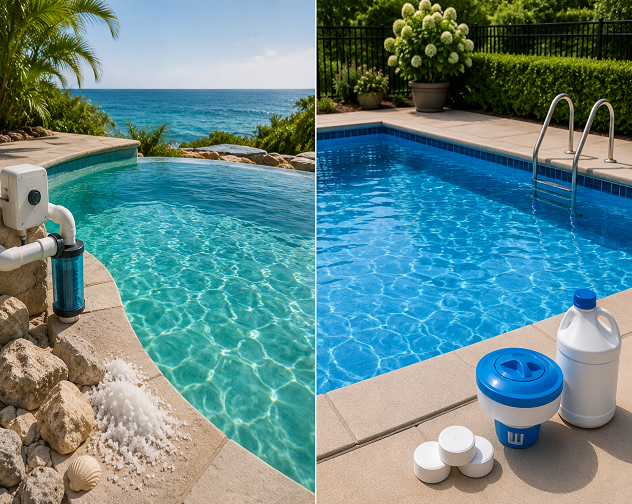
How Does a Salt System Actually Create Chlorine?
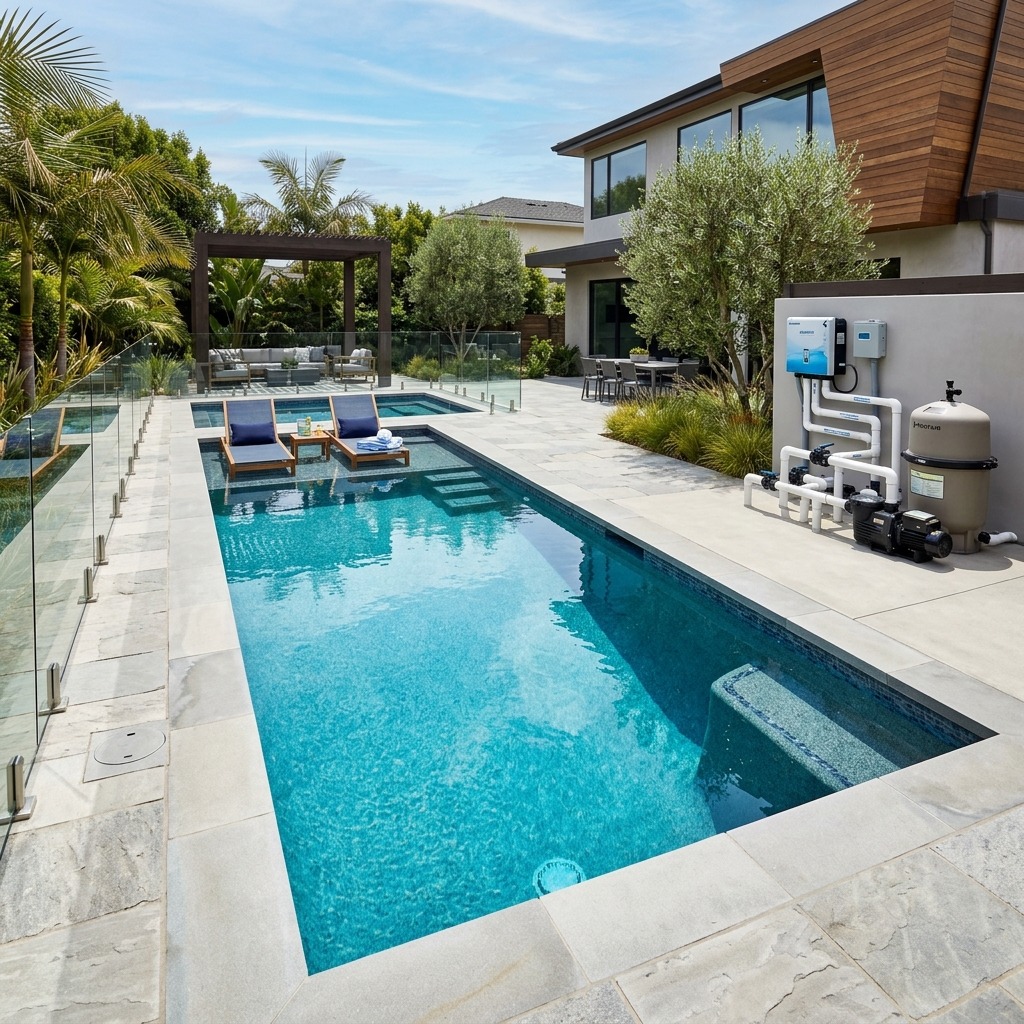
A saltwater pool creates chlorine through a simple process called electrolysis. You add pool salt to the water, and the salt dissolves. Next, the pool pump pushes this salt water through a special unit called a salt cell.
Inside the salt cell are metal plates made of ruthenium-coated titanium electrode plates. The system sends an electric current through these plates. That current breaks the salt apart and turns it into chlorine. The chlorine then flows into the pool and kills bacteria and algae. After the chlorine does its job, it turns back into salt. This means the salt recycles itself over and over. You rarely need to add more salt unless you drain the pool or heavy rain dilutes the water.
To make sure the system works correctly, you can use a microprocessor-controlled salt cell tester. This tool checks whether the plates are producing enough chlorine. It also alerts you when the plates need cleaning. In Sacramento, the Sacramento County Environmental Management Department (SCEMD) Pool Safety and Water Chemistry Guidelines require pool owners to keep their generators in safe working condition.
Here is how the two cleaning systems compare step by step:
| Cleaning Step | Saltwater Pool | Traditional Chlorine Pool |
| Chemical Used | Pool-grade salt (NaCl) | Chlorine tablets or liquid |
| Main Equipment | Salt chlorine generator cell | Inline chlorinator or tablet floater |
| Chemical Storage | Bags of salt (safe to handle) | Heavy chemical buckets |
| How Often You Refill | A few times per year | Every week |
| Does the Chemical Recycle? | Yes, chlorine turns back to salt | No, chlorine gets used up |
Which Pool Takes Less Work to Maintain?
A saltwater pool takes less daily work, but it is not fully automatic. You still need to test the water and take care of the equipment.
With a saltwater pool, the machine handles the daily chlorine work. This saves time. But there is one thing to watch closely. The electrolysis process raises the pH level over time. High pH makes the water look cloudy. It also causes white scales to build up on pool walls. To fix this, you add granular sodium bisulfate dry acid to lower the pH back down. You also need to clean the salt cell every three months. Calcium can build up on the plates and reduce how much chlorine the system makes. Keeping this in check follows the standards set by California Health and Safety Code Section 116040.
Here is a side-by-side chore comparison:
| Maintenance Task | Saltwater Pool | Traditional Chlorine Pool |
| Checking Chlorine | Once a week | 2 to 3 times a week |
| Checking pH Levels | 2 times a week | Once a week |
| Handling Chemicals | Minimal (acid and stabilizer only) | Weekly (tablets, liquid, and shock) |
| Equipment Cleaning | Salt cell every 3 months | Clean dispensers as needed |
| Algae Risk | Low (steady chlorine flow) | Medium (if you miss a dose) |
What Do Saltwater and Chlorine Pools Really Cost?
A saltwater pool costs more to install but saves money over time on chemicals. A traditional pool costs less to start but adds up in weekly supply bills.
For a traditional chlorine pool, you do not need any special equipment. A basic plastic chemical feeder is all you need. That keeps the start-up cost very low. But chlorine prices have gone up. Over one year, a typical pool owner spends $400 to $600 on chlorine tablets, liquid shock, and stabilizer.
For a saltwater pool, the generator costs between $1,000 and $2,500 to buy and install. That is a big upfront number. But pool salt is inexpensive. You might spend only $30 to $50 on salt per year. The bigger cost to plan for is the replacement salt cell. Cells wear out every three to five years and cost $500 to $1,000 to replace. Use a digital electrical conductivity tester to track how well the cell performs. This helps you know when to order a commercial-grade replacement salt cell before the system fails, and ensures you meet the electrical safety requirements of Underwriters Laboratories (UL) Standard 1081.
Here is what the numbers look like over five years:
| Expense Item (5 Years) | Saltwater Pool | Traditional Chlorine Pool |
| Initial Equipment and Install | $1,800 | $150 |
| Chemical Costs | $150 (Salt and Acid) | $2,000 (Tablets and Shock) |
| Replacement Parts | $800 (One new salt cell) | $100 (New dispenser parts) |
| Electricity Costs | $300 (Generator power) | $0 |
| Total 5-Year Cost | $3,050 | $2,250 |
Figuring out the true cost difference depends on the exact size of your pool and local installation rates. Run your dimensions through a salt water pool cost calculator to see the upfront equipment price for your specific setup. Having this baseline makes it much easier to decide if the long-term chemical savings are worth the initial investment.
Can Salt Water Corrode Your Pool or Equipment?
Yes, salt can cause corrosion damage to pool equipment and surrounding stone if you do not take steps to protect them. When pool water splashes onto a stone deck, the water dries. This leaves behind tiny salt crystals. Over time, those crystals break down soft stone and rust metal parts.
To protect your deck, apply a siloxane-based penetrating stone sealer to all stone surfaces. Use a high-pressure airless sealer sprayer to push the sealant deep into the stone pores. This creates a barrier that keeps salt out. Reseal the deck every two years to keep this protection strong. In Sacramento, you must also follow Sacramento County Code Section 15.20.080 when draining or washing pool water near storm drains. Saltwater drainage is restricted in many areas to protect local soil and plants.
For your pool plumbing, use Schedule 80 PVC union fittings for all connections near the salt cell. These fittings handle the water pressure safely and resist chemical wear. When cutting or joining PVC pipes, use a heavy-duty PVC pipe deburring tool to smooth the edges so joints seal properly without leaks.
Here is how salt affects common pool materials:
| Material | Corrosion Risk | How to Protect It |
| Soft Stone (Travertine) | High | Apply siloxane sealer every 2 years |
| Stainless Steel Ladders | Medium | Rinse with fresh water each week |
| Standard PVC Pipes | Low | Use Schedule 80 PVC fittings |
| Concrete Pool Shell | Low | Maintain proper calcium hardness |
| Titanium Heaters | Very Low | Choose heaters with titanium elements |
Which Pool Should You Choose for Your Home?
Choose a saltwater pool if you want soft, gentle water and less weekly chemical work. Choose a traditional chlorine pool if you want a lower upfront cost and a simpler system.
Think about your family first. If anyone in your home has sensitive skin, eye irritation, or breathing issues, a saltwater pool is a much better fit. The steady, low chlorine level is easier on the body. On the other hand, if you plan to sell your home within two or three years, you may not get enough savings from the saltwater system to make the installation cost worthwhile.
Also check your local rules before you decide. Some neighborhoods have restrictions on salt systems. For example, the Sacramento County Building Code Section 15.04 covers permits and equipment rules for residential pool systems. Before finishing any pool project, check your equipment grounding using a digital millivolt corrosion meter. If readings are high, install a zinc sacrificial anode block in your plumbing line. This protects all your metal equipment from salt corrosion and keeps you within the safety standards of the Sacramento County Building Code Section 15.04.
Here is a simple decision guide:
| Choose a Saltwater Pool If: | Choose a Traditional Pool If: |
| Your family has sensitive skin or eyes | You want the lowest startup cost |
| You want less weekly chemical handling | You plan to move in a few years |
| You want soft, pleasant-feeling water | You prefer easy, familiar repairs |
| You are staying in your home long-term | Salt drainage is restricted in your area |
| You can afford the upfront equipment cost | Your pool has a lot of metal or soft stone |