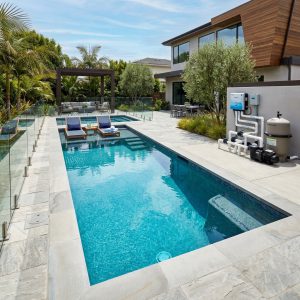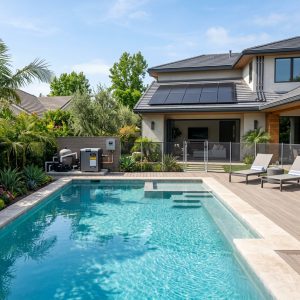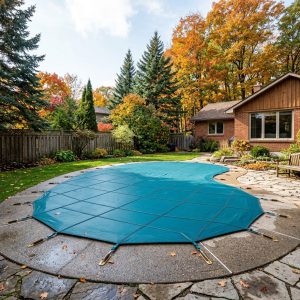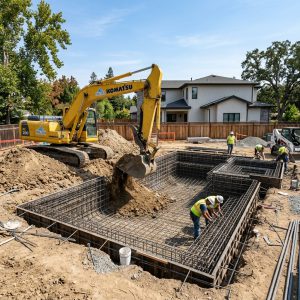
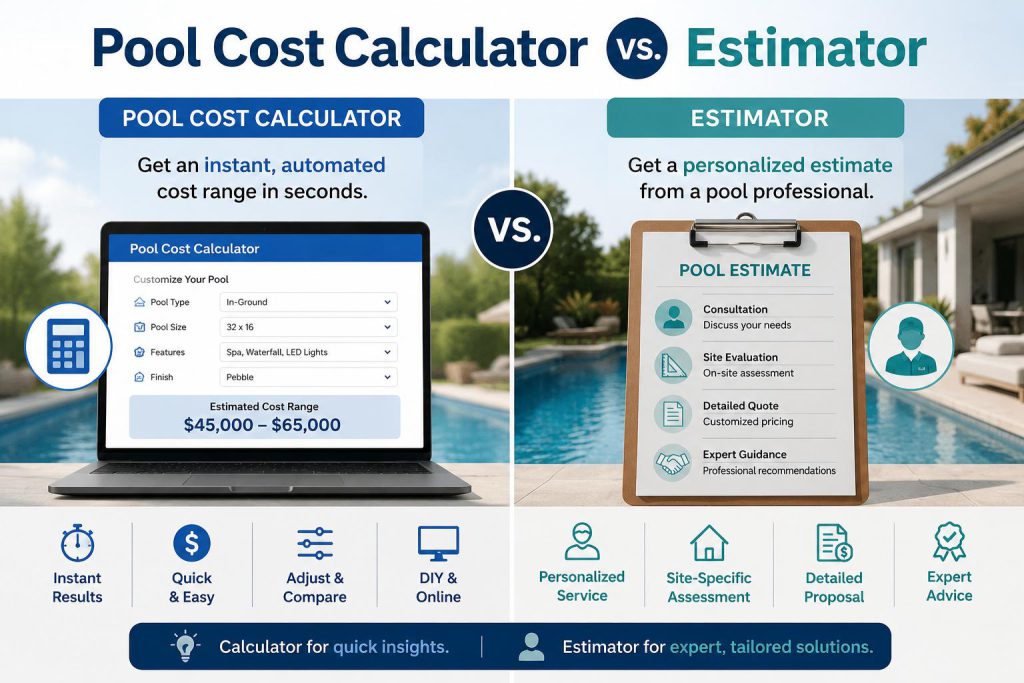
If you’ve spent any time researching what a new pool will cost, you’ve probably typed both “pool cost calculator” and “pool cost estimator” into a search bar and landed on tools that look nearly identical. That’s not a coincidence, and it’s not a mistake. These two terms describe the exact same thing: a digital tool that takes your inputs (location, pool type, size, and features) and returns a realistic price range for your project. The only difference is the word someone chose when they hit the keyboard.
What is different — and what no single search result has fully solved until now — is the gap between what these tools show you and what your total project will actually cost. The estimator gives you structural and installation figures. But permits, soil complications, decades of chemical treatments, and the heating bill that quietly doubles in January rarely appear in the first number you see.
This guide closes that gap. Whether you’re comparing a $3,000 above-ground splash pool to a $250,000 infinity design, or trying to figure out why two contractor quotes differ by $40,000, the information you need is here — organized by pool type, cost driver, and ownership stage.
Key Takeaways
– “Pool cost pricing estimator” and “pool cost estimator” are interchangeable terms — they refer to the same digital budgeting tool.
– In 2026, inground pool costs range from roughly $25,000 to $600,000+ depending on type, size, and location.
– Above-ground and semi-inground pools offer the lowest entry points but carry shorter lifespans and lower ROI.
– Hidden costs — permits, soil testing, drainage, and landscaping — can add 10-25% to any base estimate.
– Long-term ownership costs (maintenance, chemicals, heating, equipment replacement) often exceed the build cost over a 15-year window.
– Your ZIP code is the single biggest variable in your estimate: labor and material costs vary by up to 40% between low- and high-cost metro areas.
– Digital estimators are a critical first step, but a licensed contractor quote is essential before signing any contract.
– Using an estimator before talking to contractors puts you in a stronger negotiating position and helps you spot inflated bids.
What Is a Pool Cost Estimator (Calculator)?
Before diving into price ranges, it helps to understand exactly what these tools do — and just as importantly, what they don’t do. A pool cost estimator is a structured digital questionnaire that collects key project variables and returns a personalized cost range based on national contractor data, regional labor indexes, and material pricing updated on a rolling basis.
Estimator vs. Calculator — Same Tool, Different Names
The terms “pool cost calculator” and “pool cost estimator” are used interchangeably across the internet, in contractor offices, and on home-improvement forums. Search volume data consistently shows both terms peaking in spring and early summer — the same buying season — with virtually identical search intent. Someone typing “pool cost calculator” wants to know what a pool will cost. So does someone typing “pool cost estimator.” The outputs they’re looking for are identical.
This guide uses both terms throughout, not because there’s a meaningful distinction, but because your research may have started with either one. The tool you find here, and on reputable pool-planning sites, accepts the same inputs and delivers the same type of output regardless of what the button on the homepage says.
What does matter is the quality of the data behind the tool. The best estimators pull from aggregated contractor invoice data, regional material indexes (like those published by RS Means), and updated permit-fee databases — not from a static spreadsheet written in 2019.
What Data Points Drive an Accurate Pool Estimate
The more variables you give an estimator, the tighter its output range becomes. According to 2026 contractor data aggregated across more than 12,000 pool builds, the five inputs with the highest impact on final cost accuracy are:
- ZIP code — Labor rates, permit fees, and soil conditions vary dramatically by region. A gunite pool that costs $65,000 in rural Tennessee might cost $110,000 in coastal California.
- Pool type and material — Fiberglass, concrete/gunite, vinyl liner, and above-ground pools each have distinct cost structures that a good estimator treats separately.
- Surface dimensions — Length, width, and depth determine excavation volume, shell size, and interior finish square footage.
- Shape complexity — Rectangular pools are the most cost-efficient to build. Freeform and infinity-edge designs involve custom formwork, additional engineering, and specialized tile or spillway systems.
- Add-ons selected — Heater type, decking material, lighting, water features, and automation systems can collectively add $5,000 to $80,000 to a base estimate.
Providing accurate ZIP code and dimensions alone can narrow a typical estimate from a $60,000 range to a $20,000 range — which is why vague “average cost” articles without these inputs are rarely actionable.
What the Estimator Actually Outputs
A well-built pool cost estimator breaks its output into four cost buckets, giving you line-item visibility rather than a single number that’s impossible to sanity-check:
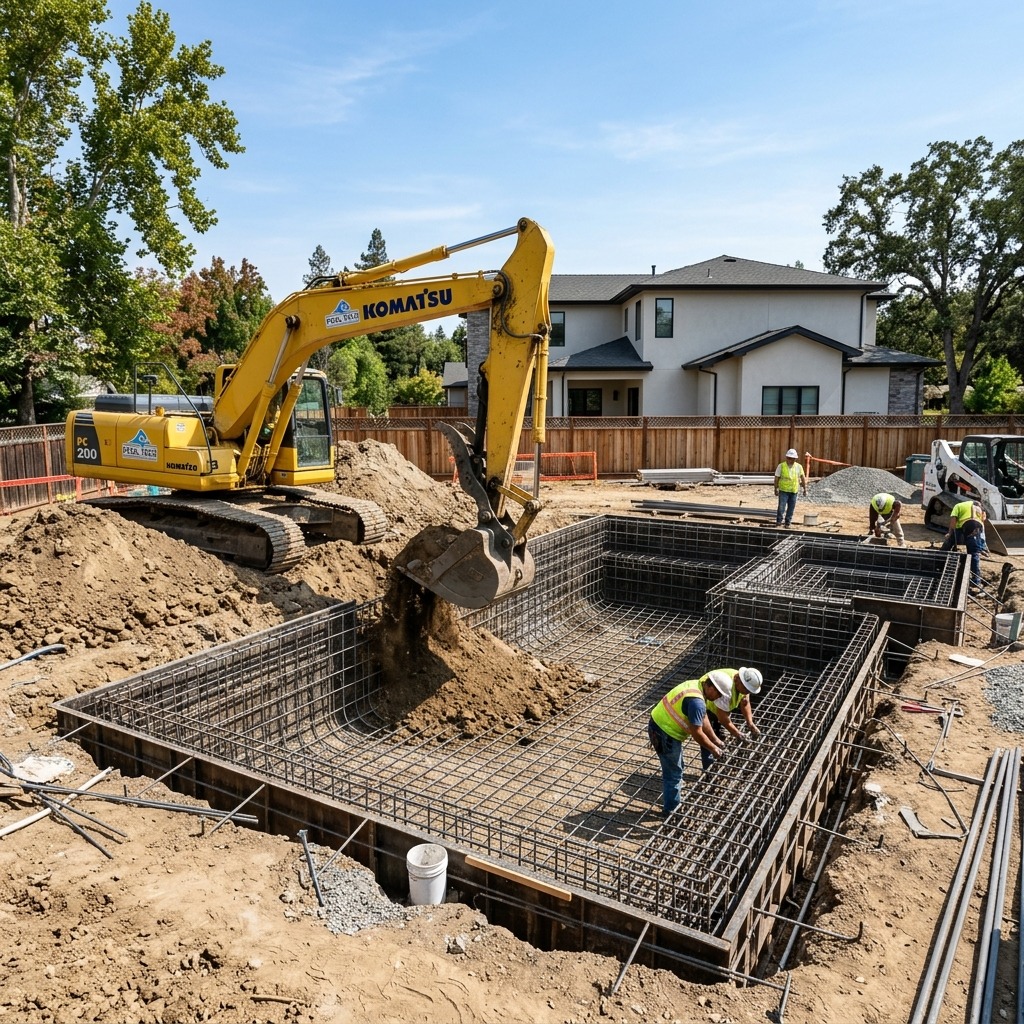
- Excavation and site prep — Digging, hauling, grading, and any required soil stabilization. Typically 8-14% of total project cost.
- Structural finish — The shell itself: fiberglass panel, gunite/shotcrete spray, steel frame and vinyl liner, or above-ground wall system. This is usually the largest single line item.
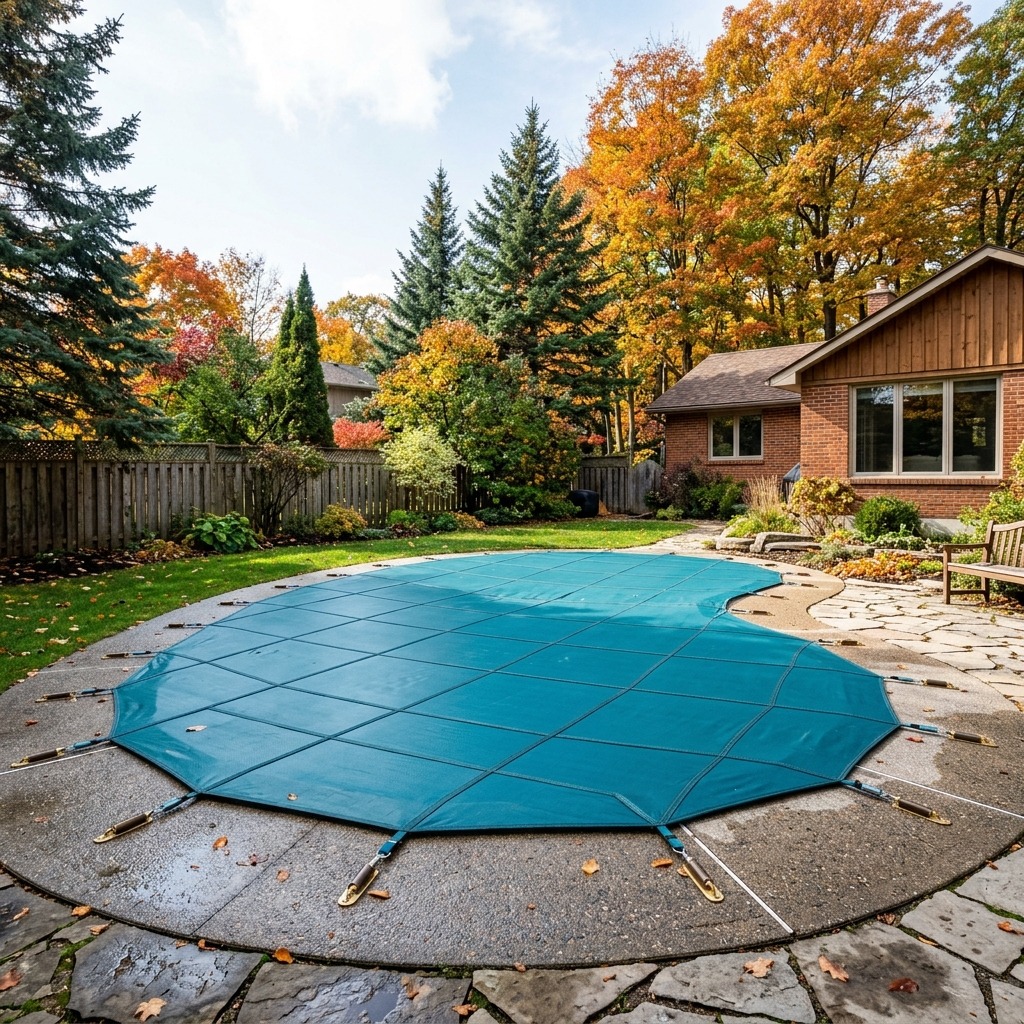
- Safety and code compliance — Fencing, alarms, safety covers, and permit-driven requirements specific to your municipality.
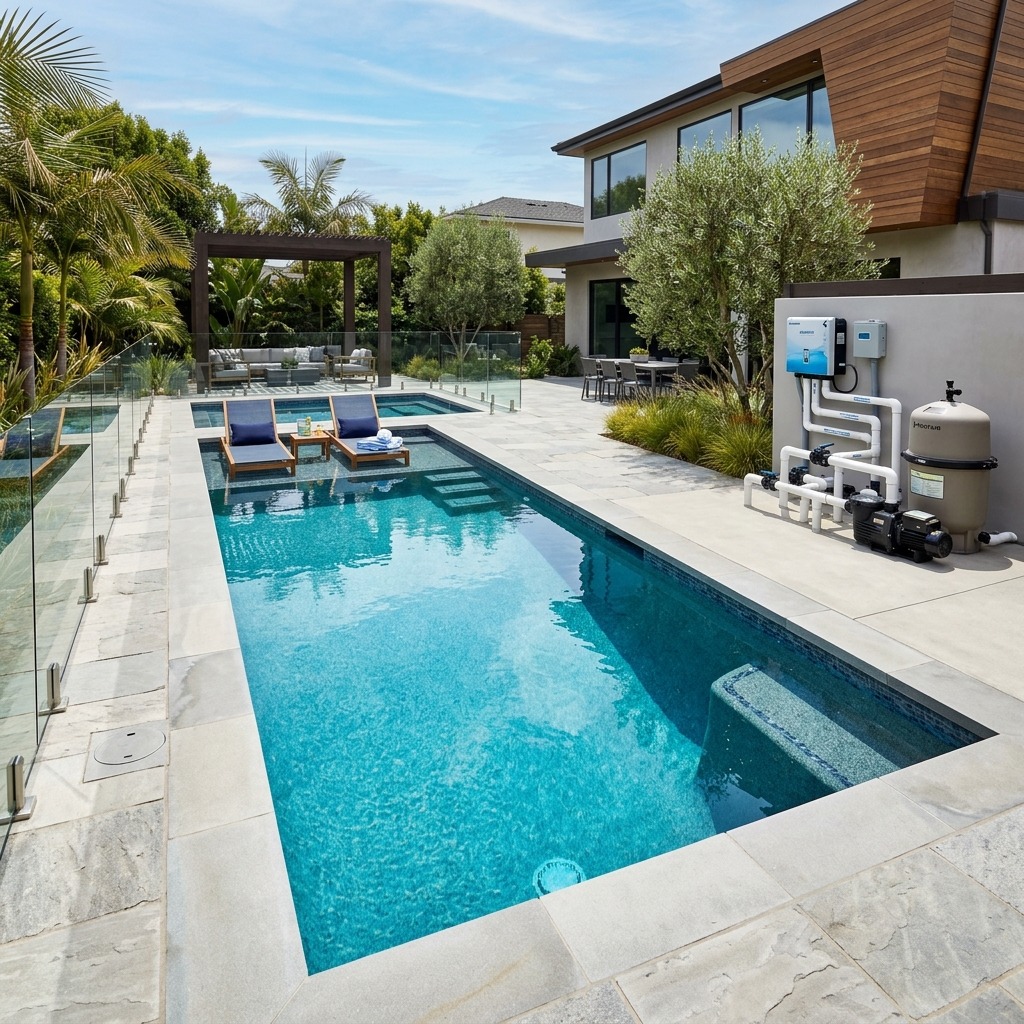
- Mechanical systems — Pump, filter, heater, automation controller, lighting, and any specialty features like saltwater chlorination or UV sanitization.
Seeing these four buckets separately is valuable: if a contractor’s quote is dramatically higher in one category than the estimator suggests, that’s the right question to ask before signing.
Pool Cost by Type — 2026 National Benchmarks
Every pool type has its own cost architecture. The table below summarizes 2026 national average ranges across all nine major pool categories. These figures represent fully installed costs including basic decking but excluding ongoing maintenance, utilities, and landscaping restoration unless noted.
| Pool Type | Low End | High End | Typical Lifespan |
| Above-Ground | $3,000 | $12,000 | 7-15 years |
| Semi-Inground | $10,000 | $40,000 | 15-25 years |
| Vinyl Liner Inground | $25,000 | $45,000 | 20-30 years (liner 8-12 yrs) |
| Fiberglass Inground | $30,000 | $60,000 | 25-40 years |
| Concrete / Gunite | $50,000 | $100,000+ | 50+ years |
| Lap Pool | $40,000 | $100,000 | 25-50 years |
| Infinity / Vanishing Edge | $110,000 | $250,000+ | 25-50 years |
| Indoor Pool | $150,000 | $600,000+ | 30-50 years |
| Natural / Eco Pool | $50,000 | $130,000 | 20-40 years |
Above-Ground Pool Cost Calculator ($3,000-$12,000)
Above-ground pools are the fastest path from “thinking about it” to “swimming in it.” A basic oval or round steel-wall unit with a sand filter and ladder runs $3,000-$6,000 installed. Larger oval models with upgraded filtration, resin walls (which resist corrosion better than steel), and a basic wood or composite deck package push toward $10,000-$12,000.
The appeal is obvious: no excavation, no permit in most jurisdictions (verified locally), and a dramatically shorter installation window of one to three days. The trade-off is longevity. Steel-wall pools typically last seven to twelve years before corrosion or liner failure demands replacement. For a detailed breakdown of budgeting decisions at this price point, see our above ground pool cost estimator.
Semi-Inground Pool Cost Estimator ($10,000-$40,000)
Semi-inground pools occupy a compelling middle ground — they’re partially buried (typically 18-36 inches below grade), which allows for deck integration and a more permanent aesthetic, while avoiding the full excavation cost of a traditional inground design. National averages in 2026 place semi-inground pool installations between $10,000 and $40,000, with the high end reflecting premium composite wall systems and integrated decking.
One often-overlooked advantage: because they’re partially above grade, semi-inground pools can work on slopes where a full inground installation would require expensive retaining walls. Our semi-inground pool cost guide covers wall material options and site considerations in detail.
Vinyl Liner Inground Pool Calculator ($25,000-$45,000)
Vinyl liner pools are the most affordable true inground option, and they remain one of the most popular choices in the Midwest and Southeast United States. The pool shell is a steel or polymer wall panel framework that a vinyl liner (typically 20-30 mil thickness) is stretched over and vacuumed into position. Total installed cost in 2026 runs $25,000-$45,000 for a standard 16×32-foot rectangular or kidney-shaped design.
The critical long-term cost factor: liners need replacement every 8-12 years at $3,500-$7,000 per replacement. Over a 20-year ownership window, that’s one to two liner replacements on top of your original build cost. For a side-by-side ownership analysis, the vinyl liner vs fiberglass pool true 10-year price comparison walks through total cost of ownership in detail.
Fiberglass Pool Price Estimator ($30,000-$60,000)
Fiberglass pools are factory-molded shells — pre-built in a manufacturing facility and delivered to your site on a flatbed truck. Installation is faster than any other inground option (typically three to five days for the shell set), and the non-porous gel coat surface requires fewer chemicals than concrete, producing ongoing savings of $300-$600 per year in chemical costs alone.
The 2026 national range is $30,000-$60,000, though premium shapes and larger footprints (models up to 16×40 feet are widely available) push past $70,000 with high-end coping and automation. One limitation worth noting: because shells are molded, you can’t customize dimensions the way you can with concrete. Our full fiberglass vs concrete pool cost comparison breaks down where each material wins financially over a 30-year horizon.
Concrete / Gunite Pool Cost Estimator ($50,000-$100,000+)
Concrete (gunite or shotcrete) pools are the gold standard for customization and longevity. Gunite — a dry-mix concrete pneumatically applied over a steel rebar cage — can be sculpted into virtually any shape, depth, or configuration. This is the material behind every resort-style pool, every multi-zone aquatic feature, and most infinity-edge designs. The lifespan, properly maintained, exceeds 50 years.
The price range reflects that flexibility. A standard 16×32-foot rectangular gunite pool in a mid-cost market runs $50,000-$70,000. Add custom shapes, Pebble Tec or glass-tile finishes, tanning ledges, and integrated spa: $80,000-$100,000 is routine. High-cost coastal markets frequently see concrete builds exceeding $150,000 for mid-tier features. Resurfacing every 10-15 years at $10,000-$25,000 is the main recurring structural cost.
Lap Pool Cost Calculator ($40,000-$100,000)
Lap pools are defined by their purpose — continuous swimming — and their shape: long (typically 40-75 feet), narrow (8-10 feet), and relatively shallow (3.5-5 feet). That straightforward geometry actually makes them one of the more cost-efficient inground options per square foot, but their sheer length drives absolute cost upward. National averages in 2026 run $40,000-$70,000 for standard gunite or fiberglass construction; high-end models with underwater lighting, automatic covers, and integrated current systems (which simulate open-water swimming) push to $100,000. Our lap pool cost calculator provides detailed inputs for length, depth, and feature configurations.
Infinity Pool Cost Estimator ($110,000-$250,000+)
Infinity pools — also called vanishing-edge or negative-edge pools — create the visual illusion that the water surface blends seamlessly into the surrounding landscape or horizon. That effect requires a precision-engineered catch basin below the edge, a dedicated return pump, precision-leveled coping, and often high-end tile that runs to the water line on every visible face. The engineering complexity alone adds $30,000-$60,000 over a standard inground build of the same footprint.
According to 2026 contractor data, a properly designed infinity pool starts at $110,000 and frequently exceeds $250,000 when combined with elevated terracing, custom spillways, or hillside installations. Our dedicated infinity pool cost estimator covers edge type selection, site requirements, and the hidden structural costs of hillside or multi-level builds.
Indoor Pool Cost Calculator ($150,000-$600,000+)
Indoor pools carry a cost premium that has nothing to do with the pool itself — it’s the building. An enclosed aquatic space requires humidity management (dehumidification systems alone run $15,000-$50,000), specialized HVAC, reinforced structural supports, vapor barriers, and in many jurisdictions, commercial-grade electrical and ventilation standards even for a residential installation.
The 2026 national range is $150,000 at the low end (a modest 12×24-foot fiberglass shell in an existing structure with basic dehumidification) to well over $600,000 for a custom concrete pool within a purpose-built enclosure with full mechanical, lighting, and automation systems. Our indoor pool cost calculator provides a detailed breakdown of enclosure costs versus pool costs — a distinction most homeowners don’t realize exists until they’re deep into planning.
Natural / Eco Pool Cost Guide ($50,000-$130,000)
Natural swimming pools (NSPs) — also called biopools or eco pools — use plant-based filtration instead of chemical sanitization. A dedicated “regeneration zone” planted with aquatic grasses and submerged plants performs biological filtration, keeping the swimming zone clean without chlorine. The result is a chemical-free swimming experience with a genuinely naturalistic aesthetic.
The 2026 cost range is $50,000-$130,000, depending on the ratio of swimming zone to regeneration zone, the complexity of the planting scheme, and whether the structural basin is concrete, liner, or reinforced natural clay. Operating costs run lower than chemical pools over time, but the setup cost and required expertise make this a niche but growing segment.
The Hidden Costs Your Pool Calculator Won’t Catch
Every reputable pool cost estimator will give you a solid foundation — but there are cost categories that are genuinely difficult to quantify until a contractor walks your specific yard. Understanding these categories before you get quotes means you won’t be blindsided when the final number lands.
Excavation Complications & Soil Testing
Standard excavation costs assume typical soil: moderately dense, free of large rock formations, and accessible by a standard excavator. In 2026, typical excavation runs $1,500-$5,000 for a standard residential pool. However:
- Rock ledge requires jackhammering or blasting, adding $5,000-$15,000 and several weeks to the schedule.
- High water table conditions require dewatering systems during installation — $2,000-$8,000 depending on severity.
- Expansive clay soils common in Texas, Oklahoma, and parts of the Southeast may require engineered footings or soil stabilization before any shell can be placed.
- Fill soil (common in newer subdivisions) often lacks the compaction density needed to support a pool shell without settlement risk, requiring additional testing and compaction at $1,500-$4,000.
A soil test — typically $300-$800 — before finalizing your design can prevent five-figure surprises mid-dig.
Permit Fees — The Regional Wild Card
Permit fees are one of the most dramatically variable line items in any pool budget. According to municipal permit-fee data compiled for 2026, a basic residential pool permit costs as little as $75 in some rural counties and as much as $3,500 in high-regulation coastal municipalities. When you factor in electrical permits, fence permits, and inspection fees (which are often separate), total permitting costs of $500-$5,000 are typical nationally.
What’s less visible: some jurisdictions require engineer-stamped structural drawings (add $1,500-$4,000), impact fees based on pool square footage, or drainage studies if your lot is near a flood zone. Our resource on pool permit costs by state provides a state-by-state breakdown of typical fees and the regulatory requirements that drive them.
Tree Removal, Drainage & Landscaping
Most homeowners don’t budget for post-construction landscaping, and it’s one of the most consistent sources of cost shock. After excavation and installation, your backyard will have compacted, graded, or disturbed soil around the pool perimeter. Restoring grass, planting screening hedges, or installing decorative landscaping typically runs $2,000-$15,000 depending on yard size and ambition.
Tree removal prior to excavation — necessary if roots could compromise the pool shell or plumbing — costs $500-$3,000 per large tree. And if your yard doesn’t naturally drain away from the pool, you may need French drains or a regrading plan at $1,500-$6,000. These aren’t optional line items: poor drainage causes deck heaving, liner damage, and equipment flooding over time.
What Factors Change Your Pool Estimate Most?
Understanding which variables move the needle most lets you make smarter trade-offs during the design phase — and gives you leverage when negotiating with contractors.
Pool Size & Surface Area
Surface area is the primary driver of material cost for every pool type. Doubling a pool’s square footage doesn’t double the cost (excavation, pump, and plumbing costs are partially fixed), but it increases it by 60-75% in most contractor models. The jump from a 12×24-foot pool (288 sq ft) to a 16×32-foot pool (512 sq ft) — the most common size upgrade homeowners request — typically adds $8,000-$18,000 depending on material. Depth adds cost too: each additional foot of depth below five feet increases excavation, structural, and finishing costs by approximately $2,000-$5,000 for a standard gunite build.
Pool Shape: Rectangular vs. Freeform vs. Infinity Edge
Rectangular pools are structurally and economically optimal. Formwork is simple, tile or coping lines are straight, and every square foot of surface area is swimmable. Freeform designs — kidney shapes, lagoon styles, L-shapes — add 10-20% to structural costs because of custom formwork and the increased complexity of laying tile around curves. Infinity edges, as covered above, add engineering complexity that can increase total cost by 30-50% over a comparable rectangular gunite pool.
Regional Labor Rates
According to 2026 Bureau of Labor Statistics occupational wage data, construction labor rates for specialty trades (which pool building draws from) vary by up to 45% between the lowest-cost and highest-cost metropolitan areas in the country. A pool that quotes at $55,000 in Memphis might quote at $95,000 in San Jose for the same materials and scope. This is the single variable that makes national “average” figures the least useful data point in any estimate — and the strongest reason to always feed your ZIP code into any estimator you use.
Materials & Decking
The pool shell material is the most-discussed cost variable, but decking often surprises homeowners. Concrete decking (brushed or stamped) runs $8-$18 per square foot. Travertine and natural stone: $20-$35 per square foot. Composite and Trex-style decking: $15-$28 per square foot. A 1,000-square-foot deck — typical for a mid-size inground pool — can cost anywhere from $8,000 to $35,000 based purely on material choice. For a combined guide to these add-on cost drivers, our pool decking and heating costs guide covers both categories with regional pricing.
Long-Term Costs the Estimator Doesn’t Show You
Build cost is a one-time event. Ownership cost is a 20- to 50-year commitment. The smart pool budget includes both.
Monthly Maintenance & Chemicals ($100-$300/mo)
National averages in 2026 show residential pool owners spending $1,200-$3,600 per year on routine chemical maintenance — or $100-$300 per month. This range reflects pool type (fiberglass requires fewer chemicals than concrete), climate (warmer climates have longer seasons and faster algae growth), and whether you maintain it yourself or use a service.
A professional weekly service contract runs $125-$200/month in most markets. DIY maintenance cuts that by 50-70% but requires weekly attention to pH, alkalinity, sanitizer, and stabilizer levels. Our pool maintenance cost calculator helps you model annual chemical and service costs based on your pool type and region before you build.
Equipment Depreciation Cycles
Pool equipment doesn’t last forever, and replacement costs are substantial enough to budget for proactively:
- Variable-speed pump: $800-$1,500, lifespan 8-12 years
- Filter (sand, cartridge, or DE): $300-$800, lifespan 5-10 years
- Salt chlorinator cell: $600-$1,200, lifespan 3-7 years
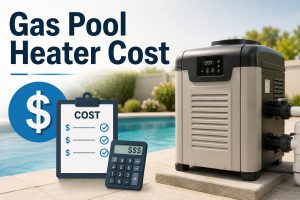
- Pool heater (gas or heat pump): $2,000-$5,000, lifespan 8-15 years
- Automation controller: $1,500-$3,500, lifespan 10-15 years
Over a 20-year ownership window, cumulative equipment replacement costs commonly reach $8,000-$20,000 — a figure that rarely appears in any initial estimate.
Heating & Utility Costs
Pool heating is one of the most climate-sensitive costs in the ownership profile. In a moderate climate (Southeast or Southwest), a gas heater maintaining 82 degrees Fahrenheit may cost $100-$200/month during the swimming season. In the Northeast or Pacific Northwest, extending the season with a heat pump or gas heater can add $200-$400/month for four to six months per year.
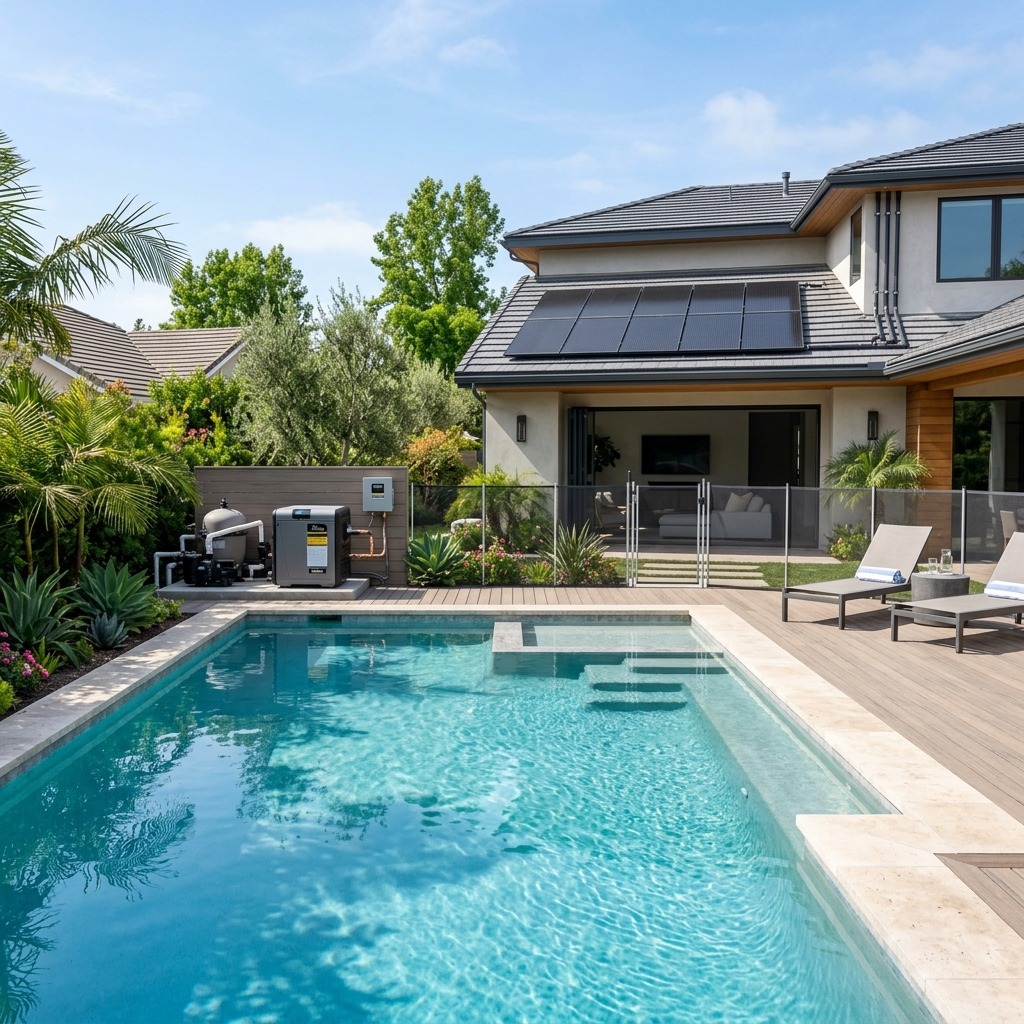
Energy-efficient alternatives — solar heating and variable-speed pumps — reduce operating costs significantly. A solar heating system costs $3,000-$8,000 installed but can reduce annual heating bills by 50-70%. Variable-speed pumps, now required by the U.S. Department of Energy in new pool installations, use up to 80% less electricity than single-speed models. These aren’t just environmental choices — they’re financial ones that compound meaningfully over a 15-year ownership window.
Digital Estimator vs. Contractor Quote — When You Need Both
A digital pool cost estimator and a licensed contractor quote serve different functions, and the smartest approach uses both in sequence — not one instead of the other.
Use the estimator first to establish your baseline, understand what drives cost in your project type, and set a realistic budget ceiling before you speak to anyone. Walking into a contractor meeting knowing that a concrete pool in your ZIP code typically runs $55,000-$80,000 changes the conversation entirely. You can evaluate quotes rather than simply receive them.
Get at least three contractor quotes once your design intent is clear. Quotes that fall significantly below the estimator range (more than 20%) deserve scrutiny — they may reflect a less experienced contractor, lower-quality materials, or scope gaps that will emerge as change orders. Quotes significantly above the range are worth negotiating against with the estimator data you’ve collected.
The industry standard recommendation from the National Spa and Pool Institute (NSPI) is to get a minimum of three written, itemized bids from licensed, insured contractors. “Itemized” is the key word: a one-line total price is not a quote you can evaluate. You want separate line items for excavation, shell, mechanical, decking, and any specialty features.
A digital estimator gives you market intelligence. A contractor quote gives you a legal commitment. You need both to make a confident decision.
7 Tips to Reduce Your Pool Build Cost
Building a pool doesn’t mean accepting the first number you see. These seven strategies — each validated by contractor and homeowner data — consistently produce real savings without compromising quality.
- Choose a simpler shape. Switching from a freeform to a rectangular design of the same surface area saves 10-20% on structural costs. The swimming experience is identical; the savings are real.
- Build in the off-season. Contractors in most markets offer 5-15% discounts for projects starting in October through February. Pool builders have slower seasons too, and they’d rather keep crews busy at a discount than idle.
- Separate your decking contract. Pool contractors aren’t always the most cost-competitive for decking. Getting a separate bid from a hardscaping contractor for the same decking scope regularly saves 10-20%.
- Size your heater and pump to the pool, not aspirationally. Oversized mechanical systems cost more to buy and more to run. An energy audit from a pool equipment specialist (many offer free consultations) can prevent over-specification.
- Delay water features. Waterfalls, bubblers, and grottos can be added in phase two, after the structural shell is complete. Planning the plumbing stub-outs during construction keeps the future addition affordable while reducing today’s invoice.
- Use a saltwater system from day one. The upfront cost of a salt chlorine generator ($600-$1,500) is offset within two to three years by reduced chemical purchases. Over a 10-year window, saltwater systems typically save $2,000-$4,000 in chemical costs.
- Verify your contractor’s license and insurance independently. Unlicensed pool contractors frequently underbid by 20-30%, but the financial exposure from failed inspections, structural failures, or insurance gaps far exceeds any savings. Your state contractor licensing board’s website allows free license verification in minutes.
How to Use the Pool Cost Estimator on This Site
The estimator at PoolCostEstimator.com is built around the same five-input model described earlier in this guide — ZIP code, pool type, dimensions, shape, and selected add-ons. Here’s how to get the most accurate output in under three minutes:
Step 1 — Choose your pool type from the menu. The estimator has separate pricing models for all nine pool categories: above-ground, semi-inground, vinyl liner inground, fiberglass, concrete/gunite, lap pool, infinity, indoor, and natural. Selecting the correct type is the single most important input for accuracy.
Step 2 — Enter your ZIP code. This triggers the regional labor index and local permit-fee data. Without this, the estimator returns national average ranges that may be 20-40% off for your market.
Step 3 — Input your target dimensions. If you’re not yet sure of the exact size, use these typical ranges: 12×24 feet for a small family pool, 16×32 feet for a mid-size, and 20×40 feet for a large pool. The estimator will show how each size step affects cost.
Step 4 — Select your add-ons. Work through the add-on checklist one category at a time: heater type, decking material, lighting, water features, safety cover, and automation. Each selection updates the estimate in real time.
Step 5 — Review the four-bucket output. The estimator returns separate estimates for excavation/site prep, structural shell, mechanical systems, and decking/safety — not a single number. Review each bucket against the contractor quotes you collect to identify where pricing diverges.
The estimator is a starting point and a negotiating tool, not a final invoice. Use it as the foundation for every conversation you have with a contractor, and revisit it each time your design scope changes.
Conclusion
Every pool project starts with a number, and the best way to get a realistic one is to use a pool cost calculator or estimator before you talk to a single contractor. These tools — whether the search engine called them calculators or estimators when you found them — give you the market intelligence you need to plan confidently, budget accurately, and negotiate effectively.
The ranges in this guide reflect 2026 data across nine pool types, dozens of regional markets, and thousands of actual project invoices. But ranges are starting points. Your pool’s actual cost will be shaped by your ZIP code, your soil, your design choices, and the contractors in your market.
Use the estimator. Get three quotes. Ask for itemized line items. Budget 15-20% above the base estimate for contingencies. And plan for the ownership costs — maintenance, equipment, and heating — that will define your pool experience long after the construction crew leaves.
Ready to get your personalized pool cost estimate? Visit PoolCostEstimator.com and run your numbers now — it takes under three minutes and gives you the foundation for every conversation, decision, and negotiation ahead.
Frequently Asked Questions
What hidden costs should I budget for beyond the estimator’s output?
The most commonly underestimated categories are: soil testing and excavation complications ($1,000-$15,000), total permitting and inspection fees ($500-$5,000), landscape restoration after construction ($2,000-$15,000), electrical service upgrade if your panel can’t handle the new load ($1,500-$4,000), and the first year of chemicals and equipment fine-tuning ($800-$1,500). Budgeting an additional 15-20% above the estimator’s base figure for these contingencies is standard financial planning advice from experienced pool contractors.
How long does a pool build take from permit to first swim?
Timeline varies significantly by pool type and market conditions. Above-ground pools: 1-3 days. Fiberglass inground: 2-4 weeks (including permit wait). Vinyl liner inground: 4-6 weeks. Concrete/gunite: 8-16 weeks, because gunite requires 28 days of curing before the interior finish is applied. Permit approval timelines add 2-8 weeks in most markets, with high-demand spring/summer periods running longest. Start the process in fall or winter if you want to swim by Memorial Day.
Will a pool increase my home’s resale value?
According to National Association of Realtors data and multiple regional appraisal studies conducted through 2026, an inground pool adds approximately 5-8% to home value in warm-climate markets (Florida, Arizona, California, Texas) where pools are expected amenities. In cold-climate markets, the return drops to 2-4% because pools are seasonal. Above-ground pools rarely add appraised value and sometimes complicate listings with buyers who don’t want the maintenance. The financial return calculation is most favorable in warm climates with mid-tier pool builds — very expensive pools in moderate-value neighborhoods rarely recover their cost at resale.
How much does pool maintenance really cost per year?
The honest 2026 answer is $1,200-$5,000 per year depending on pool type, climate, and service level. Chemical costs alone run $400-$800 for a self-maintained pool in a temperate climate. Add a weekly service contract ($1,500-$2,400/year), equipment maintenance and minor repairs ($300-$800/year), and utility costs for pump and heating ($600-$2,400/year) and the annual figure becomes very real. Fiberglass pools sit at the low end of this range due to their reduced chemical demand; concrete pools at the high end due to algae susceptibility and resurfacing cycles.
What’s the best pool type for a family with young children?
Fiberglass pools are often recommended for families with young children for several reasons: the non-abrasive gel coat surface is gentler on skin than plaster or exposed aggregate finishes, the tanning ledge and beach entry options are widely available in factory molds, installation is faster (meaning less construction disruption), and ongoing chemical demand is lower — a meaningful factor when children are regularly in the water. Vinyl liner pools are also popular for their soft surface, though the liner is more susceptible to damage from sharp toys and pets. Concrete offers unlimited design customization (including beach entries and gradual depth transitions) at a higher cost.