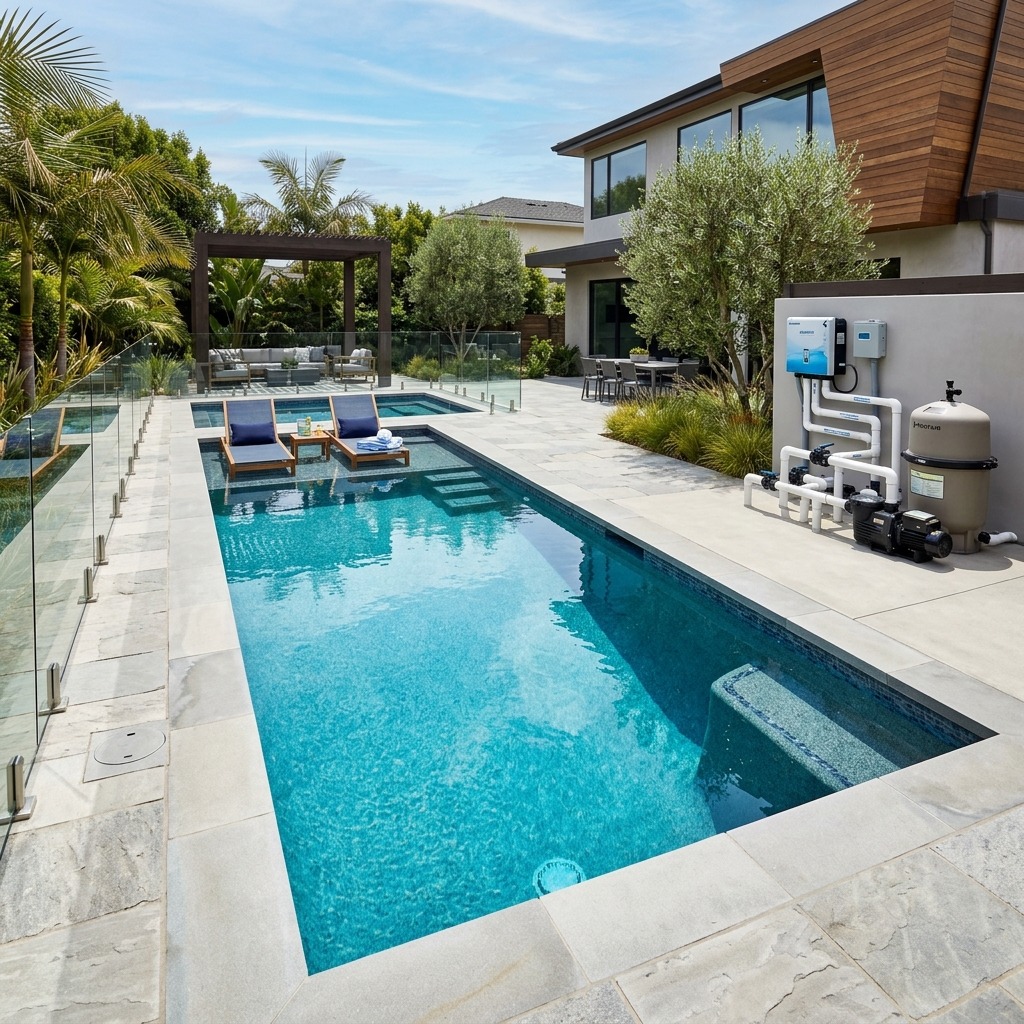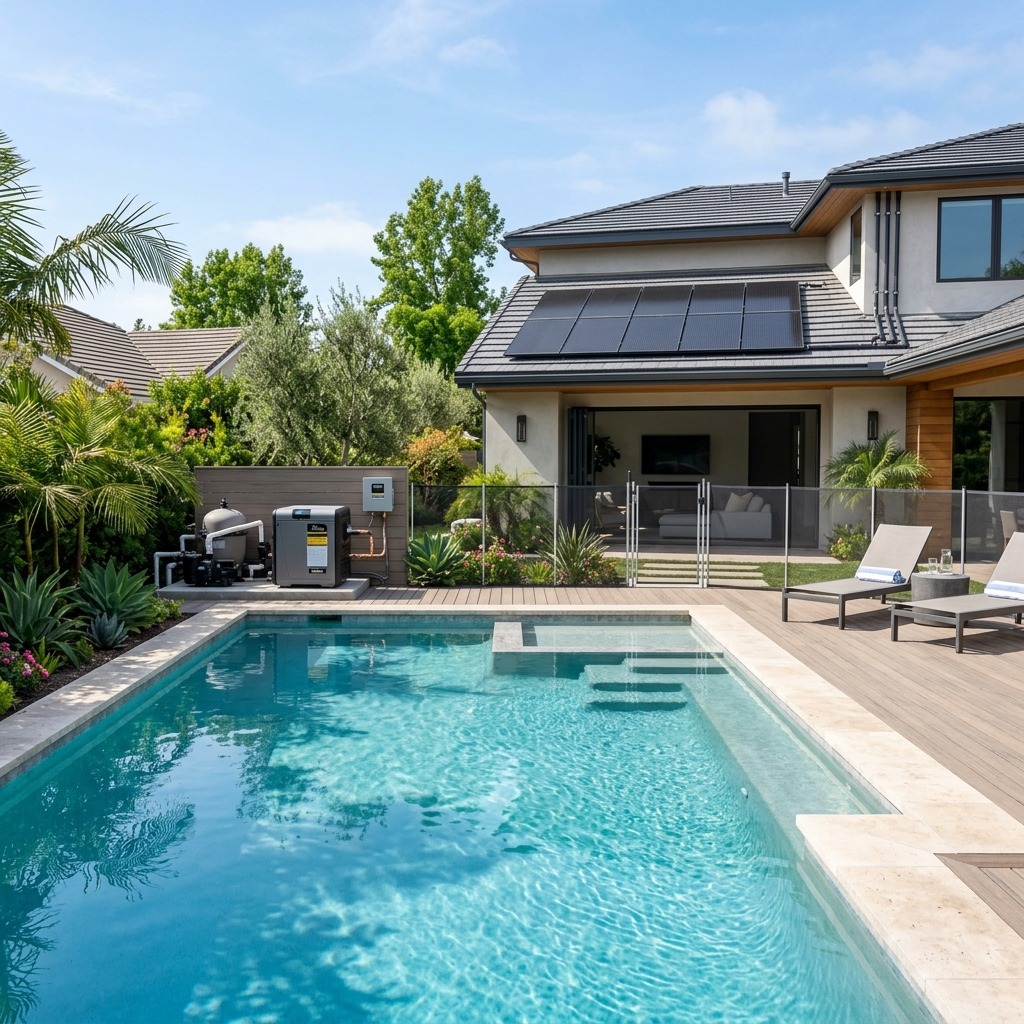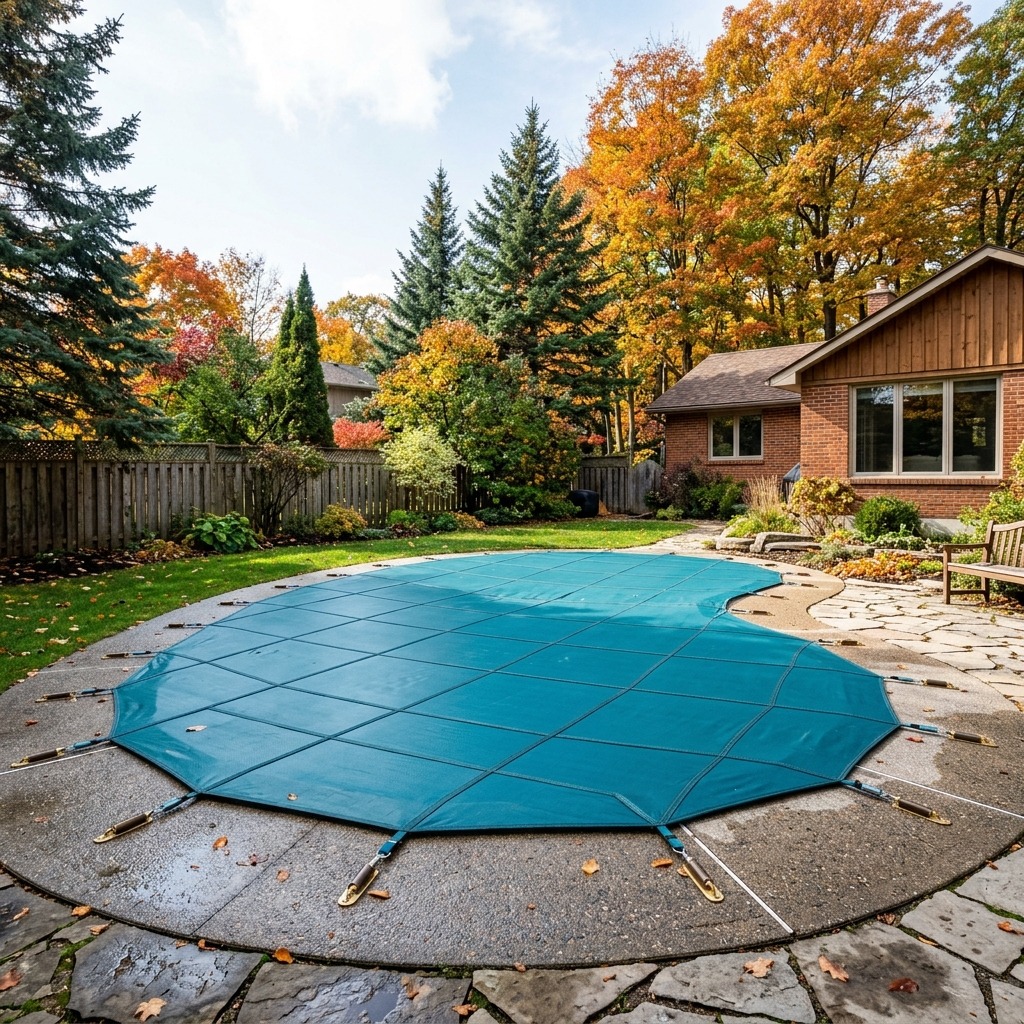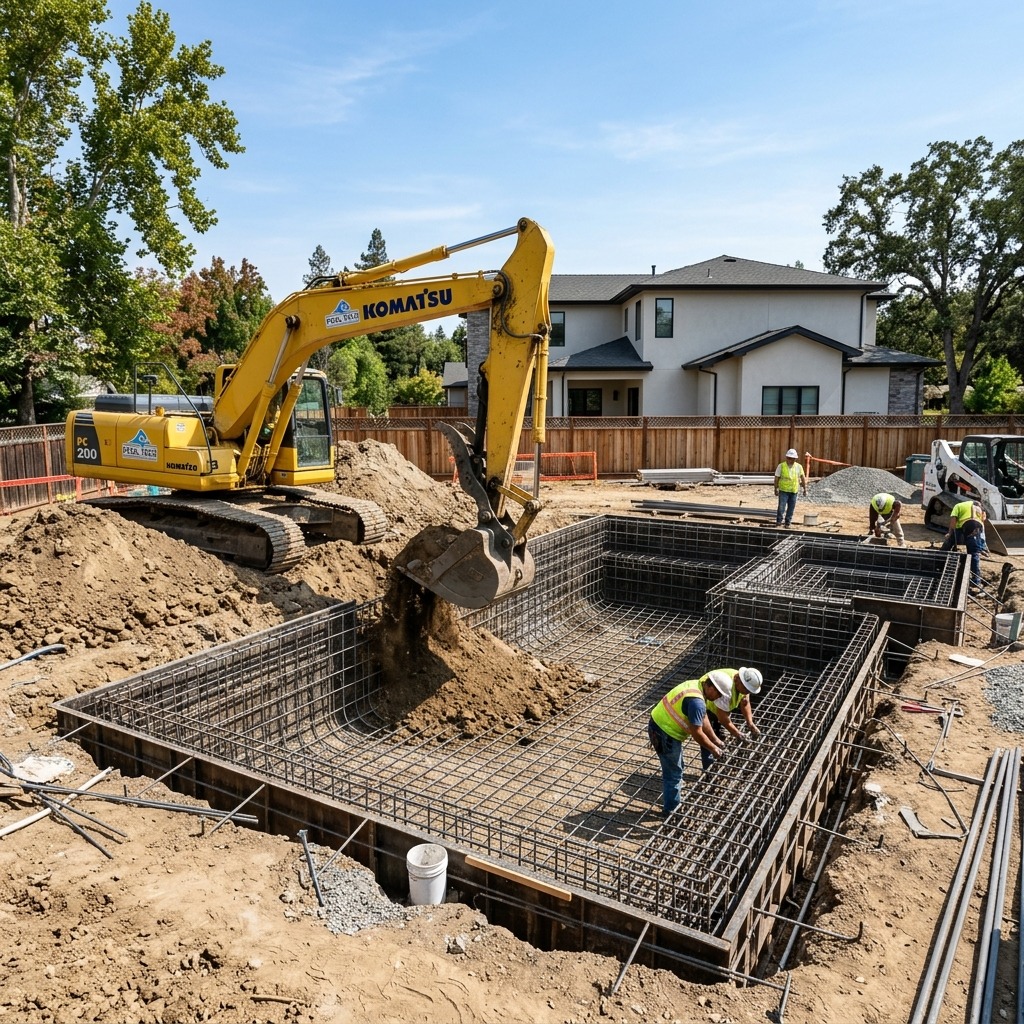
If you’ve been researching backyard pools, you’ve probably spent hours comparing above-ground models to fully inground installations — and come away feeling like the gap between the two is simply unbridgeable. Above-ground pools feel cheap and temporary. Fully inground pools feel financially out of reach. But there’s a third category that most homeowners either overlook entirely or stumble across too late in the process: the semi-inground pool.
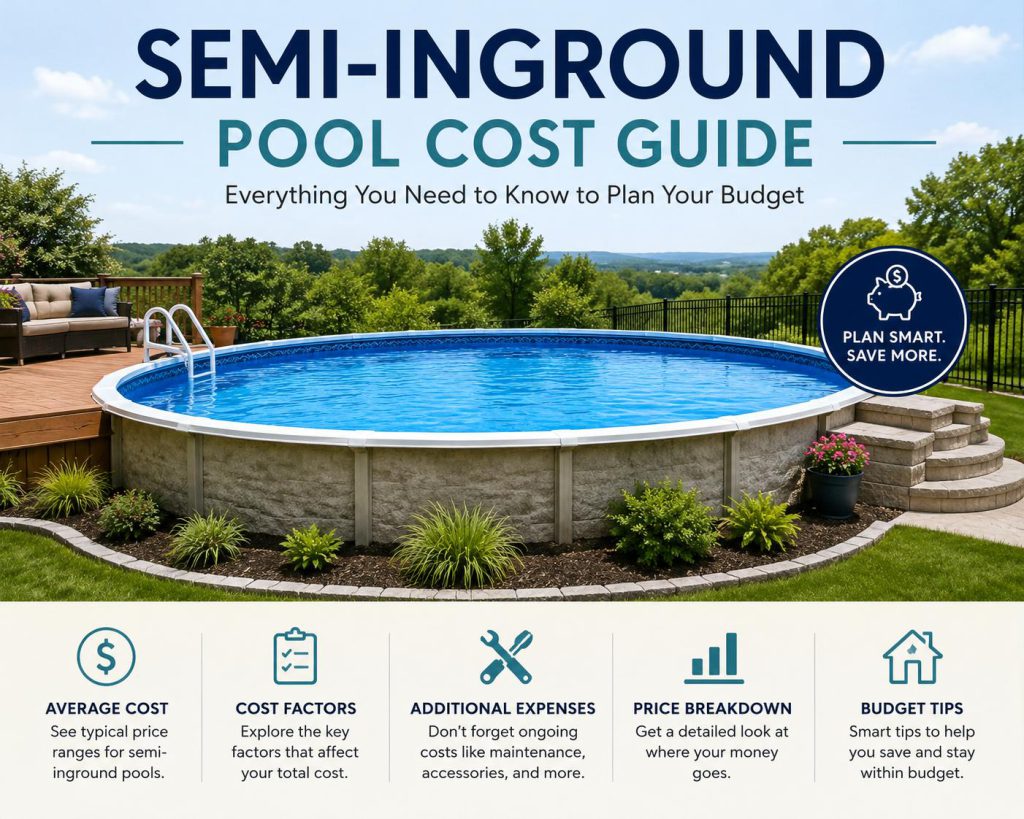
A semi-inground pool is exactly what the name implies — a pool structure that is partially buried into the earth and partially exposed above grade. You get the finished, permanent look of a real inground pool without paying the full inground price. The shell sits anywhere from a few inches below the natural grade to nearly fully buried, depending on your yard, your budget, and the aesthetic you’re going for. Semi-inground pools are especially well-suited for sloped lots, modest budgets, and homeowners who want something that looks custom but does not require a second mortgage.
In this guide, you will find a complete semi-inground pool cost breakdown — from the shell and excavation to decking, permits, and long-term ownership. Whether you are comparing your options or ready to get your first quote, this is the data you need to make a confident decision.
Key Takeaways
– Semi-inground pool cost typically ranges from $15,000 to $35,000 fully installed, compared to $35,000-$100,000+ for fully inground pools.
– Semi-inground pools can be buried anywhere from 12 inches to nearly flush with the ground, giving you flexible design options.
– Sloped yards are ideal candidates — semi-inground pools can be installed on grades where a traditional inground pool would require expensive cut-and-fill work.
– The biggest cost variables are excavation depth, retaining wall needs, and deck integration.
– Top brands like Radiant, Trevi, and Aqua Leader offer structural steel or aluminum panels engineered specifically for partial burial.
– Lifespan runs 15-30 years with proper liner maintenance, making semi-inground pools a genuine long-term investment rather than a temporary solution.
What Exactly Is a Semi-Inground Pool?
Before you can evaluate the cost, you need to understand what separates a semi-inground pool from its above-ground and fully inground counterparts. The distinction is not just about how deep the hole is — it is about the structural engineering of the pool shell itself and the way the finished product interacts with your landscape.
A standard above-ground pool uses a relatively thin steel or resin wall that is designed to stand free on flat, compacted ground. It is not built to withstand the lateral pressure that soil exerts when you bury it. If you tried to sink a typical above-ground pool into the earth, the walls would buckle inward from the surrounding soil pressure within a season or two. Semi-inground pools, by contrast, use thicker gauge steel, aluminum alloy, or polymer panels specifically engineered to resist that lateral earth pressure. They are rated for partial or full burial, which is a critical structural distinction.
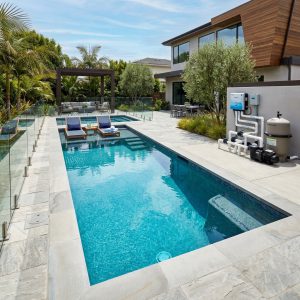
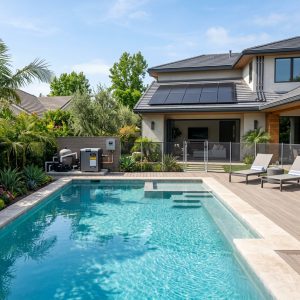
The resulting pool looks and functions like a custom inground installation — but the construction process is faster, the excavation is shallower, and the overall material cost is significantly lower. You get a vinyl liner pool with a real deck, proper fencing, and permanent filtration equipment, at a fraction of the cost.
Depth Options — 12 Inches to Fully Buried
One of the most flexible aspects of semi-inground pools is burial depth. At the shallowest end, you might sink the pool just 12 to 18 inches below grade — exposing most of the wall above ground but integrating a low deck surround to create a finished look. At the deepest end, many semi-inground models can be buried up to their full wall height (typically 48 to 54 inches), making them visually indistinguishable from a traditionally excavated inground pool.
The depth you choose will depend on three factors: the slope and drainage characteristics of your yard, your local frost depth (because semi-inground pools need to be winterized and structurally stable during freeze-thaw cycles), and your budget for excavation and retaining walls. A mid-burial of roughly 24 to 36 inches is the most common choice — it reduces excavation cost while still allowing you to build a low-profile deck around the pool that looks genuinely custom.
Best Situations for a Semi-Inground Pool
Semi-inground pools are not a one-size-fits-all solution, but they excel in specific scenarios. The most compelling use case is a sloped backyard. If your yard drops 18 inches or more from one end to the other over a 20-foot span, a fully inground pool would require expensive cut-and-fill earthwork — sometimes adding $10,000 to $30,000 to the project. A semi-inground pool can be set partially into the high side of the slope and left exposed on the low side, with a retaining wall and deck bridging the difference. This approach is structurally elegant and far more affordable.
Semi-inground pools also make sense when local zoning or HOA rules impose height restrictions on above-ground structures, when a homeowner wants a permanent-looking installation but plans to sell the property within 10 years, or when soil conditions (rock, high water table) make deep excavation impractical. If your yard falls into any of these categories, the semi-inground option deserves a serious look.
Popular Semi-Inground Pool Brands (Radiant, Trevi, Aqua Leader)
Three brands dominate the North American semi-inground market: Radiant, Trevi, and Aqua Leader. Each uses a slightly different panel system, but all three are engineered for full or partial burial.
Radiant (manufactured by Latham Pool Products) is probably the most widely recognized name in the segment. Radiant pools use an aluminum panel system with a patented radiant-barrier insulation built into the wall, which reduces heating costs significantly in colder climates. Their pools come in a wide range of shapes — oval, round, and rectangular — and are rated for burial up to the full wall height.
Trevi is a Canadian manufacturer with strong distribution across the northeastern United States and Eastern Canada. Their semi-inground line uses galvanized steel panels and offers one of the broadest shape selections in the market, including freeform designs that mimic custom inground pools at a fraction of the cost.
Aqua Leader (also Canadian) positions itself at the premium end of the semi-inground market, offering steel and aluminum hybrid panel systems with above-average structural ratings. Their pools are particularly popular in regions with significant frost heave risk, where panel rigidity and burial stability matter most.
When comparing brands, pay attention to panel gauge (thickness), burial rating, warranty terms, and local dealer availability — because installation quality matters as much as the pool itself.
Semi-Inground Pool Cost Breakdown
Understanding the total semi-inground pool cost means breaking it into its component parts. Nationally, according to 2026 contractor data compiled across multiple installation markets, the fully-installed cost for a semi-inground pool falls between $15,000 and $45,000, with the majority of residential projects landing in the $20,000-$32,000 range. Here is how those dollars are allocated:
| Component | Low Estimate | High Estimate | Notes |
| Pool Shell (panels + structure) | $6,000 | $18,000 | Size, shape, brand, and burial rating drive cost |
| Excavation for Partial Burial | $1,500 | $6,000 | Soil type, access, and burial depth are key variables |
| Liner | $1,200 | $3,500 | Thicker liners (28-30 mil) cost more but last longer |
| Pump, Filter and Plumbing Package | $1,500 | $4,500 | Variable speed pumps add upfront cost, reduce energy bills |
| Decking and Surround | $3,000 | $15,000 | Pressure-treated wood is cheapest; composite or pavers cost more |
| Retaining Wall (if sloped lot) | $1,000 | $8,000 | Block, timber, or poured concrete; required on many sites |
| Electrical and Bonding | $800 | $2,500 | Code-required bonding grid and GFCI protection |
| Permit and Inspections | $300 | $2,000 | Highly variable by state and municipality |
| Steps, Ladder and Accessories | $400 | $1,500 | In-pool steps cost more than ladder |
| Total Installed | $15,700 | $61,500 | Most projects: $20,000-$35,000 |
The wide range at the top end reflects premium deck materials, complex sloped-lot retaining work, and high-end pool shells on large rectangular pools. The average suburban homeowner doing a 12×24 or 15×30 oval with a modest pressure-treated deck should expect to land somewhere between $22,000 and $30,000 in most U.S. markets.
Pool Shell ($6,000-$18,000)
The pool shell — the structural panel system that forms the walls and, in some designs, the floor support — is your single biggest line item. A round or oval 12×24 semi-inground shell from a mid-tier brand like Trevi will typically run $6,000-$9,000 for the panel package alone. Step up to a 16×32 rectangle from Radiant or Aqua Leader with a full burial rating, and you are looking at $12,000-$18,000 for the shell.
Shape matters significantly here. Rectangular pools require more linear feet of panel, more corner hardware, and more precision in excavation, all of which add cost. Oval pools are the sweet spot for most budgets — they offer more swim room than a round pool while staying cheaper than a rectangle.
Excavation for Partial Burial ($1,500-$6,000)
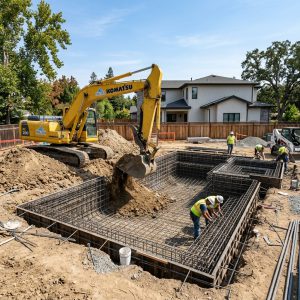
Excavation cost depends almost entirely on three factors: how deep you are burying the pool, what the soil is made of, and whether heavy equipment can access your yard. In average conditions — sandy loam soil, good equipment access, and a burial depth of 24-36 inches — excavation for a 15×30 pool will run $1,500-$3,000. In rocky soil or with restricted access (a narrow gate, mature landscaping), the same job can cost $4,000-$6,000 or more.
One factor many homeowners do not anticipate is soil disposal. When you excavate for a semi-inground pool, you generate a significant volume of spoil (removed dirt). Many contractors include basic haul-away in their quotes, but some charge separately — often $300-$800 for a standard burial depth. Ask specifically about this before signing.
Decking and Surround ($3,000-$15,000)
Decking is where semi-inground pool projects have the widest cost variance, and it is also where the most dramatic visual transformation happens. A simple pressure-treated wood deck wrapping around three sides of a 15×30 oval might cost $3,500-$5,500 installed. The same footprint in composite decking (Trex, TimberTech) climbs to $7,000-$11,000. Upgrade to natural stone pavers or poured concrete with a broom finish, and you are looking at $10,000-$15,000.
For guidance on how decking fits into your overall backyard project budget, the pool decking and heating costs guide breaks down material-by-material pricing with regional cost adjustments that can help you calibrate your expectations before getting quotes.
The deck is not optional — it is both a safety feature (providing barrier compliance and safe entry/exit) and the primary element that transforms a semi-inground pool from “fancy above-ground” to “backyard centerpiece.” Budget accordingly.
Liner, Pump and Filter Package
The vinyl liner for a semi-inground pool runs $1,200-$3,500 installed, depending on size, pattern, and thickness. National pool industry data from 2026 shows the 28-mil liner as the industry baseline, with 30-mil and 32-mil options adding $300-$800 but meaningfully extending liner life in high-UV or high-chlorine environments. Expect to replace the liner every 8-12 years under normal conditions.
The pump and filter package is another area where upfront investment pays dividends over time. A standard single-speed pump with a sand filter runs $1,500-$2,200 installed. A variable-speed pump (which is now required by federal energy standards for new installations above a certain wattage) with a cartridge or D.E. filter system runs $2,500-$4,500. The variable-speed unit will save you $300-$700 per year in electricity, paying for the upcharge in 3-5 years.
Installation Labor
Labor is typically bundled into the quotes you will receive from pool contractors, but it is useful to understand what it represents. On a mid-size semi-inground pool project, labor accounts for roughly 25-35% of the total installed cost. That means on a $25,000 project, you are paying $6,000-$8,750 for skilled installation work — excavation crew, pool assembly team, liner installation, plumbing, and electrical bonding. Do not try to unbundle these costs aggressively in negotiation; quality installation is what keeps a semi-inground pool structurally sound over 20+ years of use.
Semi-Inground vs. Fully Inground — Detailed Cost Comparison
The comparison homeowners most often want to make is between a semi-inground pool and a fully inground installation. Here is the honest breakdown.
According to 2026 national contractor pricing data, a fully inground vinyl liner pool — the most direct equivalent in terms of materials and aesthetics — costs $35,000-$65,000 installed for a standard 16×32 rectangle. Add a fiberglass shell and the range shifts to $45,000-$80,000. A concrete (gunite or shotcrete) inground pool starts at $60,000 and can easily exceed $120,000 with features.
A comparable semi-inground pool — same 16×32 footprint, vinyl liner, solid deck surround — runs $25,000-$40,000 in most markets. That is a savings of $10,000-$25,000 on the pool structure alone, before you factor in the lower excavation cost (which can be 60-80% cheaper on a semi-inground because you are moving far less earth).
The trade-off is customization ceiling. Fully inground pools can be virtually any shape, depth, or configuration. You can have a beach entry, a tanning ledge, a vanishing edge, or an infinity effect. Semi-inground pools are generally limited to manufacturer panel configurations — mostly rectangular, oval, and a handful of freeform shapes — and typical depths of 48-54 inches. If you want a pool that starts at 3.5 feet and slopes to 8 feet, an inground is your only real option.
For homeowners comparing apples to apples on cost — a standard rectangular or oval pool with a vinyl liner and basic deck — the semi-inground delivers 80-90% of the experience for 50-65% of the price. That is a compelling value proposition for most families.
Understanding how to accurately forecast your total project cost is essential before you get quotes. The pool cost calculator vs estimator complete guide explains the difference between online estimate tools and professional take-offs, and helps you use both effectively so you are not blindsided when formal bids arrive.
Semi-Inground vs. Above Ground — Why Semi Wins on Slopes
If you are weighing a semi-inground against a standard above-ground pool, the price difference is real — and the value calculus depends heavily on your specific lot and priorities.
A basic above-ground pool — 15-foot round, standard steel wall, entry-level pump — can be had for $1,500-$4,000 for a DIY install. Even a premium oval above-ground with professional installation and a surrounding deck runs $6,000-$12,000. So from a pure dollar standpoint, the above-ground wins easily.
But the equation shifts the moment your yard has any meaningful slope. An above-ground pool requires a level base — typically within 1-2 inches across the entire footprint. On a sloped lot, that means either extensive earthwork to create a flat pad (which can cost $3,000-$10,000 and may leave an ugly graded plateau) or building a raised deck structure to compensate for the grade change. When you add those costs back in, the price gap between above-ground and semi-inground narrows dramatically.
A semi-inground pool, by contrast, can follow the natural contour of your yard. The uphill side is buried deeper; the downhill side is exposed and wrapped with a retaining wall and deck. The result looks intentional and permanent rather than improvised — and it is structurally more stable because the pool is anchored into the earth rather than perched above it.
There is also a permanence factor worth considering. Above-ground pools are impermanent structures in most jurisdictions — they do not require permits in many areas, and they do not add to your property’s assessed value. Semi-inground pools, because they involve excavation and permanent deck structures, are typically treated more like inground pools from a permitting and appraisal standpoint. For homeowners building equity and wanting a permanent improvement, that distinction matters.
For a thorough look at above-ground pool pricing and what drives those costs, the above ground pool cost estimator provides a comprehensive framework that will help you make a direct, apples-to-apples comparison with semi-inground quotes you receive.
What Drives Semi-Inground Costs Up?
If the national average puts most semi-inground projects in the $20,000-$32,000 range, what pushes some projects to $45,000 or beyond? Several well-documented cost drivers can move the needle significantly.
Slope and Retaining Wall Requirements
The same sloped lot that makes a semi-inground pool structurally elegant can also make it more expensive to install. When the downhill side of a pool is exposed above grade, that exposure must be managed. The pool wall itself handles some of the load, but in most installations, a retaining wall is required around the exposed portion — both to stabilize the surrounding soil and to create a finished aesthetic.
Retaining wall cost varies enormously by material and height. Timber retaining walls (pressure-treated 6×6 posts) are the least expensive option at roughly $15-$25 per linear foot installed. Concrete block (Allan block or similar segmental retaining wall systems) runs $25-$45 per linear foot. Poured concrete or natural stone can run $50-$80 per linear foot. On a 15×30 pool where 30 linear feet of exposed wall needs retaining, the difference between timber and stone is $1,500 versus $2,400 — significant but not project-defining. On steeper slopes where the retaining wall needs to be 4-6 feet tall, the engineering loads increase and costs can jump to $8,000-$15,000 for the retaining work alone.
Custom Deck Integration
Decking is the second most powerful cost lever. A basic pressure-treated wood deck with no frills — just a flat surface around the pool perimeter with a safety railing — is achievable for $3,000-$6,000. But most homeowners who invest in a semi-inground pool also want the deck to do more: wrap around on multiple levels, include built-in seating, integrate a gate and stairs, match an existing patio, or flow into a screened porch or outdoor kitchen.
Every upgrade adds cost. A simple multi-level composite deck that connects the pool level to the house level across a 2-foot grade change can add $4,000-$8,000 to the deck budget. Built-in benches add $500-$1,500. Pergolas or shade structures add $3,000-$12,000 depending on material and complexity. Plan the full scope before you get quotes, because mid-project scope additions are always more expensive than if they had been included from the start.
Permit and Zoning Considerations
Semi-inground pools are subject to the same permitting requirements as fully inground pools in most U.S. jurisdictions. That means a building permit (typically $300-$1,500), a barrier/fence permit (often a separate application), and sometimes a zoning variance if the pool encroaches on required setbacks. In some municipalities, electrical and plumbing sub-permits are also required, each adding $150-$400.
Permit processing times also vary dramatically — from 2 weeks in rural counties to 3-4 months in dense suburban municipalities. Delays in permitting translate directly to project delays, and sometimes to higher contractor labor costs if your installation crew has to schedule around hold periods. Understanding permit costs before you budget is essential. The pool permit costs by state resource maps out the permit cost landscape across all 50 states, giving you a realistic baseline for your specific location before you sit down with a contractor.
Lifespan, Maintenance and Long-Term Ownership
One of the most common misconceptions about semi-inground pools is that they are a temporary or interim solution — something you buy when you cannot afford the “real thing,” with the plan to replace it with an inground pool in 10 years. That is not accurate, and it misunderstands the engineering behind the product.
A well-installed semi-inground pool with a quality aluminum or steel panel system has a structural lifespan of 20-30 years. The panels themselves — assuming no corrosion damage from improper water chemistry — can last even longer. The vinyl liner, the only truly consumable component, typically lasts 8-12 years before it needs replacement. Liner replacement runs $2,500-$5,500 depending on pool size, and it is a straightforward process that does not require dismantling the pool or disrupting the surrounding landscape.
Annual maintenance costs for a semi-inground pool are essentially identical to a same-size above-ground or inground vinyl liner pool. According to 2026 national homeowner survey data, pool owners report spending $1,200-$2,500 per year on chemicals, seasonal opening and closing services, filter media replacement, and minor repairs. Energy costs for the pump and any heating equipment run an additional $600-$1,500 annually depending on your climate, energy rates, and whether you are heating the pool.
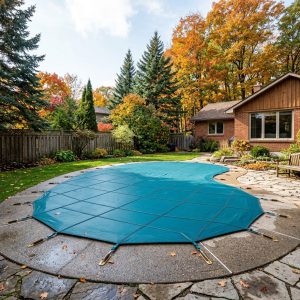
One maintenance consideration unique to semi-inground pools is the area behind and below the exposed panels. If the gap between the pool wall and any surrounding retaining structure is not properly backfilled and drainage is not addressed during installation, water can pool against the panels over winter, accelerating corrosion on steel-panel pools. This is not a theoretical risk — it is the single most common cause of premature panel failure in semi-inground installations. Ask your contractor specifically about their backfill and drainage protocol, and insist on a gravel drainage layer if you are in a wet climate or a frost-heavy region.
When comparing the long-term cost of ownership between pool types, the liner replacement schedule is the most important variable for vinyl pool owners. The vinyl liner vs fiberglass pool true 10-year price analysis runs the full 10-year cost comparison and shows exactly how liner replacement cycles affect total cost of ownership for vinyl installations — data that applies directly to semi-inground pool budgeting.
Is a Semi-Inground Pool Worth the Extra Cost Over Above Ground?
This is the question that brings most semi-inground shoppers to a decision point. You can get an above-ground pool for $3,000-$8,000. A semi-inground is $20,000-$32,000. Is the $15,000-$20,000 gap worth it?
The answer depends almost entirely on three factors: how long you plan to stay in your home, what your yard’s topography looks like, and how important the finished aesthetic is to you.
If you are staying in your home for 10+ years, the value proposition for semi-inground is strong. The pool lasts longer, looks better, integrates with your landscaping more naturally, and adds more to your property’s resale value. Real estate appraisers in most markets treat a semi-inground pool with permanent decking similarly to an inground pool for appraisal purposes — adding an estimated $8,000-$20,000 to property value depending on the region and the installation quality.
If you have a sloped yard, the semi-inground is almost always the better choice even on pure cost terms. The earthwork required to level a yard for an above-ground pool often costs $3,000-$8,000 — and the result still looks makeshift. A semi-inground installation handles the slope as a feature rather than an obstacle.
If aesthetics matter to you, the semi-inground wins with no further argument. An above-ground pool, regardless of how nice the deck is, looks like what it is. A semi-inground pool with a well-designed deck surround looks like a custom inground installation from any viewing angle.
The one scenario where above-ground clearly wins is a temporary or rental-situation installation, or a first home where you will move within 5 years and cannot recoup the investment in resale. In those cases, the economics favor a basic above-ground pool. For everyone else, the semi-inground delivers more value per dollar over the life of the installation.
How to Get an Accurate Semi-Inground Pool Estimate
Getting an accurate estimate for a semi-inground pool requires more preparation than simply calling three contractors and comparing their bids. Here is a systematic approach that will protect you from budget surprises.
Step 1: Know your yard dimensions and grade. Measure the area where you are considering placing the pool. Note any slope by using a simple line level and measuring tape — or hire a landscaper for a quick topographic assessment. The grade measurement is critical because it determines excavation depth on each side and drives retaining wall requirements. Contractors who quote without seeing the site will almost always miss these costs.
Step 2: Choose your pool size and shape before you quote. Contractors cannot give you an accurate bid on a pool you have not specified. Have a pool size and shape in mind — oval tends to be the most budget-efficient — and know your target burial depth. A “bury it halfway” answer is not precise enough for accurate bidding.
Step 3: Decide your deck material. Pressure-treated wood, composite, pavers, or concrete — each carries a dramatically different price tag. Decide before you get bids so you are comparing like with like across contractors.
Step 4: Get at least three bids from licensed contractors. In most states, pool installation requires a licensed contractor. Check your state contractor licensing database before hiring. Get detailed written quotes that itemize each component — shell, excavation, liner, equipment, electrical, decking, retaining walls, and permit fees. A reputable contractor will provide this level of detail. One who quotes a single “all-in” number without a breakdown is a red flag.
Step 5: Use an online cost estimation tool to benchmark before you start. This gives you a realistic range to carry into contractor conversations so you know whether bids are in the right ballpark. Online tools are not a substitute for professional bids, but they are an excellent sanity check that protects you from being overcharged or underestimating a project scope.
Semi-inground pools offer a great middle ground between looks and excavation costs, especially if your yard is sloped. To see how this setup affects your budget, try our semi-inground pool cost calculator. It helps you compare the price of full excavation versus partial decking.
Conclusion
The semi-inground pool occupies an undervalued middle ground in the backyard pool market — and in 2026, it is becoming more popular as homeowners discover that they do not have to choose between an affordable but uninspiring above-ground pool and a beautiful but prohibitively expensive inground installation. For most families, a well-designed semi-inground pool delivers a permanent, attractive, fully functional backyard pool for $20,000-$35,000 fully installed. That is real money, but it is also real value — a structure that will last 25+ years, look like a custom inground pool, and add meaningful equity to your home.
The key to a successful project is preparation: know your yard’s slope, choose your size and deck materials before you get quotes, understand your local permit requirements, and get detailed written bids from licensed contractors. The more specific your planning, the more accurate your budget — and the fewer surprises you will face mid-project.
Ready to see what a semi-inground pool would cost for your specific yard and budget? Use our free pool cost estimator to get a personalized estimate in minutes — no contractor visit required. Just enter your location, pool size, and site conditions, and we will generate a cost range calibrated to your local market. It is the fastest way to move from “I wonder if I can afford this” to “here is my budget and my plan.”
FAQ
How much does a semi-inground pool cost on average in 2026?
According to 2026 contractor survey data across multiple U.S. regions, the average fully-installed semi-inground pool costs between $20,000 and $32,000 for a standard 12×24 or 15×30 oval with a basic pressure-treated deck and standard liner and pump package. Larger pools (16×32 and above) with composite decking and retaining walls for sloped lots can push the total to $38,000-$45,000. Markets in the Northeast and Pacific Coast tend to run 15-25% above national averages due to higher labor costs and more complex permitting requirements, while Midwest and Southern markets often come in at or below the national midpoint. The single biggest budget variable within this range is the deck — homeowners who choose composite or stone rather than pressure-treated wood often add $5,000-$10,000 to their final cost.
Can a semi-inground pool be fully buried like an inground pool?
Yes — many semi-inground pool models are rated for full burial, meaning the top of the pool wall is at or near grade level. Brands like Radiant, Aqua Leader, and select Trevi models are specifically engineered for this application. When fully buried, a semi-inground pool is visually indistinguishable from a standard inground vinyl liner pool. The primary difference is that the pool shell uses panel construction rather than poured concrete or a fiberglass shell, which is why the total cost remains significantly lower even at full burial depth. If you are on a tight lot where you want the pool flush with the yard and prefer not to have raised decking, full burial is a very practical and attractive option.
How long does a semi-inground pool last?
The structural panels of a quality semi-inground pool last 20-30 years under normal conditions. Aluminum panels generally outlast steel because they do not corrode, but both materials perform well when water chemistry is properly maintained. The vinyl liner — the only true consumable component — lasts 8-12 years on average. With one or two liner replacements over the life of the pool, the total ownership timeline easily exceeds 25 years, making semi-inground pools a legitimate long-term backyard investment rather than a temporary stopgap. Proper winterization and a well-designed drainage layer behind the panels are the two biggest factors in achieving maximum panel longevity.
Do semi-inground pools require a permit?
In most U.S. jurisdictions, yes. Because semi-inground pools involve excavation and a permanent deck structure, they are treated similarly to fully inground pools for permitting purposes. You will typically need a building permit, a barrier or fence permit (required by the International Residential Code for any pool more than 24 inches deep), and possibly electrical and plumbing sub-permits. Permit costs range from $300 in rural areas to over $2,000 in certain metropolitan jurisdictions, and processing times vary from 2 weeks to 4 months. Always verify local requirements with your municipality before committing to a project timeline. Skipping the permit process to save money can result in fines, forced removal, and complications when you sell the property.
What is the best brand of semi-inground pool?
The three most respected names in the North American semi-inground market are Radiant (by Latham Pool Products), Trevi, and Aqua Leader. Radiant is often cited for its built-in insulation system, which meaningfully reduces heating costs in northern climates and makes it a strong choice for homeowners in USDA hardiness zones 4-6. Trevi offers the widest shape selection and strong value at the mid-tier price point. Aqua Leader is favored by contractors in cold-climate regions for its structural rigidity under frost-heave conditions. The “best” brand for your project depends on your local dealer network, your climate, and the specific shape and size you want — discuss these factors with at least two installers who carry different brands before committing.
Can I install a semi-inground pool myself?
A full DIY installation is technically possible but not recommended for most homeowners. The excavation requires professional equipment, the liner installation requires skill and precision to avoid wrinkles and early failures, and the electrical bonding is a code-required safety system that must be installed correctly. Most importantly, many municipalities will not issue a certificate of occupancy or final inspection approval for a pool installed without a licensed contractor. Some homeowners successfully complete a “homeowner-managed” project — where they hire individual tradespeople for specific tasks (excavation, electrical, liner) rather than a general pool contractor — which can save 10-15% but requires significant project management time and expertise. If you go this route, start by pulling the permit yourself so you own the process from day one.
What is the difference between a semi-inground pool and an on-ground pool?
The terms are sometimes used interchangeably, but there is a meaningful distinction. An “on-ground” pool generally refers to an above-ground pool structure installed on a raised platform or deck, typically on a very flat or slightly sloped lot. The pool itself is not buried — it sits above grade entirely, supported by a deck structure built around it. A semi-inground pool, by contrast, involves actual excavation — the pool is physically lowered into the earth to some degree. The buried portion of a semi-inground pool is supported by soil, which changes the structural requirements of the pool shell and the way it behaves over time. The finished aesthetic of an on-ground installation tends to look more like an elevated above-ground pool, while a semi-inground tends to look more like a traditional inground pool from grade level.
Does a semi-inground pool add value to my home?
In most real estate markets, yes — though the dollar amount varies by region and buyer demographics. A permanently installed semi-inground pool with quality decking and professional landscaping integration is typically appraised similarly to a small inground pool, adding an estimated $8,000-$20,000 in appraised value in pool-friendly markets (warm climates, family-oriented suburbs). In markets where buyers are pool-averse (urban condos, northern climates where pool season is short), the value add may be negligible or even slightly negative. The key variable is how well the pool integrates with the overall property — a well-designed semi-inground pool with a beautiful surrounding deck adds more appraised and perceived value than a bare-bones installation, even if the pool shell is identical. Quality of installation, not just the pool itself, is what appraisers and buyers respond to.