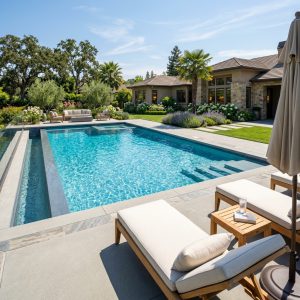
When most homeowners imagine a pool, they picture sunshine, open sky, and the smell of sunscreen. An indoor pool flips that vision entirely — and with it, every assumption about cost, construction, and complexity. An indoor pool isn’t simply an outdoor pool moved inside. It’s a fundamentally different construction project that touches structural engineering, mechanical systems, building science, and interior design in ways that outdoor pools never do.
Here’s the number that stops most buyers in their tracks: according to 2026 national contractor data, a fully built indoor residential pool costs $150,000 to $500,000 or more — compared to $50,000–$120,000 for a comparable outdoor inground pool. That’s not a markup. That’s the reality of what it takes to enclose, condition, ventilate, and maintain a body of water inside a structure year-round.
Why the dramatic difference? Because the pool shell — the vessel that holds the water — typically represents only 20–30% of the total project cost in an indoor installation. The remaining 70–80% goes to the enclosure structure, HVAC and dehumidification systems, electrical infrastructure, plumbing upgrades, specialized finishes, and the complex permitting process that governs any significant home addition.
This guide is designed to work alongside an indoor pool cost calculator to give you a realistic, line-by-line understanding of where the money goes — so you can make an informed decision, budget correctly, and avoid the costly surprises that catch underprepared buyers off guard. Let’s start with the hardest truth in the category: the enclosure changes everything.
Key Takeaways
– The pool shell is only 20–30% of total indoor pool cost — the enclosure, HVAC, and structural systems drive the majority of the budget.
– A complete indoor pool installation including structure runs $150,000–$500,000+ for most residential projects in 2026.
– Dehumidification is non-negotiable: inadequate humidity control causes severe structural damage within 12–24 months, costing tens of thousands to remediate.
– HVAC and dehumidification systems alone add $30,000–$80,000 to the project cost, separate from the pool shell.
– Cold-climate homes face higher operating costs but can see stronger year-round ROI since the pool is usable regardless of weather.
– An indoor pool adds significant resale value in luxury markets ($100,000–$300,000+) but may reduce buyer pool in mid-range neighborhoods where buyers don’t want the operating costs.
Why Indoor Pool Costs Are in a Different League
The sticker shock of an indoor pool estimate is almost universal. Buyers who have researched outdoor pools walk in expecting to pay $80,000–$120,000 and leave with a quote for $300,000+. Understanding why that gap exists makes the number far more rational — and helps you evaluate whether the investment makes sense for your situation.
The Pool Shell Is Only 20–30% of the Cost
This is the single most important thing to understand about indoor pool pricing. For an outdoor pool, the shell (excavation, construction, plumbing, and equipment) often represents 60–80% of total project cost, with decking and landscaping making up the rest.
For an indoor pool, that math inverts. The shell and associated pool mechanical systems (filtration, circulation, sanitization) represent roughly $50,000–$150,000 of a project that might total $300,000–$450,000. The majority of your budget is going toward the building — its structure, its mechanical systems, and the specialized environment it must maintain.
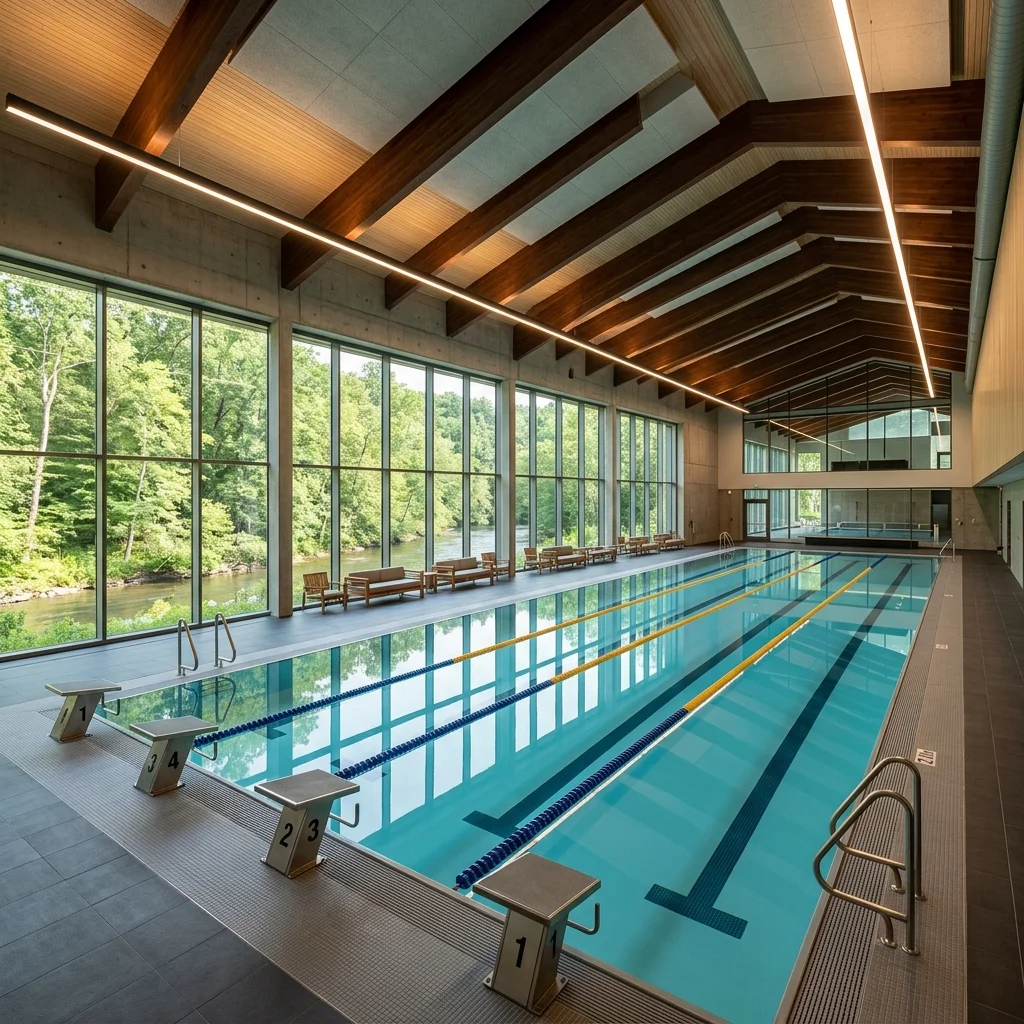
Think of it this way: you’re not just building a pool. You’re building a climate-controlled natatorium (the technical term for an enclosed swimming facility) that happens to contain a pool.
Structural Engineering for Enclosures
Any structure built to house an indoor pool faces unique engineering demands. Water vapor is extraordinarily corrosive to standard building materials. Wood framing, standard drywall, typical insulation batts, and conventional HVAC ductwork will all fail — sometimes within 12–18 months — in a pool environment if the structure isn’t specifically engineered to handle high humidity and chloramine exposure.
This means your enclosure requires:
- Structural framing using moisture-resistant materials (steel or treated lumber with vapor barriers)
- Specialized insulation systems (closed-cell spray foam is standard for pool enclosures)
- Corrosion-resistant HVAC components rated for pool environments
- Pool-grade lighting fixtures (standard electrical fixtures corrode in humid air)
- Drainage systems designed for splash zones extending beyond the pool edge
Structural engineering fees for a custom pool enclosure run $3,000–$8,000, and these drawings are mandatory for permits in virtually every jurisdiction.
Building Permit Complexity
An indoor pool is, legally speaking, a major home addition. Depending on your municipality, you may trigger:
- Full home addition permits with all associated inspections
- Mechanical permits for the HVAC system
- Electrical permits for pool-rated wiring and bonding
- Plumbing permits for pool fill, drainage, and equipment
- Zoning variances if the addition changes your home’s footprint or setback compliance
According to permit data from U.S. municipalities compiled in 2026, permit fees for an indoor pool project range from $2,500 to $15,000, with additional time costs from inspection scheduling that can add weeks to your project timeline. Understanding how to navigate this process is covered in depth in our pool permit costs by state guide.
For a foundational understanding of how to approach pool cost estimation generally, our pool cost calculator vs estimator complete guide explains the difference between calculator-based estimates and contractor-generated project budgets.
Indoor Pool Cost Breakdown by Component
The clearest way to understand what you’re paying for is to break the project into its component systems. Here’s a 2026 cost breakdown for a standard residential indoor pool installation — a rectangular 15×30-foot pool in a purpose-built addition or converted space.
Pool Shell: $50,000–$150,000
The pool shell itself — the vessel that holds water — follows the same material logic as outdoor pools, but with different material recommendations. According to aquatic construction professionals, concrete/gunite and fiberglass are the two dominant choices for indoor pools, for slightly different reasons:
- Fiberglass ($50,000–$80,000 installed indoors): The smooth, non-porous surface is particularly valuable indoors where ventilation is limited and algae growth could accelerate in stagnant air pockets. Fiberglass is also faster to install, which matters when you’re working inside an enclosed structure.
- Concrete/Gunite ($70,000–$150,000 installed indoors): Maximum design flexibility. Custom depth profiles, integrated spa areas, and precise sizing for unusual indoor floor plans are all possible. Interior finishes (plaster, tile, aggregate) add $10,000–$30,000 to this range.
- Vinyl liner (generally not recommended for indoor use): Vinyl liners are less common indoors because the elevated humidity and limited UV exposure can cause them to degrade and discolor more quickly than in outdoor environments.
Structural Enclosure: $80,000–$250,000
This is the largest single cost category and the one that most surprises first-time indoor pool buyers. The structural enclosure includes:
- Foundation work if the pool addition extends beyond the existing home’s footprint
- Framing and exterior walls using materials appropriate for pool environments
- Roofing (often specialized to handle condensation runoff)
- Windows and glazing (typically double or triple-pane with moisture-resistant framing)
- Interior wall finishes (tile, specialized paint, or waterproof panels — not standard drywall)
- Flooring in the surrounding deck area (non-slip ceramic tile, sealed concrete, or rubber pavers)
The wide range ($80,000–$250,000) reflects primarily the size and finish level of the enclosure. A basic pool room with block walls, simple roof, and minimal windows sits toward the low end. A full glass-walled natatorium with soaring ceilings, skylights, and premium finishes pushes toward $250,000+.
HVAC and Dehumidification: $30,000–$80,000
This is the component where the most expensive mistakes are made. Pool enclosures require a dedicated natatorium HVAC system — not a standard residential air handler or even a commercial unit. The system must:
- Maintain air temperature within 2–4°F of the water temperature to minimize evaporation
- Continuously remove moisture from the air (dehumidify) to prevent condensation on walls, windows, and structural elements
- Provide adequate fresh air exchange to dilute chloramine gases (a byproduct of chlorine reacting with body oils and nitrogen compounds in the water)
- Operate efficiently enough to keep monthly energy costs manageable
A properly sized pool dehumidifier from manufacturers like Natare, Desert Aire, or Dectron costs $15,000–$35,000 for the unit alone, plus $8,000–$20,000 for installation, ductwork, and integration with the pool enclosure’s air handling infrastructure.
Natatorium Air Handling Units: $15,000–$40,000
Larger indoor pool projects — particularly those with high ceilings, large water surfaces (over 500 sq ft), or elevated swimmer loads — require a dedicated air handling unit (AHU) in addition to the dehumidifier. The AHU manages the thermal environment and fresh air exchange independently of humidity control, allowing for more precise climate management.
For a 15×30 pool room with 10-foot ceilings, a combined dehumidifier/AHU package from a reputable pool HVAC manufacturer typically runs $25,000–$45,000 installed, not including ductwork or electrical connections.
Specialized Lighting and Electrical: $10,000–$30,000
Standard residential electrical systems aren’t suitable for pool environments. All wiring, fixtures, and electrical components within the pool room must comply with NEC Article 680 (National Electrical Code requirements for pools, spas, and fountains), which mandates:
- GFCI protection on all outlets within 20 feet of the water’s edge
- Specific bonding requirements connecting all metal components to equalize electrical potential
- Pool-rated underwater lighting fixtures (dry niches or wet niches with appropriate lens sealing)
- Corrosion-resistant materials throughout
The electrical scope for a residential indoor pool installation — including panel upgrades, dedicated circuits for pool equipment, lighting, and bonding — typically runs $10,000–$30,000 depending on the existing electrical infrastructure and the scope of the pool room.
Plumbing and Water Treatment: $20,000–$50,000
Indoor pool plumbing is more complex than outdoor installations because the equipment room must be integrated into the home’s structure rather than located in an adjacent equipment pad. This requires:
- Drain lines run through floors or walls to the equipment room
- Return lines distributing filtered, heated water back to the pool
- Overflow/gutter systems for pools with deck-level water lines
- Water treatment equipment — filtration, sanitization (chlorine, UV, or saltwater), and pH/alkalinity management systems
The water treatment component is particularly important indoors. Because the pool space is enclosed, waterborne pathogens and chemical byproducts can accumulate in the air. Many indoor pools use UV sanitization systems (added cost: $3,000–$8,000) as a supplement to chlorine, reducing the chloramine load in the air significantly.
Indoor Pool Total Cost Summary Table (2026)
| Component | Low Estimate | High Estimate | Notes |
| Pool Shell (concrete or fiberglass) | $50,000 | $150,000 | Includes excavation and basic finish |
| Structural Enclosure | $80,000 | $250,000 | Varies by size and finish level |
| HVAC & Dehumidification | $30,000 | $80,000 | Non-negotiable system |
| Air Handling Unit (AHU) | $15,000 | $40,000 | May be combined with dehumidifier |
| Specialized Lighting & Electrical | $10,000 | $30,000 | NEC 680 compliant wiring |
| Plumbing & Water Treatment | $20,000 | $50,000 | Includes filtration and sanitation |
| Permits & Engineering | $5,000 | $15,000 | Varies significantly by jurisdiction |
| Interior Finishes & Decking | $10,000 | $40,000 | Tile, non-slip surfaces, lighting |
| Total Project Range | $220,000 | $655,000 | Most residential projects: $250k–$450k |
The Humidity Problem — Why HVAC Is Non-Negotiable
If there’s one section of this guide that will save you money — potentially tens of thousands of dollars — it’s this one. The single most common and most expensive mistake in indoor pool construction is underspecifying or cutting costs on the HVAC and dehumidification system.
Corrosion Damage from Inadequate Dehumidification
Pool water evaporates constantly. In a warm, enclosed environment with a large water surface area, a 15×30 pool can introduce 20–50 gallons of water vapor into the air per day during active use. Without continuous mechanical dehumidification, that moisture:
- Condenses on windows, creating persistent water damage and mold
- Saturates wall insulation, dramatically reducing its effectiveness
- Corrodes metal framing, HVAC components, and electrical connections
- Causes paint and plaster to bubble, peel, and fail within months
- Creates conditions favorable for mold and mildew growth in structural cavities
The remediation cost for a pool room that was built without adequate dehumidification — or where the dehumidifier failed and wasn’t promptly repaired — runs $30,000–$100,000 or more in severe cases. This is not a hypothetical risk; it’s a documented pattern that pool HVAC engineers encounter regularly.
The rule is simple: never compromise on the dehumidification system. If budget pressure forces trade-offs, downgrade the tile selection or defer the spa — don’t undersize the HVAC.
Sizing HVAC Correctly
Proper HVAC sizing for an indoor pool is a specialized engineering calculation, not a rule-of-thumb estimate. Variables include:
- Water surface area (in square feet)
- Pool water temperature (target and seasonal variation)
- Air temperature in the natatorium
- Number of swimmers (active use generates significantly more evaporation than an unoccupied pool)
- Glazing area (windows and skylights dramatically increase heat loss and condensation risk)
- Geographic climate (outdoor temperature and humidity affect the HVAC load calculation)
A mechanical engineer specializing in natatorium design should perform a psychrometric analysis — a calculation of the moisture load in the air — before specifying equipment. This analysis costs $1,500–$4,000 but prevents the much more expensive mistake of undersized equipment.
Energy-Recovery Ventilation (ERV) Systems
The energy cost of running a pool HVAC system is significant. Pool dehumidifiers work by heating the air to cause moisture to condense, then returning the warmed, drier air to the pool room. This process is inherently energy-intensive.
Energy-Recovery Ventilation (ERV) systems capture the heat from exhaust air before it leaves the building and use it to pre-condition incoming fresh air. In indoor pool environments, ERV systems can reduce HVAC energy consumption by 30–50%, which translates to meaningful monthly savings. ERV units add $5,000–$15,000 to the HVAC installation cost but typically achieve payback in 3–6 years through reduced utility bills.
Indoor Pool Finishes and Interior Design Costs
An indoor pool room exists at the intersection of aquatic function and residential interior design. The finish choices you make will define the aesthetic of the space for decades — and they have a wide cost range depending on your priorities.
Surround Materials for Indoor Pools
The pool deck and surrounding floor area must be non-slip, waterproof, and resistant to chemical exposure. Standard options and their 2026 installed costs:
- Ceramic or porcelain tile: $10–$25/sq ft installed — the most common choice for indoor pools. Durable, easy to clean, and available in hundreds of finishes.
- Natural stone (travertine, slate): $18–$40/sq ft installed — premium aesthetic but requires sealing to prevent water absorption and chemical staining.
- Sealed concrete: $6–$15/sq ft — utilitarian and practical; popular in fitness-focused installations.
- Rubber pavers or rubber tile: $8–$20/sq ft — excellent non-slip performance; common around commercial indoor pools and increasingly popular in residential settings.
For a pool room with 600 sq ft of surround area, budget $6,000–$24,000 for flooring alone, depending on material choice.
Lighting — Underwater vs. Overhead
Indoor pool lighting serves two distinct functions: underwater lights create the visual effect of the pool itself, while overhead lighting illuminates the entire natatorium for safety and ambiance.
Underwater lighting: LED pool lights ($300–$800 each, with most pools needing 2–6 fixtures) are standard. Color-changing RGB LED systems add ambiance at modest additional cost ($100–$200 per fixture premium).
Overhead lighting: Pool room overhead lighting must use corrosion-resistant fixtures rated for humid environments. LED systems are preferred for longevity in these conditions. Budget $3,000–$10,000 for a complete overhead lighting system, depending on room size and aesthetic goals.
Natural light considerations: Skylights and large windows dramatically improve the pool experience but add cost. A single quality skylight runs $1,500–$5,000 installed; a wall of glazing facing a private outdoor space might add $15,000–$40,000.
Windows and Skylights — Natural Light Strategy
Natural light transforms indoor pool spaces from utilitarian to spectacular. However, every window and skylight also represents a thermal and moisture management challenge. Key design principles:
- Use thermally broken frames (aluminum or fiberglass, not standard aluminum) to minimize condensation on window frames
- Specify triple-pane glazing in cold climates to reduce the temperature differential that causes condensation
- Orient glazing to avoid direct afternoon sun where possible, which reduces both glare and pool water temperature fluctuation
- Consider motorized shades for skylights to allow light management without permanently blocking the view
Window and skylight costs for an indoor pool room vary dramatically by scale — from $5,000 for minimal fenestration to $60,000+ for dramatic floor-to-ceiling glass walls in luxury installations.
Geographic Factors — Cold vs. Warm Climate
Where your home is located has a significant impact on both the cost and the ROI calculus of an indoor pool.
Cold climates (USDA Zones 3–6): The value proposition for an indoor pool is strongest here. Year-round swimming without heating loss to outdoor temperatures, no winterization costs, and immunity to weather-related closures make the indoor pool a compelling daily-use asset. However, HVAC operating costs are higher because the differential between indoor pool temperature and outdoor temperature drives greater heat demand.
Warm climates (USDA Zones 8–10): An outdoor pool is usable 8–12 months per year, which reduces the perceived necessity of an indoor installation. However, in areas with extreme summer heat (Phoenix, Las Vegas, Houston), an indoor pool can actually be more comfortable in July and August than one exposed to direct sun at 105°F.
Humidity considerations by region: In high-outdoor-humidity climates (Gulf Coast, Southeast), the HVAC system works harder because the building envelope is constantly trying to equalize with humid outdoor air. This increases both equipment sizing requirements and monthly energy costs.
Operating Costs Monthly and Annual
Understanding the ongoing cost of an indoor pool is essential before committing to the installation. According to 2026 data from residential pool operators and HVAC professionals:
HVAC Running Costs
A properly sized pool dehumidifier running continuously consumes 3–8 kWh per hour depending on unit capacity and pool size. At the national average electricity rate of approximately $0.17/kWh (2026), that translates to:
- Small pool room (15×30 ft): $130–$200/month in HVAC electrical costs
- Medium pool room (20×40 ft): $200–$350/month
- Large pool room (25×50 ft+): $350–$600+/month
These costs can be reduced significantly with ERV systems, heat pump-based dehumidifiers (which are more efficient than electric resistance units), and proper building envelope insulation.
Chemical and Water Treatment
Indoor pools generally require similar chemical management to outdoor pools, but with some important differences. Because the water surface is enclosed, chloramine gases can build up faster — making it more important to maintain proper free chlorine levels and use supplemental oxidizers. Budget $80–$180/month for chemicals, depending on pool size and swimmer load.
Our pool maintenance cost calculator provides a detailed breakdown of monthly chemical, equipment, and service costs for both indoor and outdoor pools.
Structural Maintenance
The pool room structure requires periodic inspection and maintenance that outdoor pools don’t:
- Annual inspection of HVAC equipment, ductwork, and corrosion-prone components: $300–$600
- Window and door seal inspection: $100–$300
- Pool room repainting or refinishing every 5–10 years: $3,000–$15,000 depending on surfaces
Annual maintenance for a well-built indoor pool room (excluding pool chemicals and HVAC utilities) runs approximately $2,000–$5,000.
For information on how decking and heating choices affect both indoor and outdoor pool running costs, see our pool decking and heating costs guide.
Is an Indoor Pool Worth It? ROI Analysis
Whether an indoor pool is “worth it” depends entirely on how you define return — financial, lifestyle, or both.
Financial ROI in luxury markets: In premium ZIP codes where homes sell for $1.5M+, a high-quality indoor pool can add $150,000–$400,000 to appraised value, particularly in cold-climate states where year-round swimming is genuinely scarce. The ROI in these markets can be quite strong.
Financial ROI in mid-range markets: A $300,000 indoor pool installation added to a $500,000 home will rarely produce a dollar-for-dollar return. Buyers in mid-range markets often see indoor pools as a liability — they’re expensive to operate and limit the pool of potential buyers who want them.
Lifestyle ROI: For households that would use an indoor pool daily — competitive swimmers, physical therapy patients, families with young children, or buyers in cold climates — the quality-of-life value can be extraordinary. Daily swimming for fitness, privacy year-round, and no weather-related cancellations represent genuine daily-life improvements.
The break-even question: If you would otherwise pay for a gym membership ($80–$150/month), swim club access ($200–$600/month), or aquatic therapy ($100–$300/session), the operational cost of a home indoor pool becomes more palatable — particularly if multiple family members benefit.
If you’re comparing an indoor lap pool against other pool categories, our detailed lap pool cost calculator breaks down cost and ROI for fitness-specific pool designs.
Moving your pool indoors requires heavy-duty HVAC systems and room reinforcements that outdoor pools skip entirely. To price out these climate control systems, use our indoor pool cost calculator. It gives you a complete estimate for both the pool shell and the room modifications.
Conclusion
An indoor pool is the most ambitious residential construction project most homeowners will ever undertake — and for those who build one correctly, it’s also among the most transformative. The ability to swim at midnight in January, to train without weather interruptions, and to create a private aquatic sanctuary within your own home is genuinely extraordinary.
But the investment demands complete honesty about costs. The pool shell — the part that most people think of — is only a fraction of the total. The structural enclosure, HVAC and dehumidification systems, specialized electrical infrastructure, and the complex permitting process are all major cost centers that must be planned for from day one.
Use our indoor pool cost calculator at the top of this page to build your project estimate component by component — and share the output with multiple contractors to ensure every line item is accounted for in their bids. An indoor pool is too significant an investment to approach with anything less than complete financial clarity.
Frequently Asked Questions
How much does the average indoor pool cost to build in 2026?
The national average for a complete residential indoor pool installation — including pool shell, structural enclosure, HVAC, electrical, plumbing, and finishes — runs $250,000–$450,000 for a standard 15×30 to 20×40 foot pool room. Smaller plunge-pool rooms can be built for $150,000–$220,000, while large luxury natatoriums with premium finishes exceed $500,000–$800,000.
Can I build an indoor pool in my existing home, or does it require a separate structure?
Both approaches are possible. Converting an existing large room (a garage, unused great room, or basement with adequate ceiling height) reduces structural costs because the exterior shell already exists — but often requires significant moisture-proofing, HVAC upgrades, and structural reinforcement. A purpose-built addition or separate structure is often preferred because it allows the entire enclosure to be designed for the pool environment from the ground up.
What’s the minimum ceiling height for an indoor pool room?
Most aquatic design professionals recommend a minimum ceiling height of 10–12 feet for indoor pools. Lower ceilings trap humidity near the water surface, make HVAC airflow more difficult to design effectively, and create a claustrophobic aesthetic. For competition-length lap pools, 12–14 feet is preferred to allow adequate air circulation above the water surface.
How long does it take to build an indoor pool?
A typical residential indoor pool installation takes 9–18 months from permit application to first swim. The timeline is driven primarily by permitting (which can take 2–6 months in complex jurisdictions), structural construction (3–6 months), and pool installation and commissioning (1–3 months). Custom luxury natatoriums can take 18–24 months.
Does an indoor pool increase my homeowner’s insurance?
Yes, significantly. An indoor pool — particularly one in a climate-controlled enclosure — represents a substantial increase in both property value and liability risk. Expect your homeowner’s insurance premium to increase by $1,500–$5,000 annually, and consult your insurer before beginning construction to ensure your coverage terms are updated.
What temperature should an indoor pool be kept at?
Most residential indoor pools are maintained at 78–82°F for general recreational use. Competitive swimmers often prefer slightly cooler water (76–78°F) to prevent overheating during high-intensity training. The pool room air temperature should be maintained at 2–4°F above the water temperature to minimize evaporation — so if the water is 80°F, the air should be 82–84°F.
Is a saltwater system better for an indoor pool?
Saltwater systems (more accurately, salt chlorination systems) generate chlorine from dissolved salt rather than requiring liquid or tablet chlorine additions. They can be used in indoor pools, but the salt-rich air environment requires extra attention to corrosion prevention on metal components in the pool room. Some indoor pool experts prefer UV sanitization + low-level traditional chlorination over saltwater systems indoors specifically because it produces fewer chloramines and requires less chemical management in the enclosed air environment.
What’s the biggest hidden cost in indoor pool projects?
The single most frequently underestimated cost is the HVAC and dehumidification system. Many contractors who build excellent outdoor pools have limited experience with the specialized natatorium HVAC engineering required for indoor installations. Buyers who accept a pool quote that doesn’t explicitly include a fully specified pool dehumidification system — often because it was treated as a “deferred item” — frequently discover they need to add $30,000–$80,000 to their budget after construction has already begun.