You already know how you want to start your mornings — the clean pull of water, the rhythm of your strokes, the focused calm that no other exercise quite replicates. What you probably do not know yet is exactly how much it costs to install a lap pool in your backyard, and that uncertainty is stopping a lot of serious swimmers from ever getting started. The truth is that lap pool prices in 2026 span an enormous range — from around $15,000 for a basic modular steel tank to well over $100,000 for a fully equipped, competition-grade gunite pool with heating, a hydraulic lane system, and premium decking. That spread is not arbitrary. Lap pools are longer, narrower, and more mechanically demanding than standard recreational pools, and every variable — the material you choose, the length you need, whether the pool goes indoors or out, and how many lanes you want — compounds the price in ways that catch most buyers off guard.
This guide was built to remove that uncertainty. Whether you are a competitive masters swimmer planning a backyard training facility, a triathlete who wants to log winter yards without paying gym fees, or a homeowner who simply wants serious lap swimming on demand, this lap pool cost calculator breakdown covers every real-world number you need before talking to a contractor. We will walk through materials, dimensions, hidden costs, indoor versus outdoor pricing, and monthly operating budgets — so that by the time you reach the end, you will know not just what a lap pool costs, but exactly why it costs that amount.
Key Takeaways
– Lap pool costs in 2026 range from $15,000 to $100,000+, depending on material, length, and features — the average homeowner installation runs $45,000–$70,000.
– Fiberglass lap pools ($35,000–$65,000) offer the fastest installation and lowest long-term chemical costs, but come in fixed factory lengths.
– Concrete/gunite lap pools ($55,000–$100,000+) are the most customizable and durable, but take the longest to build and cost the most upfront.
– Modular steel lap pools ($15,000–$40,000) are the most affordable entry point but may limit resale value compared to in-ground alternatives.
– Indoor lap pools add $50,000–$200,000 in structural and HVAC costs beyond the pool itself — a major budget consideration.
– Monthly operating costs for a heated lap pool run $300–$700, depending on climate, pool length, and energy prices in your region.
What Qualifies as a Lap Pool?
Before you can use any lap pool cost calculator accurately, you need a firm grasp on what separates a “lap pool” from a regular backyard pool. The distinction is not just about looks — it is about function, and function drives every design decision that affects your final price. A lap pool is purpose-built for continuous, uninterrupted swimming. That means a specific length-to-width ratio, an absence of irregular shapes or beach entries, and a construction philosophy centered on performance rather than leisure. Standard recreational pools are designed to be enjoyed in — lounged in, jumped into, floated across. Lap pools are designed to be swum through, and that difference in purpose reshapes every line item on your estimate.
Minimum Dimensions for Effective Lap Swimming (25 Yards vs. 25 Meters)
The two universally accepted lap swimming benchmarks are 25 yards (approximately 75 feet) and 25 meters (approximately 82 feet). These are not arbitrary standards — they are the two short-course distances used in competitive swimming worldwide, meaning every training protocol, pace chart, and interval set is calibrated to one of these two lengths. A 25-yard pool is the U.S. domestic standard, used by the vast majority of college and masters swim clubs. A 25-meter pool aligns with international competition standards and is used widely in countries where World Aquatics rules govern training facilities.
For homeowners, a true 25-yard or 25-meter pool is the gold standard, but it is also the most expensive option because of the sheer footage of excavation, shell material, and decking involved. According to 2026 contractor survey data, the average private residential lap pool is actually built between 40 and 60 feet long — shorter than a competitive short-course pool, but long enough to complete meaningful swim sets with flip turns. Pools under 40 feet are often called “plunge pools” or “swim spas” rather than true lap pools, and they typically require a powered current system such as a swim jet or resistance unit to provide usable swimming distance. A 40-foot minimum is a reasonable threshold for calling something a genuine lap pool, and that is the baseline most cost estimators use when generating quotes.
Width is equally important. Serious single-lane lap swimming requires a minimum of 8 feet of clear water width. A two-lane pool needs at least 16–18 feet across to maintain safe lane separation using standard 3-foot lane lines. National governing body guidelines recommend 9-foot lanes for competition, which means a single-lane 25-yard pool at full competitive specification is 75 feet long and 9 feet wide — a significant land commitment in any residential yard.
Lane Configurations — Single vs. Multi-Lane
Most residential lap pools are built as single-lane facilities, and that is a perfectly practical choice for individuals or couples who train at different times. Single-lane pools are easier to heat, require less surface area, and cost meaningfully less to build. According to 2026 national contractor averages, a single-lane lap pool costs approximately 40–55% less to install than an equivalent two-lane design, simply because the shell width, excavation footprint, and deck square footage are all dramatically reduced.
Two-lane pools make sense for households with multiple serious swimmers, for small group coaching situations, or for masters swim teams that want to host informal workouts. A two-lane residential pool typically runs 18–20 feet wide, which shifts it from “lap pool” pricing territory into “competition pool” pricing — expect costs to scale accordingly, often reaching $80,000–$150,000 for a gunite build at full spec. Three-lane and four-lane facilities are generally the domain of schools, fitness clubs, and community organizations rather than private homes, and their costs of $200,000–$500,000 and above reflect that institutional scale.
Lap Pool Shapes: Rectangular, L-Shape, and Plunge Options
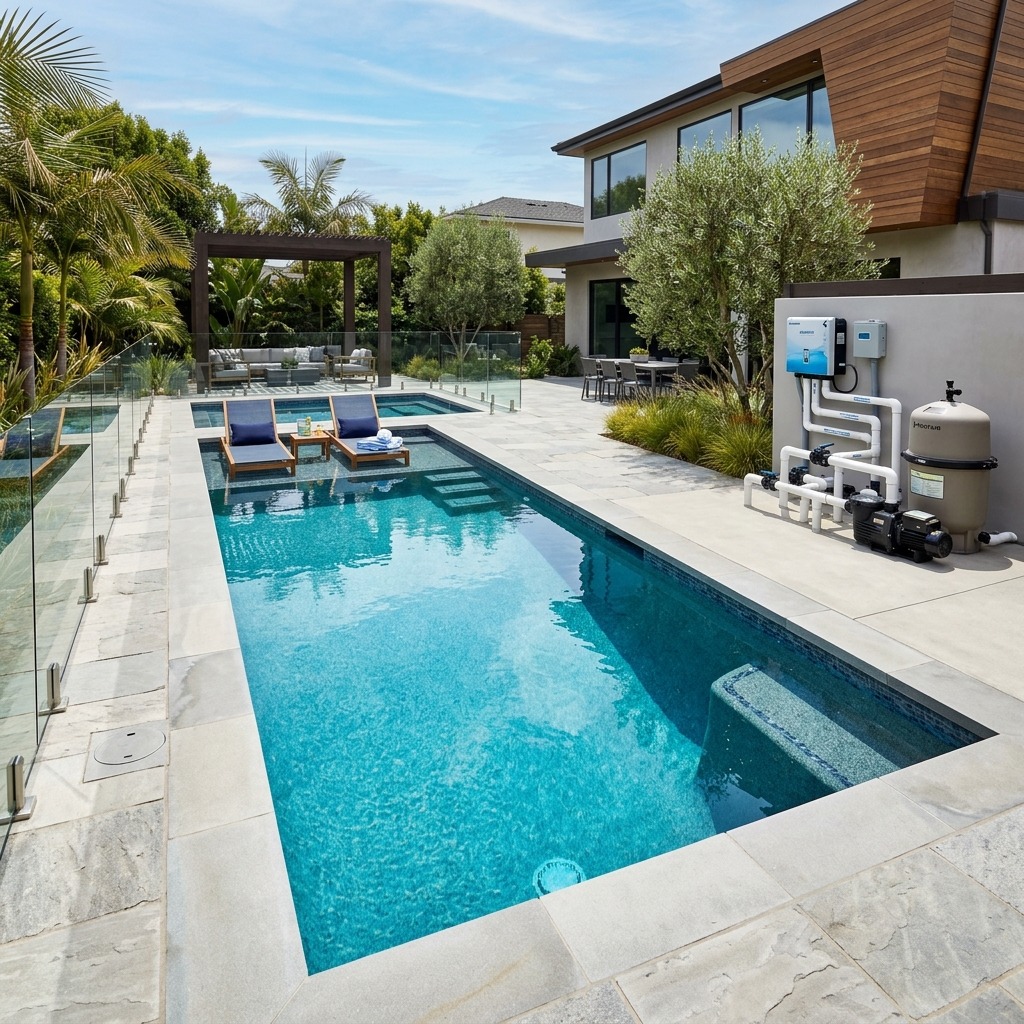
The rectangular layout is by far the most common and most cost-effective shape for lap swimming. Clean right angles minimize structural complexity, make lane lines easy to install, and allow the pool shell — whether fiberglass, vinyl, or gunite — to be built with maximum efficiency. Almost every fiberglass lap pool shell is rectangular, because the manufacturing process favors simple, symmetrical forms.
L-shaped lap pools combine a full-length swimming lane with a wider “leisure” end that can accommodate a spa, a seating ledge, or simple wading space for non-swimmers. They are a popular compromise for families where one member wants a serious training pool and others want a social water feature. The L-configuration adds roughly 15–25% to total build cost compared to a straight rectangle of equivalent lap-lane length, because the irregular geometry requires additional excavation, more complex plumbing routing, and custom decking work at the corner junction.
Plunge-with-current configurations — sometimes marketed as “endless pools” or “swim-in-place pools” — use a powerful hydraulic jet or paddle-wheel system to create a current that the swimmer swims against. These systems fit in pools as short as 10–15 feet, making them viable for smaller yards. Costs range from $20,000 to $45,000 installed, but serious competitive swimmers often find the turbulent current less satisfying than genuine open-water lap swimming. They are best suited to fitness swimmers rather than technique-focused or speed-focused athletes.
Lap Pool Cost by Material — 2026 Price Ranges
Material choice is the single biggest lever you have over your lap pool’s total installation cost. Each of the four primary materials — fiberglass, concrete/gunite, vinyl liner, and modular steel — involves different manufacturing processes, installation timelines, long-term maintenance profiles, and financing considerations. Before you consult a pool cost calculator vs estimator complete guide to run your numbers, understanding what each material fundamentally means for your wallet is essential.
| Material | Low | High | Best For |
| Fiberglass | $35,000 | $65,000 | Fast install, low chemical costs, smooth gel-coat finish |
| Concrete / Gunite | $55,000 | $100,000+ | Full custom length and depth, competition-grade durability |
| Vinyl Liner | $30,000 | $55,000 | Budget-conscious builds, flexible rectangular sizing |
| Modular Steel | $15,000 | $40,000 | Temporary or semi-permanent installs, constrained lots |
Fiberglass Lap Pool Cost ($35,000–$65,000)
Fiberglass lap pools are factory-manufactured shells — entire pool basins molded in one piece at a production facility, then transported to your property by flatbed truck and set into an excavated hole with a crane. The all-in-one-piece construction means no seams, no liner to replace, and a gel-coat surface that resists algae growth far better than porous concrete. According to 2026 industry data from the Pool and Hot Tub Alliance, fiberglass pools typically require 75% fewer chemicals than gunite pools over their lifetime, producing measurable savings in annual operating cost.
The trade-off is size flexibility. Fiberglass shells are molded in fixed dimensions at the factory, and the width of most residential shells is capped at around 16 feet due to highway transportation restrictions. Common residential fiberglass lap pool lengths run from 40 feet to 60 feet, with a handful of manufacturers offering shells up to 75 feet. If you need a full 25-yard (75-foot) pool or a fully custom width, fiberglass cannot accommodate it. Installation timelines, however, are excellent — a fiberglass lap pool can be set and swimming-ready in 3–6 weeks, compared to 3–6 months for a gunite build. For a detailed comparison between these two material types, see the fiberglass vs concrete pool cost comparison guide, which breaks down the lifetime cost equations side by side.
Concrete / Gunite Lap Pool Cost ($55,000–$100,000)
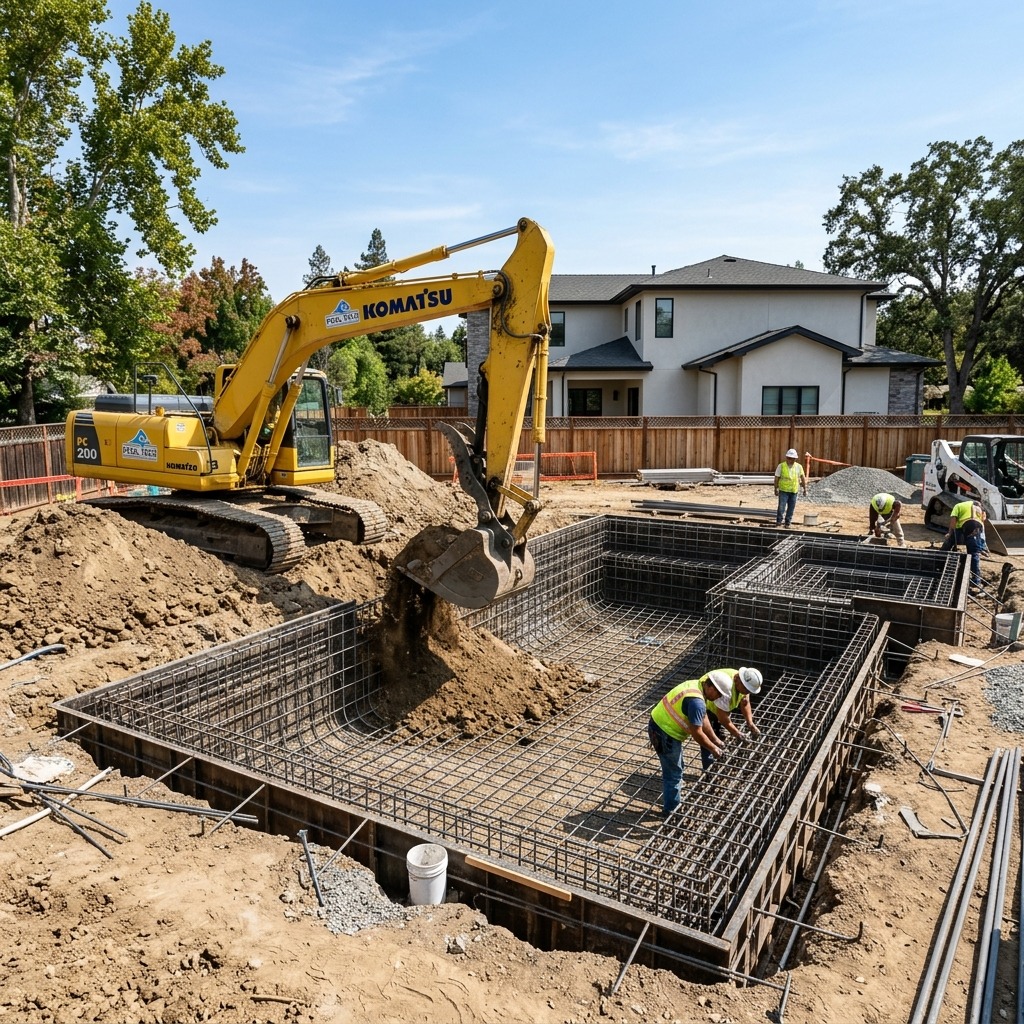
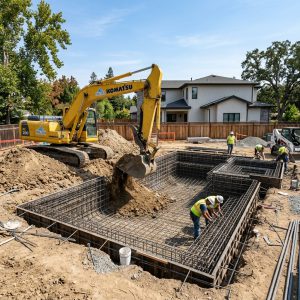
Gunite is the material of choice whenever size, shape, or specification flexibility is the top priority. In a gunite build, a steel reinforcement cage is erected in the excavated hole, and then a mixture of dry concrete and water is pneumatically sprayed over it to form the shell. Once cured, the interior is finished with plaster, exposed aggregate, or tile. The entire process is labor-intensive and weather-dependent, but the result is a basin that can be built to absolutely any length, width, depth, or shape the engineer specifies.
For competitive swimmers who need a true 25-yard or 25-meter pool, gunite is generally the only material that delivers. It is also the preferred choice for pools with significant depth requirements — competition pools typically feature a depth of at least 4 feet throughout, with many homeowners opting for 5–6 feet to accommodate comfortable flip turns. National averages from 2026 builder surveys show gunite lap pools costing between $55,000 and $100,000 for a standard residential build, with full-spec competition pools reaching $120,000–$150,000 when you add timing systems, underwater lighting, professional lane hardware, and premium interior finishes.
Vinyl Liner Lap Pool Cost ($30,000–$55,000)
Vinyl liner lap pools sit at a comfortable middle ground between the affordability of modular steel and the premium feel of gunite or fiberglass. In this construction method, a steel or polymer panel wall system is assembled in the excavated hole, and then a custom-cut vinyl sheet — typically 20–40 mil thickness — is fitted inside to form the waterproof membrane. Vinyl liner pools can be built in almost any rectangular dimension, which gives them more flexibility than fiberglass without the cost of gunite.
The primary downside is liner longevity. According to 2026 replacement cost data, vinyl liners typically need to be replaced every 8–12 years at a cost of $4,000–$10,000 per replacement, depending on pool size. In a lap pool context, where the pool is often used 300 or more days per year by an athlete doing flip turns, the liner in the shallow turning end takes constant abrasion stress. Homeowners should budget for earlier-than-average liner replacement cycles and factor that into the total 20-year cost of ownership before deciding this is the most affordable option overall.
Modular Steel Lap Pool Cost ($15,000–$40,000)
Modular steel lap pools — sometimes called “container pools” when built from repurposed shipping containers, or “bolt-together pools” when assembled from prefabricated panel kits — represent the lowest-cost entry point into serious lap swimming. These systems are typically above-ground or partially above-ground installations, which eliminates the cost of deep excavation and reduces engineering requirements significantly. For buyers on a tight budget, or for properties with soil conditions that make in-ground construction impractical, modular steel is a legitimate option.
The limitations are real, however. Above-ground steel pools have lower perceived value among real estate appraisers and are far less likely to contribute positively to home resale value compared to an in-ground pool. They also lack the visual integration that makes an in-ground lap pool feel like a genuine backyard amenity. If you are comparing this against other non-traditional pool formats, the above ground pool cost estimator provides useful context for understanding what you gain and give up at each price point.
What Drives Lap Pool Prices Up?
Even within a single material category, two lap pools can cost dramatically different amounts. Understanding the specific cost drivers gives you real leverage in the design phase — you can make informed trade-offs rather than being surprised when your contractor’s quote comes back 30% higher than the average you saw online.
Length — Every Extra Foot Costs More Than You Think
The relationship between pool length and price is not linear — it is compounding. Every additional linear foot of a lap pool requires more excavation (billed per cubic yard of dirt removed), more shell material (whether fiberglass, gunite, or vinyl), more plumbing runs from the equipment pad to the far end of the pool, more decking, and more water volume (which increases heating and chemical costs permanently). According to 2026 data from regional pool builders across the Sun Belt, each additional foot of pool length beyond 40 feet adds approximately $600–$1,200 to the total installation cost for a gunite pool, and $400–$800 per foot for a fiberglass shell upgrade to the next available factory size.
That means the step from a 40-foot pool to a full 75-foot competition-length pool is not just a 35-foot difference — it is a $21,000–$42,000 difference in construction cost alone, before accounting for larger heating systems, additional pump horsepower, and extended decking. When evaluating your budget, be precise about the minimum length you actually need. Many competitive swimmers find that a 60-foot pool — long enough for genuine flip turns and meaningful interval work — provides 90% of the training value of a full 75-footer at roughly 60% of the cost.
Depth Requirements for Competitive Swimming
Standard recreational pools are built 3.5–5 feet deep throughout most of the shell. Competitive swimming guidelines from USA Swimming recommend a minimum depth of 5 feet for short-course competition, specifically to reduce wave turbulence — shallow water produces more surface chop, which slows swimmers and elevates fatigue and injury risk. High-performance training pools often go to 6–7 feet throughout, and any lane intended for diving starts requires a minimum of 9 feet at the turn wall.
Every additional foot of depth is a direct cost multiplier. Deeper excavation requires more heavy equipment time and more dirt removal, more structural steel in the gunite or panel wall system, a greater volume of plaster or liner material, and a larger water volume that demands a more powerful heating system to reach and hold target temperature. Going from a 4-foot-deep pool to a 6-foot-deep pool across a 60-foot shell adds approximately 40–50% to excavation costs and meaningfully increases shell material expenses. Budget an additional $8,000–$18,000 for every foot of depth you add across a full-length lap pool.
Hydraulic Turning Systems and Pace Clocks
Serious training facilities often include features that casual swimmers never consider but competitive athletes consider non-negotiable. Touchpad timing systems — the electronic pads mounted at each end wall that record split times — cost $3,000–$8,000 installed for a basic two-pad residential system. Professional-grade timing systems linked to scoreboard displays run $15,000–$40,000 and are generally only justified for multi-lane pools used for coached group training.
Pace clocks — the large-face timing clocks mounted poolside that swimmers use to track interval rest periods and departure times — cost $500–$2,000 each. Most competitive swimmers want at least two, one at each end. Underwater LED lighting systems designed for training (distinct from decorative lighting) cost $2,000–$6,000 for a full-pool installation. And hydraulic touchpad systems, which mount cleanly flush to the wall and deploy on demand, add $4,000–$10,000 beyond basic rope-and-lane hardware. None of these features are strictly necessary for fitness swimming, but together they represent $10,000–$25,000 in potential upgrades for the serious competitive swimmer who wants a complete at-home training environment.
Heating and Circulation for Year-Round Use
A lap pool used for training year-round needs a heating system capable of maintaining a stable 78–82 degrees Fahrenheit water temperature regardless of ambient weather conditions. That is the range recommended by USA Swimming for competitive training. Heating a lap pool — which holds substantially more water than a typical recreational pool of the same width — costs more both to install and to operate month after month.
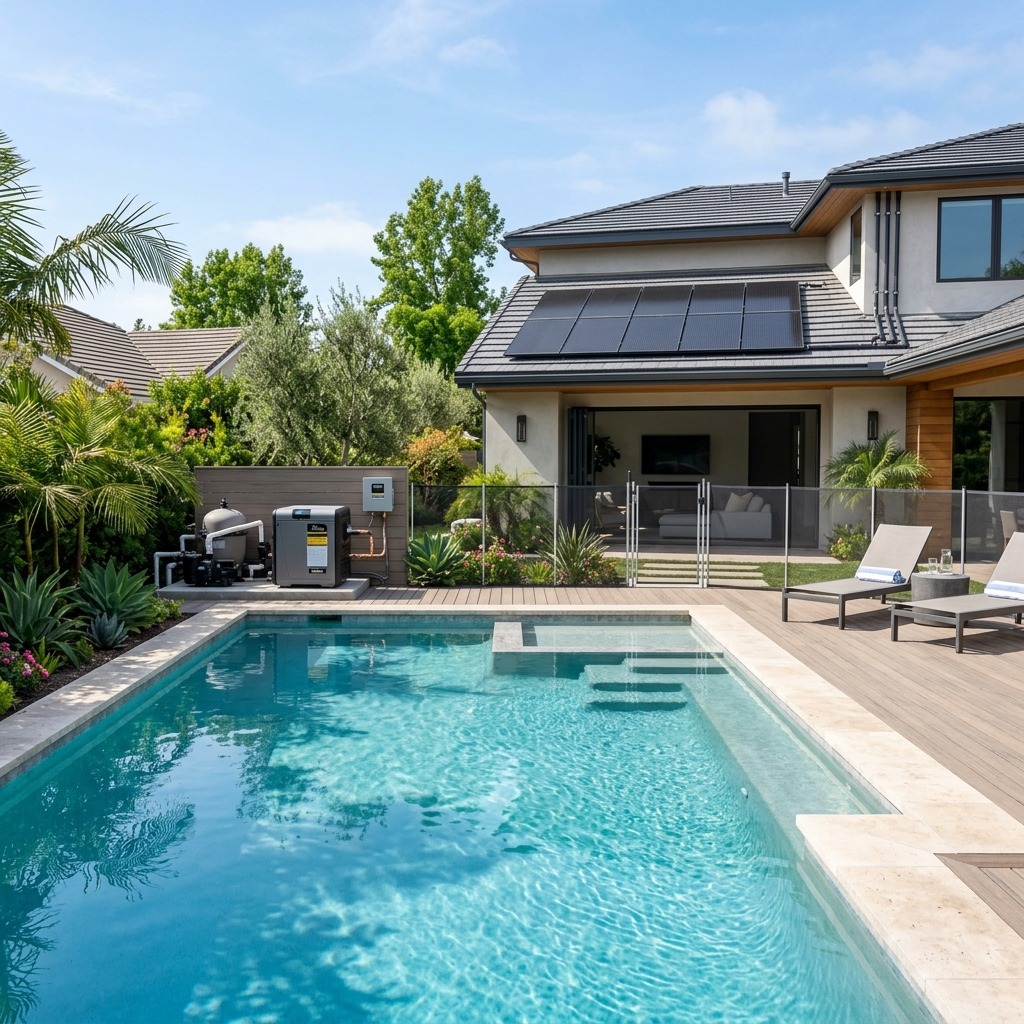
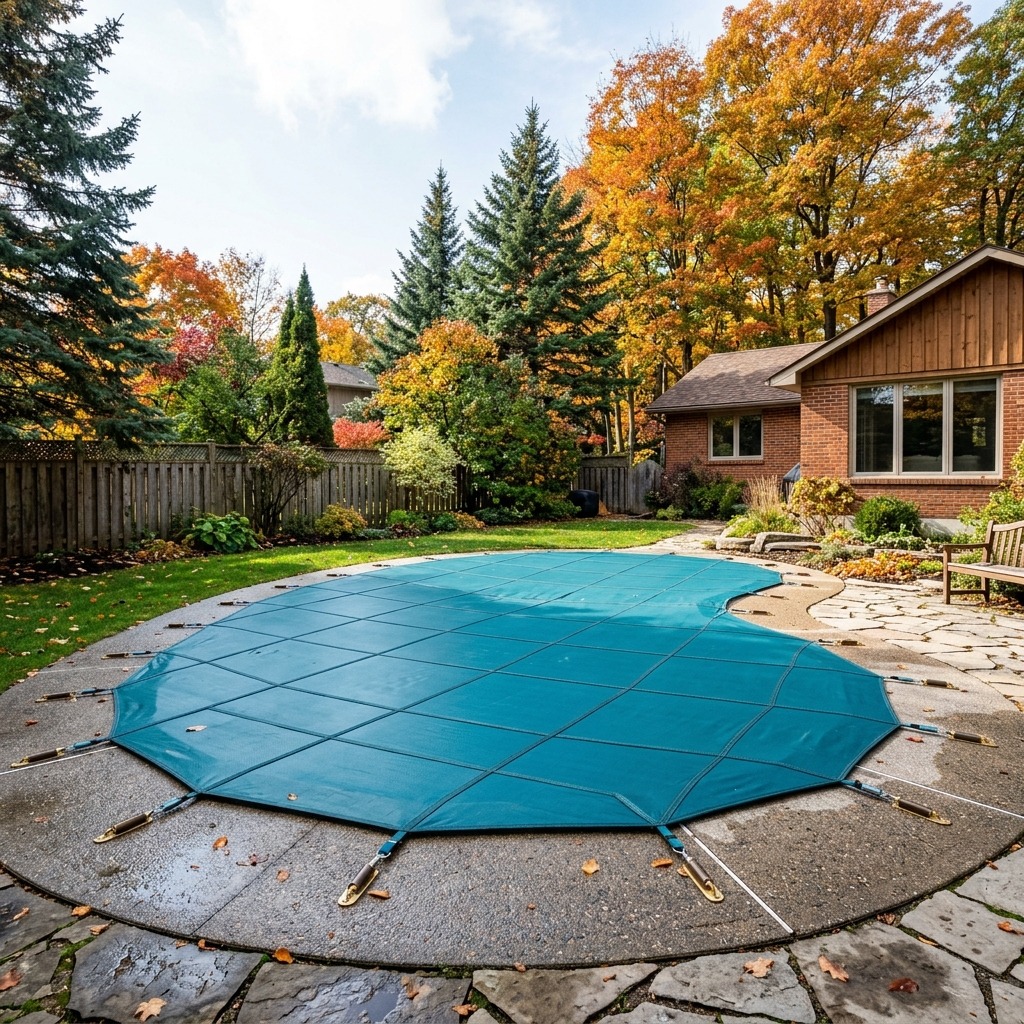
According to 2026 energy cost data averaged across U.S. climate zones, a 60-foot gas-heated lap pool costs $200–$500 per month to maintain competition temperature through winter months in northern climates, and $100–$200 per month in warmer southern climates where the heating season is shorter. Heat pumps are increasingly popular as a lower-operating-cost alternative to gas heaters; they cost more upfront — $4,000–$8,000 versus $2,000–$4,500 for gas — but typically reduce monthly operating costs by 50–70% in moderate climates. A pool cover — either manual, automatic ($8,000–$15,000 for a motorized cover on a full-length lap pool), or a liquid thermal blanket — is one of the most cost-effective investments a lap pool owner can make, reducing heat loss by up to 70% overnight.
Lap Pool Installation — What the Estimate Includes
When a contractor hands you a quote for a lap pool, the line items can run to two or three pages. Understanding what should be in that estimate protects you from low-ball quotes that exclude standard costs and high quotes that pad in unnecessary add-ons.
Site Preparation and Excavation
Excavation is typically the first major cost after the design fee. For an average 60-foot gunite lap pool excavated to 5 feet depth, contractors will remove somewhere between 150 and 200 cubic yards of soil. National excavation rates in 2026 average $50–$80 per cubic yard removed and hauled, putting excavation alone at $7,500–$16,000 for a standard residential lap pool. Rocky soil, high water table conditions, or difficult access — narrow side yards, steep lots, or limited gate width — can double or triple that estimate. Always ask your contractor for a site assessment before accepting any excavation quote. Surprises underground are the most common source of budget overruns in pool construction.
After the pool shell is installed, backfill — the material used to fill the gap between the excavated hole and the exterior of the pool shell — must be compacted properly to prevent settling. Poor backfill compaction is a leading cause of cracked pool decks and shifting pool shells over time. Verify that your contract specifies engineered backfill standards, not simply “fill dirt,” and ask whether compaction testing is included.
Permits and Engineering Certifications
Every jurisdiction in the United States requires building permits for an in-ground pool installation, and most require a stamped engineering drawing from a licensed structural engineer before the permit is issued. Permit costs vary enormously by municipality — from $500 in small rural counties to $4,000–$8,000 in major metropolitan areas. Engineering fees typically run $1,500–$4,000 for a residential lap pool design. Beyond the basic building permit, competition-grade pools may require additional certifications from electrical inspectors (for touchpad systems and underwater lighting), health departments (for pools used by more than one household), and zoning boards (for structures coming within setback distances of property lines).
Never allow a contractor to bypass permits to reduce cost or timeline. Unpermitted pools are discovered at resale, create liability exposure in the event of an accident, and can result in mandatory demolition orders in some jurisdictions. A properly permitted and inspected lap pool is also significantly easier to insure at appropriate coverage levels.
Decking Around a Lap Pool
The pool itself is only half the functional story. The decking — the hardscape surface surrounding the water — is what integrates the lap pool into your property and makes it operational as a training environment. For a single-lane lap pool, a practical minimum decking specification is 4 feet of clear walking surface on each long side and 8–10 feet at each end wall, to allow for flip turns, equipment placement, and coach or observer positioning.
Common decking materials for lap pools include brushed concrete ($8–$18 per square foot installed), pavers ($15–$30 per square foot), travertine ($20–$40 per square foot), and composite decking on steel frames ($25–$45 per square foot). A single-lane, 60-foot lap pool with 4-foot decking on each long side and 8-foot end aprons has approximately 960 square feet of deck area — translating to a $7,700–$17,300 brushed concrete installation or a $19,200–$43,200 travertine project. Decking is one area where many buyers seriously underestimate costs during the planning phase. Always get a line-item deck quote alongside your pool shell quote so the numbers reflect your actual full project.
Indoor vs. Outdoor Lap Pool Costs
Outdoor lap pools are the baseline against which all other configurations are measured. They benefit from natural ventilation, require no structural building modifications, and carry the majority of their costs in the pool shell, excavation, equipment, and decking categories described above. Total outdoor lap pool installation in 2026 runs $45,000–$110,000 for most residential builds.
Indoor lap pools occupy an entirely different cost universe. To house a lap pool indoors, you need either a purpose-built structure — an addition, outbuilding, or dedicated pool house — or an existing building with sufficient structural capacity to support the weight of a water-filled pool. A single-lane 60-foot lap pool holds approximately 100,000 gallons of water, which equals roughly 835,000 pounds. That mass requires extraordinary structural engineering to support safely. The enclosure structure itself — even a modest prefabricated steel building designed to house an above-ground pool — typically costs $50,000–$150,000. A custom masonry or timber-frame natatorium can easily reach $200,000–$500,000 before the pool itself is installed.
The other hidden cost of indoor lap pools is HVAC. Water evaporates continuously into the indoor air, creating humidity levels that destroy conventional building materials within a few years if not controlled through a purpose-designed system. A properly engineered natatorium HVAC system — featuring dedicated dehumidification, heat recovery, air filtration, and mechanical ventilation — costs $30,000–$80,000 installed for a residential lap pool enclosure. Without it, you will face mold, wood rot, corrosion, and structural damage that costs far more to remediate than the system would have cost to install upfront. Indoor lap pools, done correctly, represent a total investment of $150,000–$400,000 for a residential facility, with the pool itself often accounting for less than a third of that total. The experience is unparalleled — year-round swimming regardless of weather, complete privacy, and no seasonal closing costs — but the financial commitment is substantial and should be approached with a full understanding of all associated costs.
Lap Pool Running Costs — Monthly Budget
The installation price is a one-time expenditure. The running costs are ongoing, and serious lap pool buyers should understand what those numbers look like in monthly dollar terms before breaking ground. Making sure you are covered on ongoing costs is just as important as nailing the install figure — something the pool maintenance cost calculator breaks down in thorough detail for all pool types.
According to 2026 data compiled from homeowner surveys and service provider pricing across the U.S., a typical 60-foot heated lap pool costs approximately the following each month:
- Electricity (pump, lighting, automation): $80–$180
- Natural gas or propane heating: $100–$500 (varies significantly by climate)
- Chemicals (chlorine, pH adjusters, alkalinity balancers): $60–$120
- Professional service visits (weekly): $150–$350 (optional but common among training-focused owners)
- Water top-off for evaporation replacement: $15–$40
- Equipment maintenance reserve (set aside for annual servicing and parts): $50–$100
Total monthly operating range: $455–$1,290, depending on climate, whether you handle maintenance yourself, and your local energy rates. Annual costs of $5,500–$15,500 are typical for a year-round heated lap pool in the continental U.S. Over a 20-year ownership period, running costs can easily match or exceed the original installation price — making energy-efficiency upgrades like heat pumps, variable-speed pumps, and automatic covers genuinely important economic decisions rather than optional luxuries.
Compared to features like an infinity pool — where the visual drama creates premium costs across almost every line item — a lap pool’s operating costs are more predictable and more directly tied to measurable use. For a sense of how running cost structures compare across premium pool types, the infinity pool cost estimator provides a useful contrast between the aesthetics-driven pricing of a vanishing-edge build versus the performance-driven pricing of a lap pool.
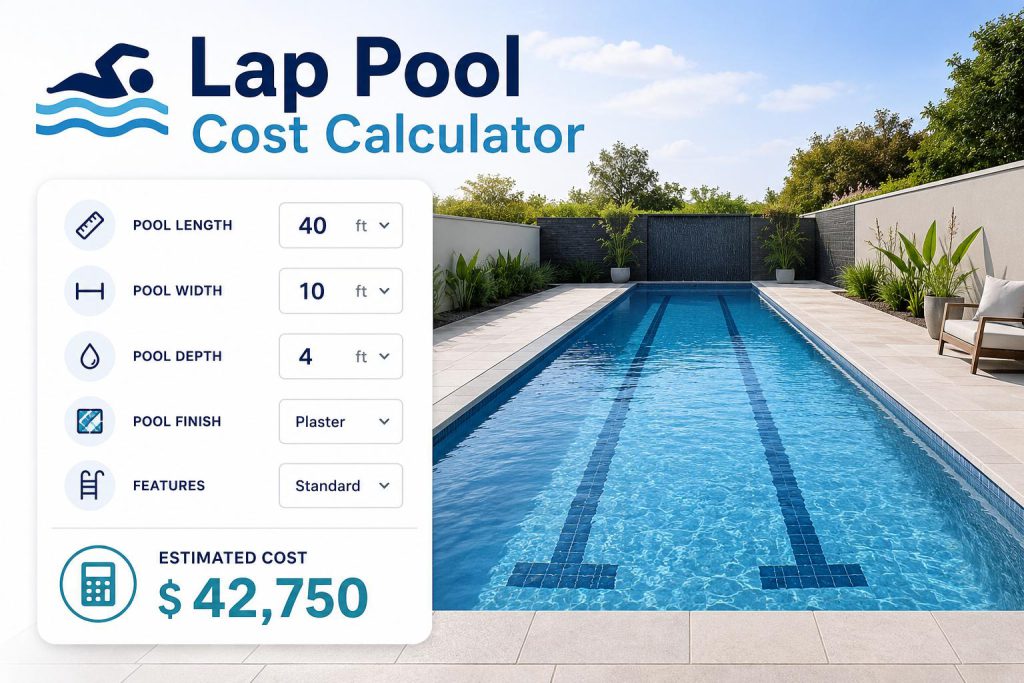
The long, narrow shape of a lap pool means you often need custom engineering and strong water-current equipment. You can price out your exact dimensions using our lap pool cost calculator. This lets you adjust the length until you find a price that fits your budget.
How to Use a Lap Pool Cost Calculator Accurately
A lap pool cost calculator is only as useful as the inputs you give it. Generic online calculators that ask only for “length” and “material” will produce estimates that can be off by 30–50% from real contractor quotes, because they miss the variables that actually drive the price in your specific situation. Here is what to have ready before you start entering numbers.
1. Confirmed pool dimensions. Know the exact length, width, and depth you need. Do not round down hoping the price will be friendlier — underbuilding a lap pool is the most common source of buyer regret among serious swimmers. If you need 60 feet, plan and budget for 60 feet from the start.
2. Material selection. Have a preliminary preference between fiberglass, gunite, vinyl liner, or modular steel, and understand the implications of each on both upfront and long-term costs. If you are undecided, run the calculator for two materials and compare the 10-year total cost of ownership, not just the installation price.
3. Site conditions. Note whether your yard has existing hardscape that needs demolition, slopes that require retaining walls, access limitations requiring smaller equipment — which takes longer and costs more — or soil conditions (clay, caliche, sandy, or rocky) that affect excavation difficulty. A calculator that does not ask about site conditions is giving you a generic number, not a project-specific estimate.
4. Equipment package. Decide which features you need — heating type, pump speed, automation system, lighting, lane hardware, timing systems — before you start calculating. Optional features can add $10,000–$40,000 to a base pool price, and they need to appear in your estimate from the beginning so your budget is realistic.
5. Decking and landscaping. Include at least a rough estimate of your desired deck material and square footage. Leaving this out of a calculator estimate is a very common mistake that produces totals 15–25% below true project cost. Decking on a full-length lap pool is not a minor line item — it is frequently a $15,000–$40,000 component of the total project.
6. Indoor vs. outdoor. If you are considering an indoor installation, use a calculator that explicitly models enclosure and HVAC costs — most basic pool cost calculators do not include these and will dramatically underestimate your total project. The difference between an outdoor and indoor lap pool budget is often $100,000 or more.
Armed with these inputs, a well-built lap pool cost calculator can produce an estimate within 10–15% of real contractor quotes — accurate enough to drive meaningful budget decisions and financing conversations before you spend a dollar on professional design fees.
Conclusion
Building a lap pool is one of the most meaningful home investments a serious swimmer can make — a private training facility that eliminates commute time, crowded public lanes, and inflexible gym schedules, and turns daily fitness swimming from a logistical challenge into an effortless daily routine. The numbers in this guide reflect 2026 real-world pricing across all four major construction materials, from the budget-accessible modular steel option at $15,000 up to fully equipped gunite competition builds that exceed $100,000. The right lap pool for you lives somewhere in that range — defined by your training goals, your lot dimensions, your local climate, and your long-term budget for both installation and operation.
The most important step you can take right now is to move from rough numbers to a real estimate customized to your actual property and specifications. Use the lap pool cost calculator tools at poolcostestimator.com to run your personalized calculation, compare material options side by side, and arrive at your first contractor conversation knowing exactly what your project should cost — and exactly what to ask for. Your pool is closer than you think. Start calculating today.
Frequently Asked Questions
How long does a lap pool need to be to be worth building?
The minimum length that most competitive swimmers consider genuinely useful for lap training is 40 feet. At 40 feet, you can complete flip turns and swim continuous intervals with meaningful rest periods, though your splits will be based on a non-standard distance. At 25 yards (75 feet), you unlock the full library of competitive swim training sets, interval protocols, and pace charts — every workout written for a short-course pool applies perfectly. Pools between 40 and 60 feet represent the practical residential sweet spot: long enough for real training, short enough to fit in most suburban lots without dominating the entire backyard. If your lot limits you to 30–35 feet of pool length, a resistance-current swim-in-place system is likely a better choice than a pool that is too short to provide genuine lap swimming value. Always measure your usable yard space carefully before setting a target length, because actual pool length plus deck clearance on both ends typically adds 20–25 feet to your total footprint requirement.
What is the cheapest way to build a lap pool?
The lowest-cost path to a functional lap pool is a modular steel or vinyl-liner above-ground system, which can be installed for $15,000–$30,000 depending on length and accessories. Within the in-ground category, a vinyl liner pool is typically the most affordable option, with installations starting around $30,000–$35,000 for a 40-foot build. To minimize costs further, consider limiting length to the minimum you can realistically train in, skipping advanced features like timing systems and automated covers in the first phase, and choosing a brushed concrete deck over premium stone or paver alternatives. Doing your own minor landscaping and cleanup after the contractor finishes can also save $2,000–$5,000. Keep in mind, however, that cost-minimization in pool construction often results in higher long-term operating costs — especially if you skip energy-efficient equipment like variable-speed pumps or a heat pump heater. The cheapest pool to build is not always the cheapest pool to own over 20 years.
Can I use a lap pool year-round?
Yes — but doing so requires an appropriately sized heating system and, in cold climates, either a pool enclosure or a high-quality automatic cover system. Without heating, water temperatures in most U.S. climates drop below comfortable swimming range for several months per year — typically below 68–70 degrees Fahrenheit. With a properly sized gas heater or heat pump, a lap pool can maintain 78–82 degrees year-round regardless of outdoor conditions. In northern states, winter heating costs for an outdoor pool run $300–$600 per month in the coldest months. A combination of a heat pump for efficiency during moderate shoulder seasons and a gas heater backup for speed and capacity during winter extremes is increasingly popular among serious year-round lap swimmers. Automatic covers cut heat loss dramatically and typically pay for themselves within two or three heating seasons in cold climates.
Do lap pools add value to a home?
Lap pools add meaningful value to homes in the right context — specifically, in warmer climate markets such as Florida, Arizona, Southern California, and Texas where pools are expected features of premium homes, and in properties marketed to buyers who value fitness infrastructure. According to 2026 appraisal industry data, an in-ground lap pool in a strong pool market adds approximately 5–8% to residential home value on average, though this varies significantly by neighborhood, pool quality, and buyer demographics. In colder northern markets, the value contribution is less certain — pools are sometimes viewed as a maintenance liability rather than an asset. Above-ground and modular steel lap pools are generally viewed less favorably by appraisers than in-ground installations. If maximizing resale value is a primary concern, a gunite or fiberglass in-ground installation is the most defensible long-term investment.
How wide should a lap pool be?
For comfortable single-lane lap swimming, a minimum clear water width of 7–8 feet is generally cited in builder guidelines, with 9 feet being the competition standard for a single lane per USA Swimming specifications. A 7-foot-wide pool works for solo fitness swimming but feels tight when flip-turning and can produce more wall turbulence. A 10-foot width is comfortable for a single lane and provides enough clearance for training aids such as pull buoys, paddles, and fins without feeling cramped. Two-lane pools require a minimum of 16–18 feet across, with 20 feet being the comfortable standard that allows adequate lane separation and clean water flow. When in doubt, adding an extra 2 feet of width is almost always worth the incremental cost — it improves the swimming experience noticeably and makes the pool more versatile for multiple users.
How long does it take to install a lap pool?
Installation timelines depend heavily on the material chosen. Fiberglass lap pools typically have the shortest timelines — from permit approval to first swim, expect 4–8 weeks for a standard installation in a cooperative jurisdiction. Vinyl liner pools take slightly longer, usually 6–10 weeks from permit to completion. Gunite pools require the most time — the shell alone takes 2–4 weeks to spray and cure properly, followed by interior plastering, filling, and chemical startup, for a total of 3–6 months from groundbreaking to swimming-ready. Permit timelines are highly variable by municipality and can add 2–8 weeks to any construction type before a shovel goes in the ground. In high-demand markets during peak summer season, contractor scheduling backlogs add 3–6 additional months to the wait before construction even begins. Plan your timeline accordingly if you have a specific competitive season in mind.
What permits do I need for a lap pool?
In most U.S. jurisdictions, an in-ground lap pool requires at minimum a building permit, an electrical permit for pool wiring, and often a zoning review or variance if the pool or associated structures come within setback distances of property lines. Pools larger than a certain square footage or water volume may trigger additional environmental review in some counties. Competition-grade pools used by more than one household — even informally for a small coached group — may require a commercial pool permit and regular health department inspections involving water quality testing, safety signage requirements, and mandated safety equipment. Your contractor should handle permit applications as part of their contract scope; verify this in writing before signing. If a contractor suggests bypassing permits to save time and money, treat it as a disqualifying red flag and find a different builder.
How does a lap pool compare in cost to a swim spa?
A swim spa — a hybrid unit that combines a hot tub-sized vessel, typically 12–18 feet long, with a resistance current system — typically costs $15,000–$35,000 installed, significantly less than any in-ground lap pool. The trade-off is swimming quality: even the best swim spa currents are turbulent compared to open-water lap swimming, and the confined space limits stroke development and makes interval training less intuitive to execute and track. Serious competitive swimmers almost universally report that a swim spa does not adequately replace a genuine lap pool for structured training purposes, though it can be a useful supplemental tool for recovery swims, hydrotherapy, and general fitness swimming. For buyers on a strict budget who want to start swimming at home immediately while saving toward a full lap pool, a swim spa is a practical bridge solution. That said, the $15,000–$35,000 spent on a swim spa could also serve as a meaningful down payment on a financed in-ground lap pool, which is worth considering carefully before committing to the smaller format.